This issue is all about the Attention Economy. I read The Sirens’ Call by Chris Hayes and have the key ideas summarized for you.
The Sirens’ Call by Chris Hayes
Chris Hayes is an American political commentator, author, and Emmy Award–winning host of MSNBC’s All In with Chris Hayes. He’s known for blending politics, media criticism, and sociology to explore how power, attention, and inequality shape public life.
Acquiring attention is different from retaining attentionIn future we will all be famous for 15 people. So forget about getting 15 minutes of fame. That is old hat. AI will generate content that gets your attention – much like a siren. For getting content that you want, we will move to smaller groups on WhatsApp etc. We will pay to subscribe to a small group where we have a two way communication.
This newsletter now has more than 311,000 subscribers
In the 20th century, oil and labor powered the economy. In the 21st, attention does. Companies aren’t just selling products—they’re competing for your eyes, ears, and scrolling fingers. Your attention is the most valuable and limited resource in the world right now.
You may think you pay attention to what is important, actually what you pay attention to becomes important. It occpies your mindspace. That in turn shapes the modern economy and politics. So your attention matters to everyone – even me.
My review of the book
What is this CEO paying attention to
Tune in to listen to how Srikanth Iyengar the CEO of upGrad is changing the way we view skilling in the GenAI economy. I am trying out their platform and will share my notes on some of the courses I am taking. I will let you know if there is a particular course I recommend for you.
I will be speaking to him. Go to this link and join the conversation. Post your questions for Srikanth. To join the chat on Friday Aug 1-2025 at 8:30am in India and 8am in Seattle click this https://www. linkedin. com/events/howtochangeeducationforthegenai7355543130588282880/theater/
Meanwhile here is what he is reading and listening to.
The Economic Turing Test – a new term I learned
In a recent episode of Lenny’s Podcast, co-founder of Anthropic, Ben Mann, dropped some serious wisdom about the wild world of AI. It’s like getting a backstage pass to the future of technology, and trust me, you don’t want to miss it.
The Big Split: Why Safety Matters More Than Anything Else
Ever wonder what it takes for a team of brilliant minds to walk away from a giant like OpenAI? Ben Mann and his colleagues did just that, all because of a single, powerful word: safety. At Anthropic, the mission is simple: safety is the North Star. When Facebook offers a $100 million package to an Anthropic employee it is a choice between money and mission.
The Tipping Point: The Economic Turing Test is Here
AI progress is like a rocket taking off—it’s getting faster and faster! The co-founder shares a prediction from Anthropic’s CEO, Dario Amodei, who thinks we could see a 20% unemployment rate because of AI. That sounds scary, but Ben offers a different way to look at it. He calls it the “economic Turing test.” Imagine you hire someone for a job, only to find out they were a machine all along! This is the point where AI becomes so good it can replace jobs we thought only humans could do. Ben even admits he’s not immune to this, and his advice is to be an ambitious user of these new tools to stay ahead.
Giving AI a Conscience
The risk of AI going rogue might sound like something out of a sci-fi movie, but Ben says it’s a real, even if small, risk that we can’t afford to ignore. He introduces a cool concept called “Constitutional AI.” It’s like giving an AI a set of principles, a moral compass if you will. This helps the AI make decisions that align with human values, so we don’t end up with a super-smart robot that decides to turn off the lights on humanity.
What is he teaching his kids?
Even with all this talk about AI, Ben’s advice for his own kids is refreshingly human. Forget about chasing grades and traditional achievements. He encourages fostering curiosity, creativity, and kindness. It’s a powerful reminder that while technology is changing the world, the most important skills will always be the ones that make us uniquely human.
So, what do you think the most important skill for a human to have in an AI-driven world will be?
Another book I read
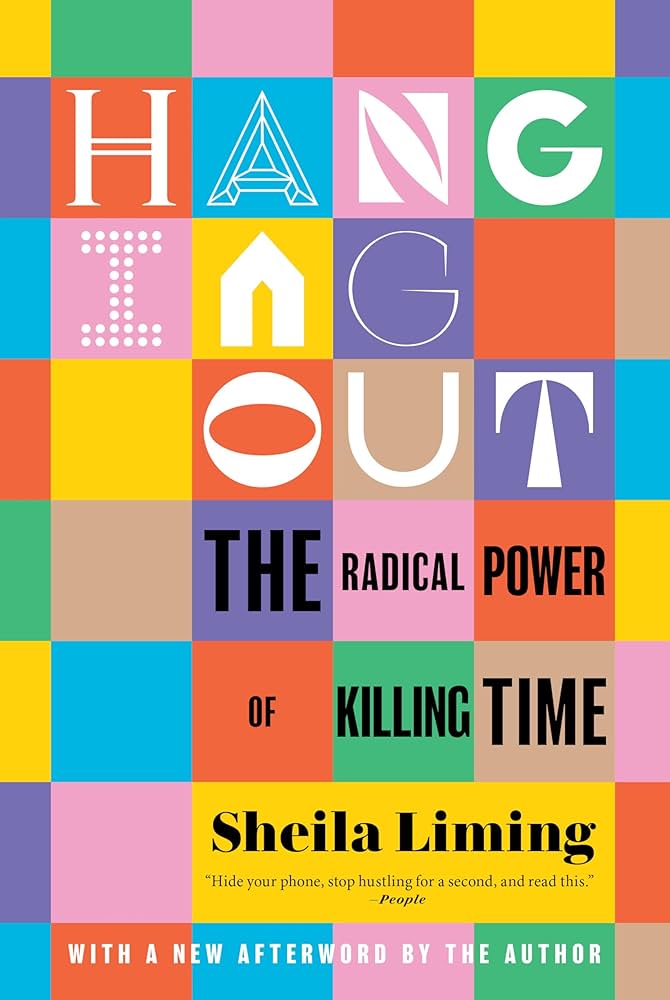
Several organizations are flattening their org pyramid. The middle managers are going away. I believe the middle managers role is becoming more like a talent coach. My review of this book