Ever wondered why employees trust Glassdoor , Blind , and Reddit, Inc. more than their own HR department? Or why leadership development programs always have to prove ROI, while compliance training gets an automatic green light? Or why HR still struggles to build employer brands, even though Marketing has been doing it for decades for customers?
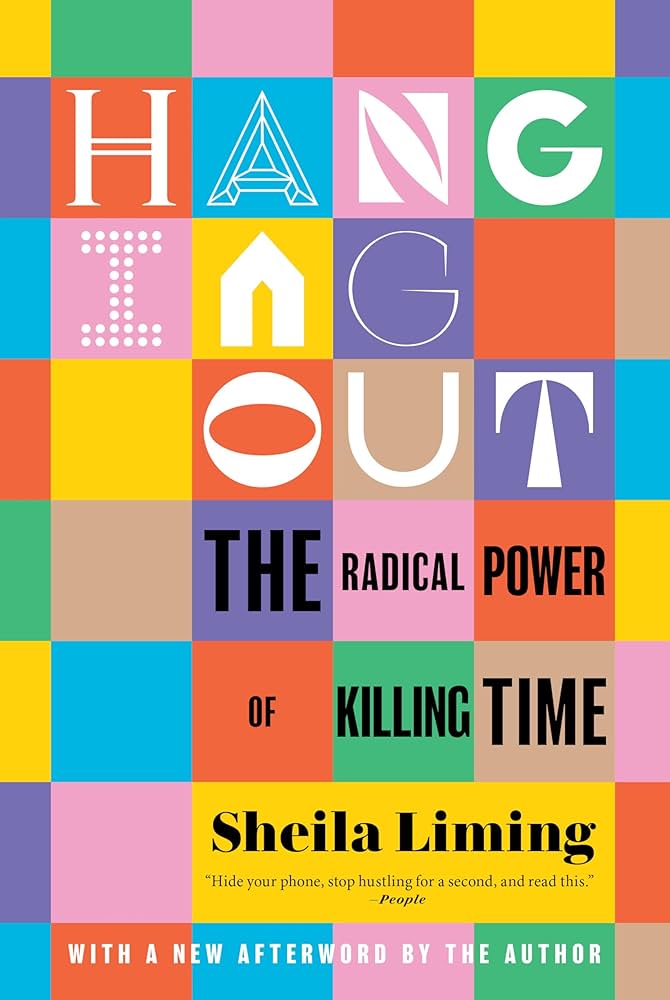
Two books by Gillian Tett that I found valuable – The Silo Effect (read a review here)
HR has spent so much time trying to be like Finance, it’s forgotten what makes it uniquely valuable to business.
It’s time for a new way of thinking—one that doesn’t measure success only in numbers, but in understanding people, culture, and behavior like an anthropologist.
HR doesn’t need more spreadsheets. It needs more anthropology.
Gillian Tett’s book The Silo Effect is a great read
HR Shouldn’t Be a Club for HR Professionals
Ever noticed how HR conferences are full of… HR people?
It’s like a restaurant hosting a customer feedback session and only inviting the chefs.
The Problem: HR sees itself as the voice of the employee, yet non-HR employees rarely engage with HR-led discussions.
Why? The Silo Effect. HR professionals mostly talk to other HR professionals, reinforcing their own frameworks instead of embedding themselves in real employee experiences.
The Anthropologist’s Solution:
Instead of designing policies from a distance, HR should function like an ethnographer—sitting in on team meetings, shadowing employees, and observing how people actually work.
If HR leaders spent a day each month working alongside different teams, they’d see challenges before they show up in engagement surveys.
Diversity, Leadership, and Employer Branding—We Need a New Lens
HR is obsessed with measurement. If it can’t be quantified, it’s treated as “soft” or optional.
Leadership development? Takes too long to show results.
Employer branding? Hard to measure impact.
Diversity initiatives? Often seen as compliance instead of innovation.
Yet, Marketing doesn’t hesitate to invest in brand-building, knowing that a strong brand attracts customers. HR should adopt the same mindset—a strong employer brand attracts top talent.
What if HR measured employee sentiment as deeply as companies measure consumer sentiment? What if we had an “Employee Research” team, just like we have Market Research?
It’s time to treat employees like customers—not just resources.
Want a friend to join this newsletter? Send them this link https://bit. ly/3ZwsrZF
Read: How to Decode Culture in your Organization
Want to Innovate? Start With Employee Research
We do consumer research, market research, competitive research.
But where’s the team dedicated to researching employees—beyond surveys?
What are unspoken workplace rituals that shape behavior?
What “social silences” exist? (What issues are people afraid to bring up?)
How do employees really feel about hybrid work, leadership, or performance reviews?
Imagine if HR analyzed employees the way anthropologists analyze cultures—with deep observation, not just survey results. That’s where the real insights are.
Final Thought: HR Needs to See Work Through Human Eyes Again
If HR keeps acting like a policy and compliance function, employees will keep ignoring it.
But if HR learns to think like an anthropologist—understanding people before trying to “fix” them—it can finally become the function it was always meant to be.
Less MBA. More anthropology. More human.
Scott Galloway’s Predictions at SXSW
Consumers want certainty – not choice. This was the most insightful part of the talk. We spend 50 minutes every week deciding what to watch on Netflix. TikTok is the opposite. They are one channel and they know what you want and will show you only that. That gives back time.
NVIDIA and Open AI will dominate. Nvidia has grown its earnings to justify its Market Cap, because Microsoft, Amazon, Google and Meta have all invested heavily in their chips. OpenAI is over valued. Byte Dance (of TikTok fame) is undervalued. Meta will make the most progress in AI because 9/10 people outside of China are on a Meta platform. Think of the data they have (about you!)Expect Shein to do an IPO. They offer 7000 new styles every day and make $2mn per employee while Zara makes $344 per employee. They do 100 new styles per day. Traditional retail does 100 new styles per week.