Utkarsh Narang had me on his podcast recently (Sep 13-2025). He opened with an interesting question. What would I tell my 8 year old self today? I was also speaking to Utkarsh after 8 years. When I last spoke to him, he was in Gurgaon. He moved to Melbourne three years back. For the past three years I have been living in Seattle.
The first thought I had was to think of the very quiet eight year old kid who practically lived in an imaginary world. The stories from all the books I read, were illustrated in my head. My first thought was that it would startle the kid if an adult came and tapped him on the shoulder to give him some advice.
Learn as many languages as you can because not everyone speaks the same languages. I was very keen on learning phrases from different languages – largely made up from different books I read. The Russian books were everywhere. Nyet? I also would encourage my younger self to learn more musical instruments. By that I mean learn it in a structured manner.
When you feel happy, make two people around you happy. That would double the happiness level in the little world that I lived in. If everyone did that we would be in a happier space for sure.
Understand yourself from the eyes of your enemy. It tells you what you are missing. Your friends and loved ones don’t judge with the exacting standards that your adversary will. It would make me feel comfortable with criticism.
What advice would you give your eight year old self. What would tell your future self – the 80 year old self? My answer is there in the podcast. What’s your answer?
Companies die—quietly, in their sleep. Because skills age like milk, not wine.
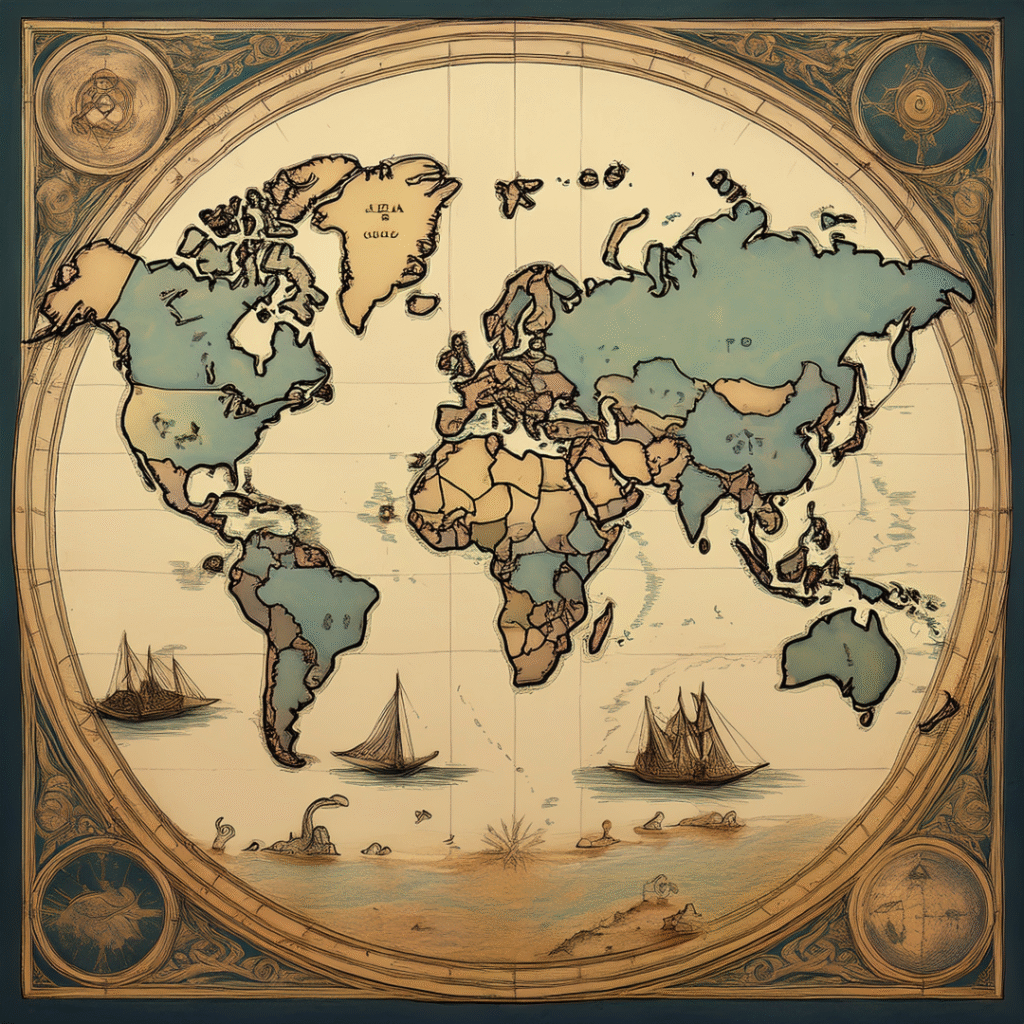
When medieval European mapmakers encountered blank spaces on their maps – areas they knew existed but had little concrete knowledge about – they would often populate these unknown regions with drawings of fantastical beasts, sea monsters to show the area remained to be explored.
When organizations encounter territories they don’t understand—whether it’s customer behavior in new markets, the impact of emerging technologies, or the true drivers of employee engagement—they tend to fill these voids with familiar frameworks and conventional wisdom rather than acknowledging uncertainty. This false confidence in imaginary knowledge can be more dangerous than honest ignorance, as it prevents companies from doing the hard work of genuine exploration and discovery that would actually illuminate these unknown territories.
The most successful organizations learn to resist this impulse, instead marking their knowledge gaps clearly and investing in the patient, systematic exploration needed to map their business terrain accurately.
The CEO of UpGrad Srikanth Iyengar and I chatted about the skilling strategy for the current times we live in.
Is Your Learning Function a Map or Just a Compass?
A Chief Learning Officer (CLO for short) is the map maker who sees the terrain ahead, redraws the map in real time, and helps your people find paths no one else has walked. Training helps you navigate today. A CLO helps you survive tomorrow.
What World Is Your Learning Strategy Built For?
The world has shifted under our feet:
AI is already sitting in your office, making half your workforce wonder if they’ll be relevant next year. The winners will be the ones who teach people to partner with machines, not resist them.
Your best people are not only hunting for pay raises. They’re hunting for growth. If they don’t see a future inside your company, they’ll make one outside of it.
And complexity has collapsed the walls between functions. Finance can’t pretend marketing doesn’t exist. Operations can’t ignore technology. It is world where we need multidisciplinary thinkers.
Your training department wasn’t designed for this world. It was built for a world that no longer exists.
Why Doesn’t Every Company Have a CLO?
Some firms are simply too small—for now. If you’ve got 50 people, a C-suite learning role might not make sense. But if you’re planning to scale, put it on the roadmap.
Some leaders don’t see the difference. They confuse training with transformation. That’s like confusing a bicycle and a motorcycle because both have wheels. The power gap is massive.
And yes, some leaders get spooked by the price tag. A great CLO costs a lot. But the real cost is invisible: the revenue you miss, the talent you lose, the opportunities that slip through your fingers.
How Do You Know It’s Time?
You need a CLO when digital transformation is not just an initiative but a bet-the-company moment. Here are questions my clients have asked me.
Can’t AI Do This Job Instead?
AI is a brilliant assistant—it can personalize training, crunch data, and deliver content at scale. But it can’t decide who to develop, which capabilities you’ll need next year, or why those choices matter.
The CLO can work with a team that can leverage AI. To influence the culture, you need humans. The CLO needs to influence and persuade the CXOs and the rest of the organization. Today we need to build the skills at speed and scale.
For example using “failure stories” – not case studies of successful sales to build consultative selling skills.
Consultative selling improves dramatically when people understand the gaps between what they thought they heard and what the client actually needed. These post-mortem conversations—conducted months later when emotions have cooled—reveal the difference between surface-level pain points and deeper systemic issues that salespeople missed during the original process.
Fractional or Full-Time: Which One’s for You?
Fractional CLOs are perfect if you’re midsized (500–2,000 employees), in transition, or want C-level thinking without the full-time cost. They build foundations, design roadmaps, and guide pivots.
Full-time CLOs make sense if you’re large, global, or complex; if the cost of being behind is measured in millions, not thousands; or if you’re in an industry where continuous capability building is survival, not strategy.
What Makes a CLO Worth It?
Look for someone who speaks two languages: (i) How adults learning science and (ii) Using creative learning styles to impact business strategy. That means someone who builds experiences, not just buys programs. Someone who can challenge culture and has the vision to reshape it.
What Does Success Look Like?
Here are some measures I like
Cross-functional project success rates and speed – Measure how quickly teams from different departments collaborate effectively on new initiatives.
Internal mobility vs. external hiring ratios for senior roles – Track what percentage of leadership positions are filled internally versus through external recruiting.
Recovery time from failed initiatives – Track how quickly teams bounce back from setbacks and apply lessons to new projects.
What Should You Do Next?
Ask yourself: is your learning function building competitive advantage or just checking compliance boxes? Are you preparing for tomorrow or clinging to yesterday?
Then choose. Fractional CLO to build the base. Full-time CLO to drive transformation.
The future belongs to those who learn faster than the world changes. Everyone else is just waiting to be overtaken.
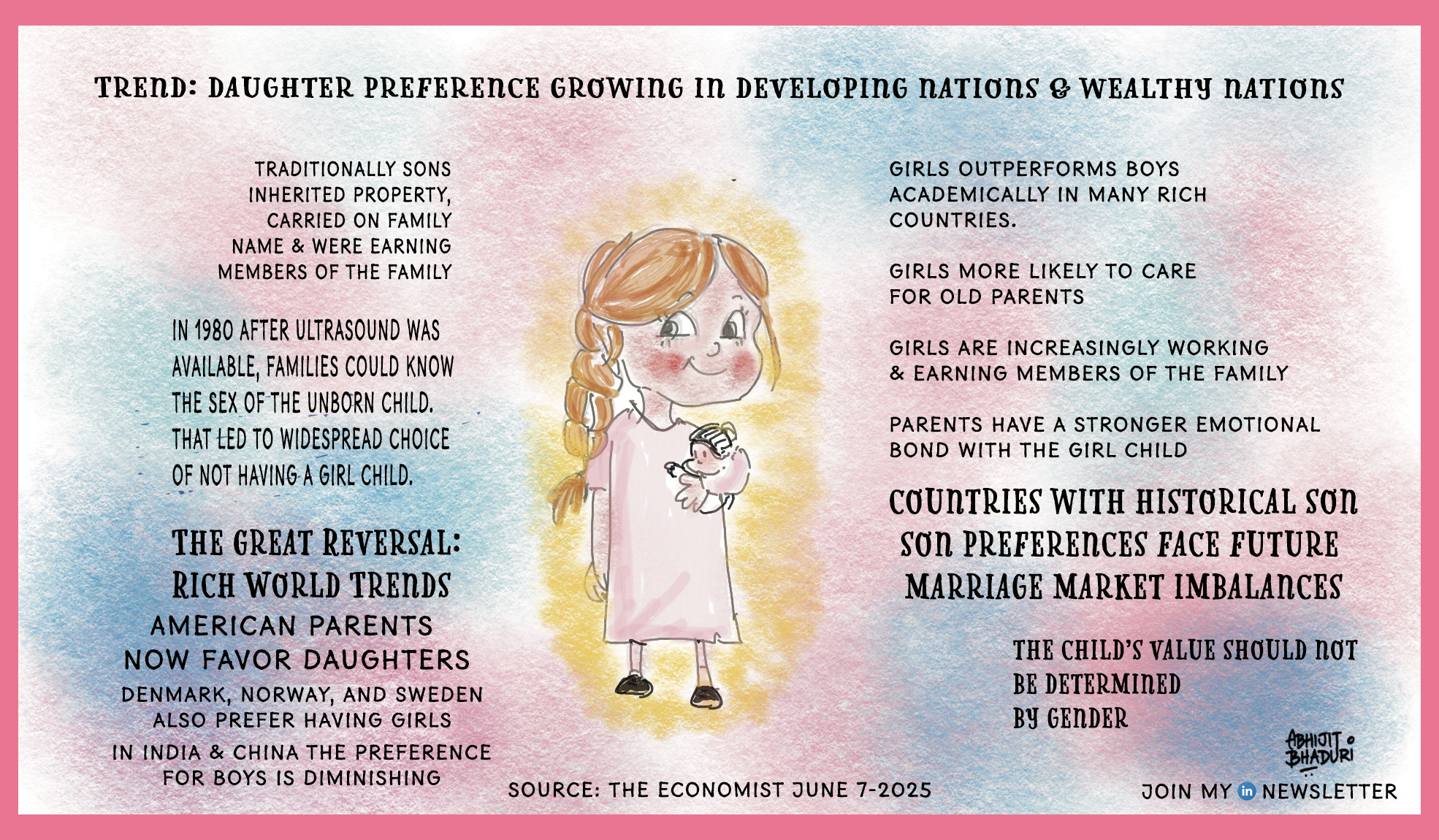
Something extraordinary is going to happen in boardrooms across America, and most executives don’t even realize it. While headlines focus on AI and remote work, a silent demographic revolution is fundamentally altering who shows up to work, how they think about careers, and what they need from employers. There is growing trend that will shape the talent pool. It is a complete flip in what parents want when they’re hoping for a baby.
For centuries, families worldwide prayed for sons. In many cultures, boys meant financial security, family legacy, and care in old age. But today, American parents are more likely to keep trying for a baby if they only have sons—they want daughters. This isn’t just a cultural curiosity; it’s a workforce earthquake waiting to happen.
When Daughters Become the Favorite
When a former colleague announced her third pregnancy, her mother-in-law asked if she was hoping for a boy to “complete the family.” My colleague laughed, “Mom, we’re hoping for another girl. My daughters are going to take better care of us when we’re old, and honestly, they’re just easier to connect with.” This sentiment, once unthinkable, is now commonplace in wealthy nations.
The numbers tell the story. Girls consistently outperform boys in school, are more likely to attend college, and increasingly dominate professional programs. Meanwhile, parents observe that their daughters call more often, remember birthdays, and coordinate family gatherings. The result? A generation of parents who see daughters as both emotionally closer and economically smarter investments.
But here’s where it gets interesting for employers: this preference shift is creating a workforce that operates by completely different rules than the one currently running most companies.
The Caregiving Collision
While previous generations of women might have left the workforce entirely, today’s professional women are trying to balance peak career years with intensive eldercare responsibilities. They’re negotiating with nursing homes during lunch breaks, attending parent-teacher conferences and geriatric care meetings in the same week, and making career decisions based on proximity to aging parents. Bhavana Issar who started Caregiver Saathi says, “81% of caregivers are women.”
“81% of caregivers are women”
Companies still operating under old assumptions—that ambitious employees will relocate anywhere, work late without notice, or prioritize career over family—are about to lose their best talent.
The New Workplace Reality
Smart organizations are already adapting. Microsoft now offers eldercare resources alongside childcare benefits. Some consulting firms have created “caregiving career tracks” that allow high performers to maintain demanding roles while managing family responsibilities. Others are experimenting with “season-based” careers, where employees can dial intensity up or down based on life circumstances.
The most forward-thinking companies are recognizing that the traits that make someone a good eldercare coordinator—patience, emotional intelligence, complex problem-solving under pressure—are exactly the skills needed for modern leadership.
Beyond the Pink and Blue
This demographic shift extends far beyond American offices. In China, where son preference once drove families to extreme measures, young parents increasingly value daughters’ emotional intelligence and academic achievement. Indian families are celebrating daughters’ career success in ways that would have been unimaginable a generation ago.
For global companies, this means rethinking everything from recruitment strategies to leadership development programs. The executives of tomorrow will likely be more emotionally intelligent, more collaborative, and more skilled at managing complex family dynamics—qualities that happen to align perfectly with what modern organizations need.
The Bottom Line
The demographic revolution isn’t coming—it’s here. The children born during the height of daughter preference are now entering the workforce, bringing different expectations, capabilities, and life patterns. Companies that recognize this shift early will secure competitive advantages in talent attraction and retention. Those that don’t will find themselves struggling to understand why their best employees keep leaving for “better work-life balance”—not realizing that the definition of balance itself has fundamentally changed.
The future of work isn’t just about technology or remote policies. It’s about understanding that the humans showing up to work tomorrow were raised by parents who saw them as the answer to their prayers—and who expect the workplace to honor that same value.
What do you think is the biggest shift in the talent pool with more QUALIFIED women entering the workforce.
I spoke to Bhavana Issar about the sensitivity in corporates to Caregivers.
Kraftshala is a fascinating job-linked platform for marketing and sales education! Here are five jaw-dropping facts about it:
It is backed by top investors – Kraftshala has attracted investment from Nandu Nandkishore (Former Head of Asia, Oceania & Africa at Nestlé & Global CEO for Nestlé Nutrition) Pallav Jain & Sarfaraz Khimani (ex-Performics India), Phanindra Sama (RedBus) and Amit Kumar Agarwal (NoBroker).
INDUSTRYCreds™ Certification – Kraftshala’s programs offer an INDUSTRYCreds™ certification, which is becoming a benchmark for hiring marketing and sales talent in India. Many top consumer companies, including Unilever, P&G, Nestlé, and Yum! Brands, recognize its value.
94% Placement Rate – Kraftshala boasts a 94% placement rate, meaning that nearly all students and professionals who take their courses highly recommend them.
Founded by Industry Experts – The company was founded in 2016 by Varun Satia (ex-Nestlé, ex-FMS) and Eshu Sharma (ex-HUL, ex-FMS), who saw a gap in practical marketing education and built Kraftshala to bridge it.
Strong Placement Record – Kraftshala has successfully placed over 2200 students in jobs with salaries starting from 4.5 LPA and going up to 9.2 LPA from it’s Marketing Launchpad Program. Its latest addition, the PGP in Sales, Marketing & Business Leadership, has delivered impressive outcomes with an average CTC of 10.3 LPA and the highest package reaching ₹17.5 LPA.
I spoke to Varun Satia recently about his philosophy, operating model and more.
Strong Industry Connections: Kraftshala leverages its network of industry partners to facilitate job placements, internships, and live projects, giving students practical exposure and increasing their chances of securing employment.
Placement Accountability with Refund Policy: Kraftshala offers a unique proposition where students are assured of job placements post-course completion. If a student doesn’t secure a job within a stipulated timeframe above a certain CTC, after meeting all course requirements, Kraftshala promises a 60% refund emphasizing their confidence in the program’s effectiveness.
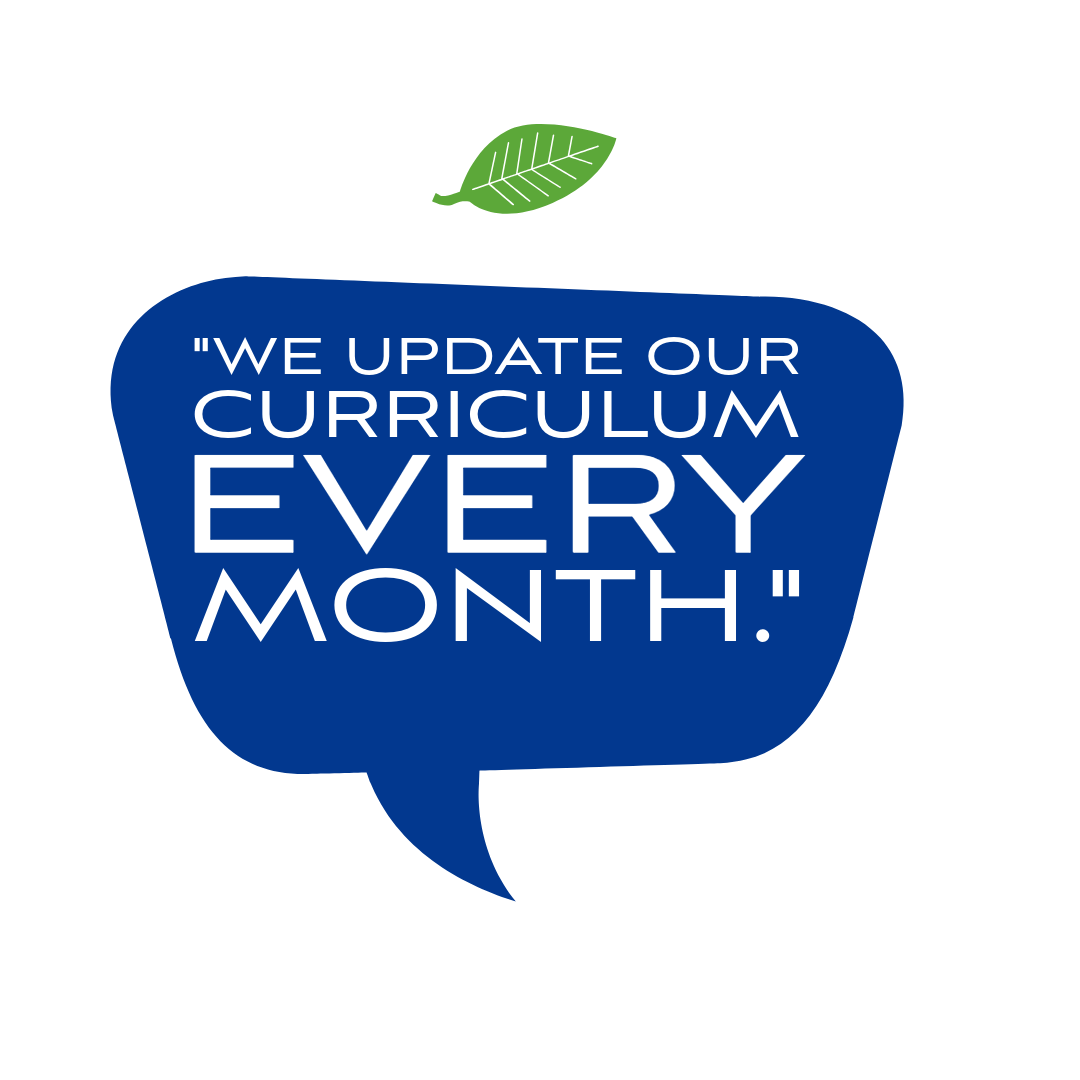
Industry-Relevant Curriculum: The courses are designed in collaboration with industry experts to ensure that the content is up-to-date and aligns with current market demands. This approach increases the employability of graduates by equipping them with skills that employers are actively seeking. They update their curriculum every month with ongoing feedback from recruiters, understanding of the job market and to incorporate new tools and technologies.
Personalized Mentorship and Support: Students receive one-on-one mentorship from professionals in the field, providing guidance, feedback, and support throughout the learning journey. This personalized approach helps in addressing individual learning needs and career aspirations.
Rigorous Assessment and Feedback Mechanisms: Regular assessments, projects, and feedback sessions are integral to the program, ensuring that students are continually improving and are well-prepared for real-world challenges.
Problem: Organizations struggle to keep pace with rapid AI advancements. AI is really Chaotic Technology and upskilling for this needs to done differently – think play, not work.
Hallmarks of a great learning culture for generative AI?
Problem: Organizations struggle with keeping up with the rapid evolution of AI.
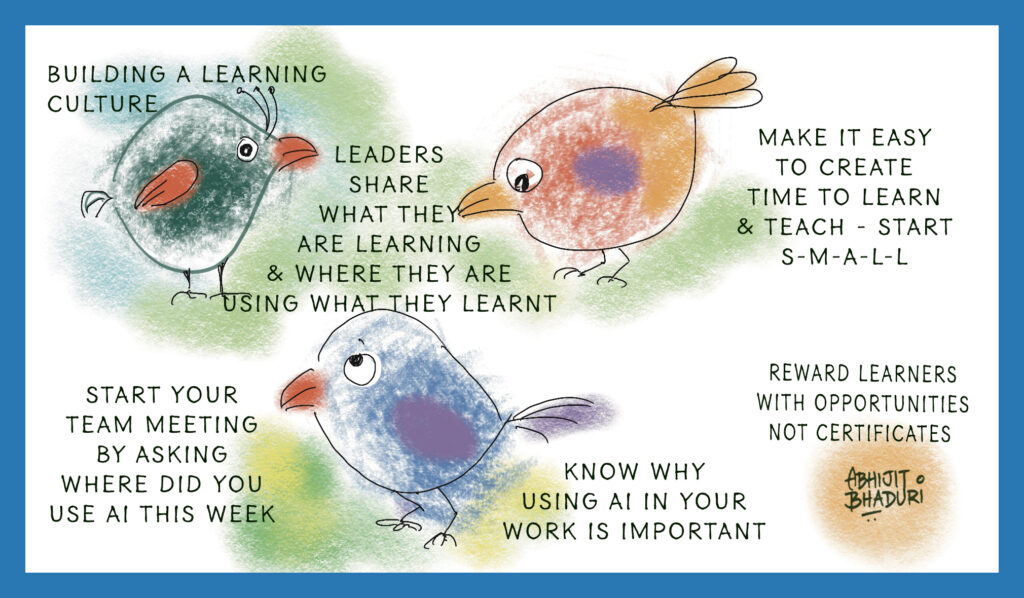
Solution: A great learning culture treats learning as a habit, not an event. What needs to happen:
Embedded in work – Learning should be part of daily workflows, not a separate activity. Example: Google’s “20% time” policy allowed employees to dedicate time to learning and innovation, leading to products like Gmail.
AI-assisted – Use GenAI for personalized learning paths and just-in-time support. Example: Duolingo’s AI-driven personalized learning adapts to user pace and learning style.
Leadership-led – When leaders learn publicly, it signals that learning is expected. Example: Satya Nadella’s “Learn-It-All” mindset transformed Microsoft’s culture.
Experimentation-friendly – Encourage hands-on projects, hackathons, and safe spaces for failure. Example: Amazon’s “Day 1” culture encourages employees to experiment with AI tools and fail fast.
Problem: Leaders don’t know where to start measuring learning readiness.
Solution: Use a 3-question pulse check:
Do employees know why AI matters for their role?
Do employees know why AI matters for their role?
Are they applying AI learning to real business problems?
📌 Pfizer’s AI Readiness Audit helped identify learning gaps before rolling out AI-driven drug discovery tools.
How do you make learning a daily habit?
Problem: Employees don’t prioritize learning because of work pressure.
Solution: Make learning easy and friction free
• Dedicate 1% of work time (24 minutes a week) to structured learning.
AI-powered nudges: Use chatbots to send “learning nudges” relevant to daily tasks.
• Encourage managers to start meetings with a “What AI tool helped you this week?” discussion.
📌 Accenture’s AI Learning Nudges – Employees receive weekly AI use-case examples based on their job role. Walmart’s AI Upskilling Program tailors AI education based on employees’ career stage and function.
Role of the Leaders
Problem: Employees won’t prioritize learning if leadership doesn’t.
Solution:Leaders must learn visibly. Use the Work Out Loud to share your process of learning in real time.
• CEOs and managers should share their own AI learning journeys in town halls.
• Reverse mentoring: Leaders pair with younger employees to learn new AI tools.
📌 Example:Goldman Sachs’ Reverse Mentoring for AI – Senior executives are paired with junior AI specialists to understand AI’s impact firsthand.
The “Win-Win” of Career Growth: It’s Not Just Warm Fuzzies
Hey everyone, ever wonder why some companies just seem to “click”? Well, I recently had a fantastic chat on the Digital Transformation podcast. We dove deep into a fascinating trend highlighted in the LinkedIn Workplace Learning Report 2025: companies that prioritize career development are winning big time. Thanks Priscilla @littlebirdmomma and @littlebirdmktg for Little Bird Marketing for having me on your podcast. #littlebirdmarketing, #digitaltransformation
Think of it like this: a garden thrives when you nurture the plants. Companies thrive when they nurture their people. Employees who see a clear path for growth stick around. They build deep relationships with customers, understand the company’s “secret sauce” (tacit knowledge), and become valuable assets.
From Microsoft to Main Street: It’s a Mindset, Not Just a Budget
You might think only big names like Amazon can afford to invest in career development. But here’s the kicker: it’s more about mindset than money. Even smaller companies like Zillow are nailing it.
Think of your brain. It works best when all the neurons are connected, right? Same goes for organizations. When employees connect with each other and with the world outside, they bring fresh ideas and energy. It’s like a well-connected network, where everyone benefits from shared knowledge.
Imagine this: a client is excited about your product. They’re ready to learn more. But then, the employee they were talking to suddenly leaves. Now, a new person has to start from scratch. Awkward, right?
This “continuity factor” is huge. When you retain talent, you keep that valuable knowledge within your company. It’s like having a team that speaks the same language, understands the nuances, and builds on past successes.
Beyond Competence: The Personality Puzzle
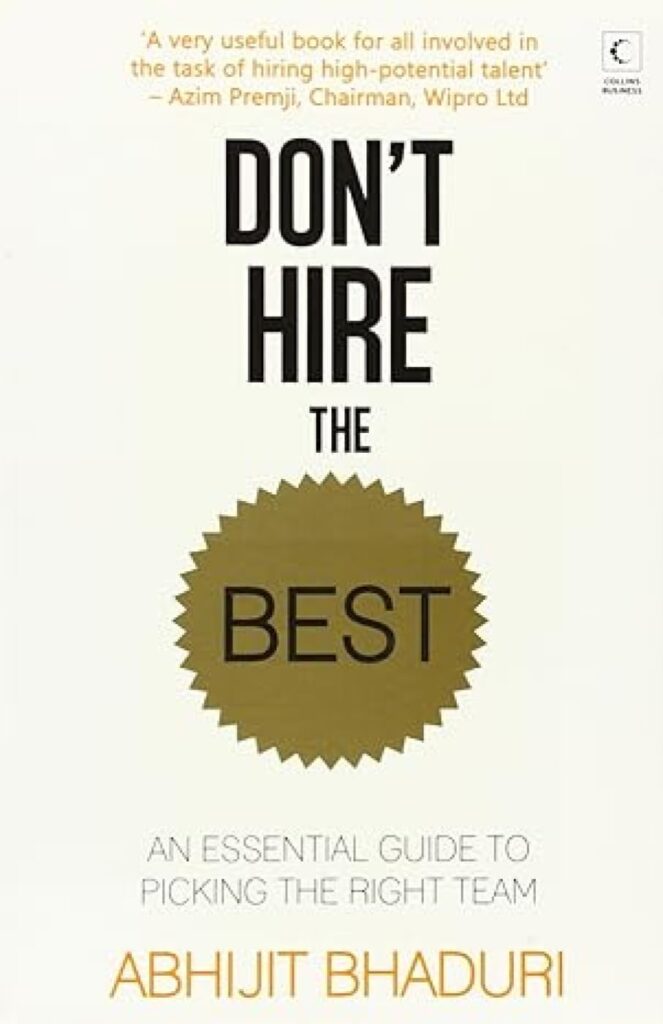
Why hiring the BEST is a bad idea
We often focus on hiring the “best” person for the job. But as you climb the ladder, competence becomes a given. What really matters is personality.
If it was only competence, then most job descriptions for the same position require the same qualifications and experience. Even successful CEOs may not succeed in a new organization.
It’s about finding the right “fit” – someone who not only has the skills but also aligns with your company’s culture.
We often focus on hiring the “best” person for the job. But as you climb the ladder, competence becomes a given. What really matters is personality.
Think of it like this: confidence is great, but overconfidence can be a deal-breaker. It’s about finding the right “fit” – someone who not only has the skills but also aligns with your company’s culture.
Managers as Career Architects: Building Pathways to Success
Managers play a crucial role in career development. It’s not just about performance reviews; it’s about coaching and creating opportunities.
Think of managers as architects, designing pathways for their team members to succeed. They provide feedback, connect people, and help them grow beyond their current roles.
Every Career Needs an Architect
Invest in career development: It’s a win-win for both employees and the company.
Focus on mindset: It’s not just about big budgets; it’s about creating a culture of growth.
Retain talent: Continuity and tacit knowledge are invaluable assets.
A career architect helps you lay the cornerstones, ensuring each phase supports the next, and the final structure reflects your vision. They help you avoid load-bearing walls that lead to dead ends, identifying potential structural weaknesses before they manifest. Like a master builder, they understand the interplay of materials – your skills, experiences, and aspirations – to craft a cohesive design. They guide you in selecting the right materials, avoiding flimsy substitutes that might crack under pressure, and ensuring your career’s framework can withstand the inevitable storms. Just as an architect envisions the finished building within the raw landscape, they help you see the potential within your current situation, mapping out a path to your desired professional horizon.
Have you ever had a manager who played the role of an architect for your career… created a scaffolding that enabled you to grow and scale?
Talking of architects, I recommend that you watch The Mehta Boys I saw it on Prime Video. It is a story about an architect son and the relationship he has with his recently widowed father.
DesignRush.com is a B2B marketplace connecting businesses with agencies through expert reviews and agency ranking lists, awards, knowledge resources, and personalized agency recommendations for vetted projects. They had me as a guest on their show. Here is what we spoke about:
✅ The AI Balance — Why too much reliance on AI can hurt your company culture. ✅ Upskilling for Success — How continuous learning can boost productivity ✅ Overcoming Bias in Leadership — How to attract and retain diverse talent ✅ Creating Career Paths — How to ensure your employees grow within the company ✅ Building a Culture of Innovation — Why side hustles could be the secret to keeping your business adaptable
Leaders Underestimate the Value of Human Connection: Nurturing talent, driving innovation, and building trust are essential for success in the future of work. Psychological Safety, Role Modeling, and Fun: The power of leaders acting as role models for learning and creating a fun and engaging work environment. Side Hustles as Skill Development: Side gigs as valuable opportunities for employees to develop new skills and explore their creativity. These experiences can benefit both the individual and the organization. The Power of “Why” and Transparency: The importance of leaders being transparent about their decisions and actions. He believes that explaining the “why” behind decisions builds trust and fosters a culture of understanding. Human-Centric Approach to Technology: We need a human-centric approach to technology adoption. What it implies is that organizations should prioritize the needs of their employees when implementing new technologies. Diversity as a Business Initiative: Think of diversity as a business initiative that can drive innovation and improve financial performance. Listen to find out why I feel so. Building Local Leadership: Why it is important for global organizations to build local leadership and have a distributed leadership team to foster inclusivity across different cultures and geographies. Consistent Transparency: Consistent transparency as a non-negotiable leadership principle for success in 2025 and beyond. Transparency builds trust and creates a more positive work environment.
Let me pull back the curtain on talent management and reveal the secrets behind those seemingly “successful” companies. Think of it like a magician revealing their tricks – once you see how it’s done, you’ll never look at your career the same way again.
Talent Pyramids: It’s Not Just About the Bricks
Ever wonder how some companies seem to have all the right people in all the right places? It’s not magic, it’s a talent pyramid. Imagine a company’s structure visualized: a broad base of doers, a rising middle of managers, and a pointed top of executives. That’s the basic shape, but the real trick is what’s inside that pyramid.
Shape Shifting: The “ideal” pyramid isn’t always so ideal. Some teams need more leaders, some need more specialists. A savvy company understands this and adjusts the shape to match its goals. They don’t just stack people; they strategically arrange them.
Who’s Who: Inside the pyramid, it’s not just about what people do, but who they are. A company that gets talent management understands that diversity isn’t just a buzzword; it’s a superpower. Different backgrounds, different perspectives – that’s the secret sauce for innovation.
Talent Velocity: The Rhythm of Success
Now, imagine the pyramid isn’t static. People are moving: getting hired, promoted, taking on new roles. This is talent velocity. It’s the pulse of the company.
Fast and Furious (or Slow and Stagnant): Too much movement, and you lose experience. Too little, and people get bored and leave. The trick is finding the right rhythm, the pace that keeps everyone engaged and growing.
The Big Reveal: Why This Matters to You
So, why should you care about all this? Because understanding talent management is like having a secret decoder ring for your career.
Beyond the Job Description: Don’t just look at what a company does, look at how they manage their people. Do they just fill slots, or do they invest in growth? Do they see you as a cog, or as a potential star?
Your Career GPS: Understanding talent pyramids and velocity helps you plot your own course. You can see where you fit in, where you want to go, and how to get there.
It’s a Strategic Lever to Grow the Business
Here’s the real magic trick: some companies treat talent management as an expense, something to be minimized. The smart companies see it as a strategy, a way to build a winning team and dominate the competition. And those are the companies you want to work for. They’re not just buying talent; they’re building it. Now that you know the secrets, you can choose a company that will help you rise in the pyramid. What talent management “tricks” have you noticed companies using (good or bad)?
I spoke to Tonushree Mondal about the terminology of talent management and the mystery behind the whole business of identifying high potential talent. Why is such a hush-hush affair. Is it fair to do this behind close doors if the organization promises to be an equal opportunity employer? Should you tell someone that they are part of The List (of high potentials)
Have you heard of the talent pyramid in India when it comes to tech talent
Is this pyramid accurately explained?
Is it worth spending time on using talent management as a growth lever? What has been your experience? Leave me a comment below.
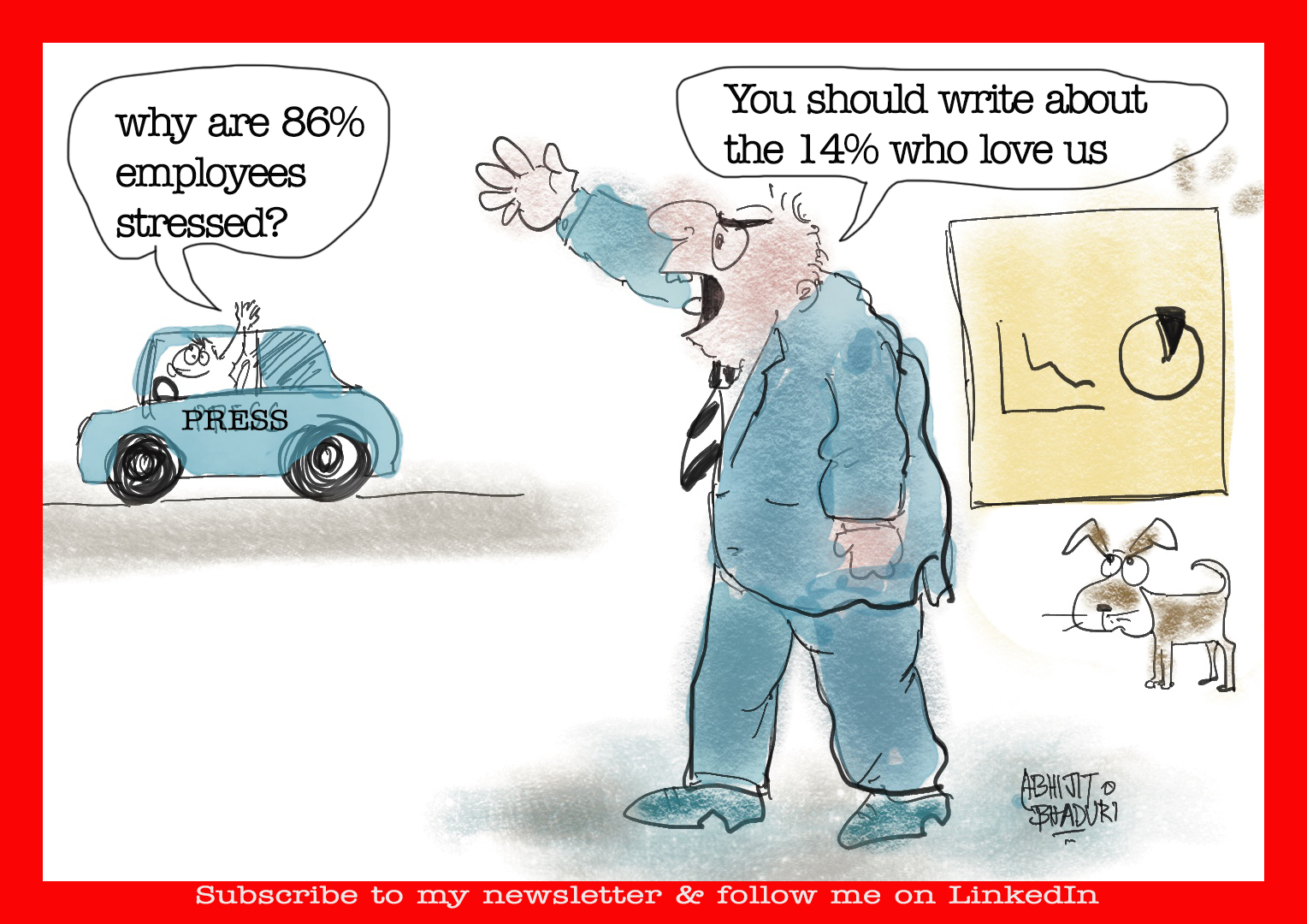
Indian media has a curious habit—it loves putting CEOs and CXOs on a pedestal when talking about workplace issues. These leaders are often seen as the all-knowing sages of corporate wisdom. But what about the middle managers juggling a dozen tasks, the shop floor workers who keep the wheels turning, or the freshers navigating their first jobs?
The Case for Diverse Workplace Narratives
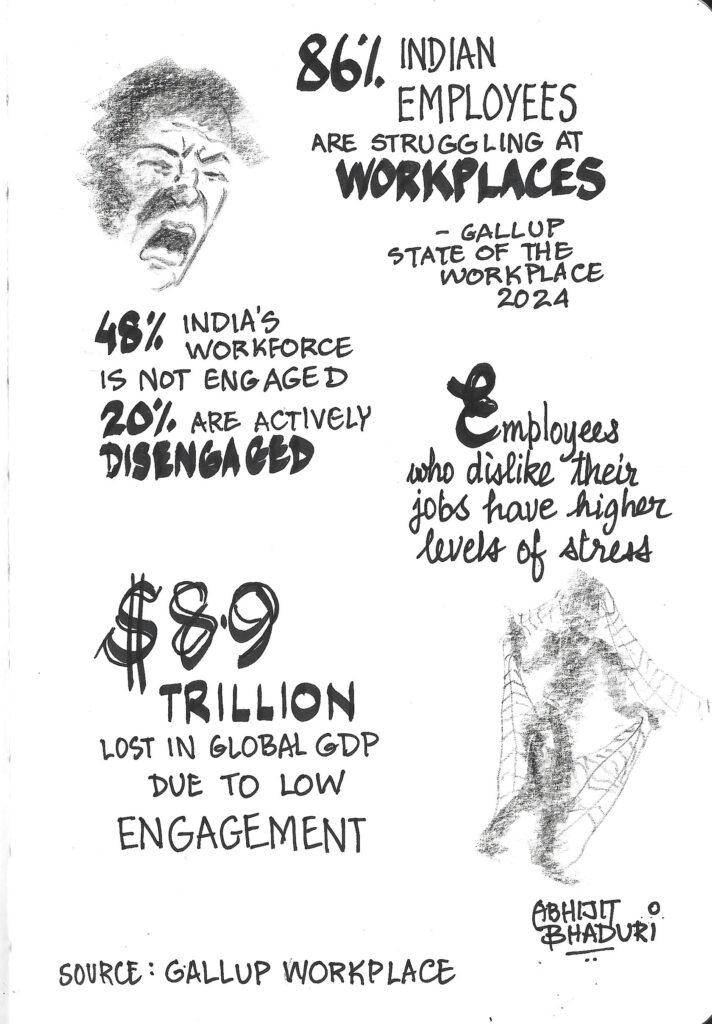
Let’s start with some numbers. A 2024 Gallup report revealed that a staggering 86% of Indian employees are “struggling” or “suffering” at work, while only 14% feel they are “thriving”—a figure well below the global average of 34%. These stats scream for attention, yet most workplace stories focus on boardroom strategies rather than breakroom struggles. Imagine the untapped potential of telling stories that resonate with the majority of India’s workforce instead of just its elite minority.
Take, for example, middle managers—the unsung heroes who act as shock absorbers between demanding bosses and stressed teams. Their challenges, like managing burnout or navigating conflicting expectations, rarely make headlines. Or consider entry-level employees, who often face toxic work cultures and unrealistic expectations in their first jobs. Highlighting these stories could spark meaningful conversations about workplace reform.
Why Include Unheard Voices?
Builds Trust and Credibility: When media outlets focus solely on the perspectives of CEOs and CXOs, they risk appearing out of touch with the realities faced by the majority of the workforce. By including the voices of middle managers, fresh hires, and shop floor workers, media can build trust and credibility with a wider audience. These are the people who experience the daily grind, the challenges, and the triumphs of the workplace firsthand. Their stories are authentic and relatable, fostering a stronger connection with the audience.
Opens New Avenues for Storytelling: The experiences of middle managers, fresh hires, and shop floor workers offer a rich tapestry of untold stories. These narratives can shed light on critical issues such as work-life balance, career progression, workplace culture, and the impact of technology on jobs. By venturing beyond the boardroom, media can uncover unique and compelling stories that resonate with a broader audience and offer a more nuanced understanding of the workplace.
Drives Accountability and Change: When media platforms amplify the voices of those who are directly impacted by workplace policies and practices, they can hold organizations accountable for their actions. By sharing stories of discrimination, unsafe working conditions, or unfair labor practices, media can create public pressure for change. This can lead to improved workplace conditions, better employee待遇, and a more equitable work environment for all.
Reflects the True Diversity of the Workforce: India’s workforce is incredibly diverse, encompassing people of different ages, genders, ethnicities, and socioeconomic backgrounds. By including the voices of middle managers, fresh hires, and shop floor workers, media can better reflect this diversity and provide a platform for marginalized groups to share their experiences. This can help to break down stereotypes, promote inclusivity, and foster a greater understanding of the challenges faced by different segments of the workforce.
Attracts New Audiences and Increases Engagement: By expanding their coverage to include the voices of middle managers, fresh hires, and shop floor workers, media outlets can attract new audiences who feel seen and heard. This can lead to increased readership, viewership, and engagement with the content. When people feel that their stories matter and that their voices are being heard, they are more likely to connect with the media platform and become loyal consumers of its content.
Some ideas
“The Middle Manager Maze”: A series focusing on the unique challenges and triumphs of middle managers in navigating their careers, managing teams, and bridging the gap between middle managers and frontline employees.
“First Day Jitters”: A series documenting the experiences of fresh campus hires as they enter the workforce, exploring their aspirations, anxieties, and the realities of their first jobs.
“Shop Floor Chronicles”: A series highlighting the lives and work of shop floor workers in various industries, showcasing their skills, contributions, and the challenges they face in their daily work.
“Voices of the Unheard”: A series featuring interviews with employees from marginalized communities, sharing their experiences of discrimination, bias, and the fight for equality in the workplace.
“The Future of Work”: A series exploring the impact of technology, automation, and globalization on the Indian workforce, featuring perspectives from employees at all levels on how these changes are affecting their jobs and their future prospects.













Leave a Reply