
The quiet catastrophe of not knowing how to simply be with each other without structure or agenda or what Sheila Liming describes as simply “Hanging Out”. Why it matters in an increasingly lonely and isolated world.
Isolation is a signal of success
A realtor once told me that the most expensive properties promise the same luxury: isolation. “Your neighbor is 40 minutes away!” she said with pride, as if human contact were a design flaw to be engineered out of existence.
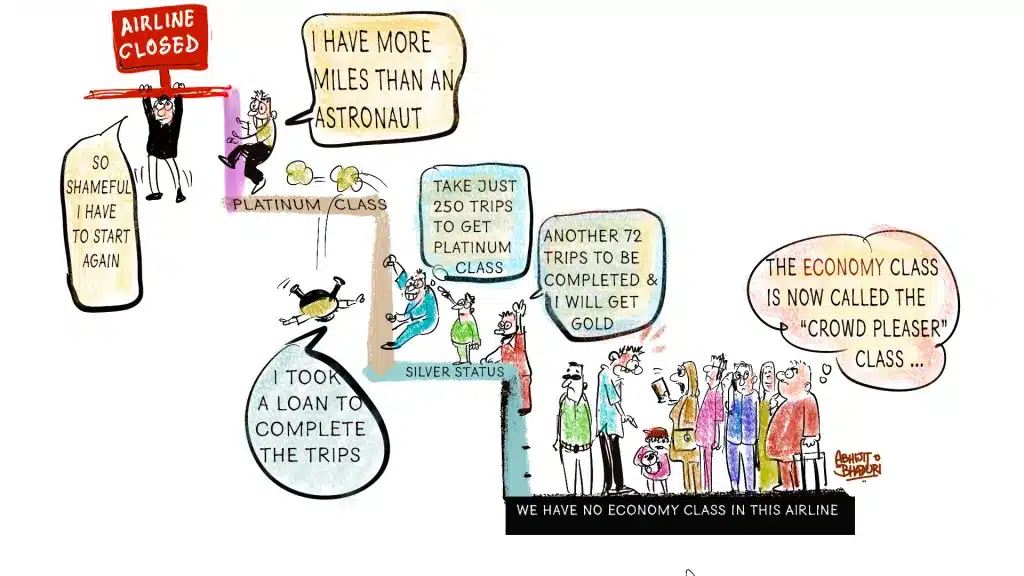
The economy section of an airplane is packed with people; premier economy has fewer seats; business class even fewer; first class the least of all. Wealth, it seems, is always about building exclusivity—and exclusivity means building walls between ourselves and others. If you have flown enough miles, the Airlines lets you board early (and then makes you wait for the lesser mortals to board).
We’ve perfected the art of avoiding each other: AirPods serve as invisible “do not disturb” signs, making strangers into irritants to be bypassed rather than potential connections. No wonder it’s lonely at the top.
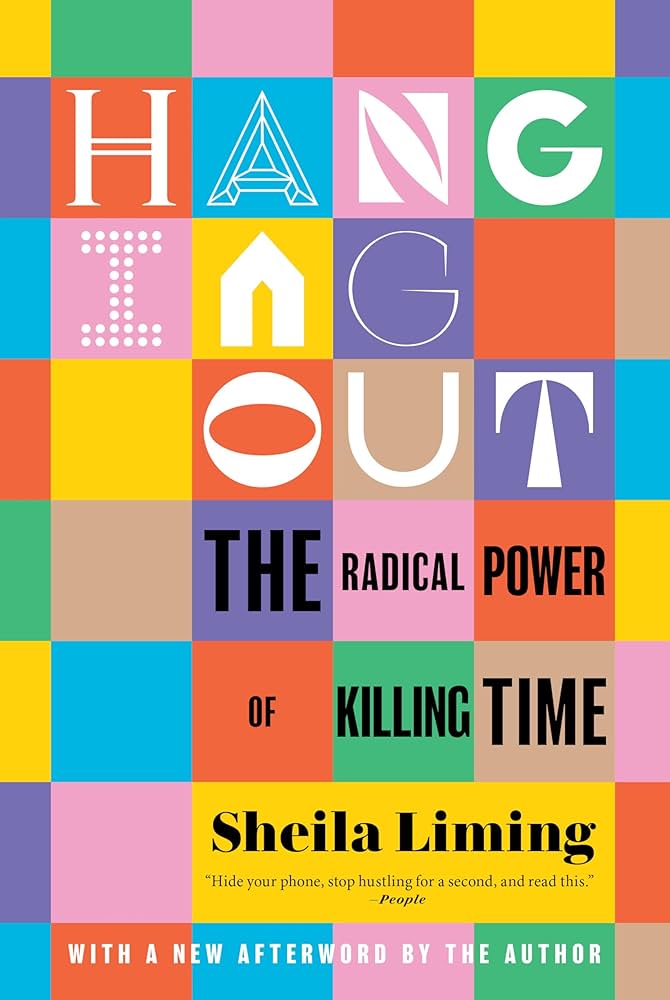
In Hanging Out: The Radical Power of Killing Time, Sheila Liming argues that this isolation isn’t accidental—it’s the result of decades of cultural, economic, and technological forces that have made simply spending unstructured time with others increasingly difficult and even radical. Drawing on personal memoir, cultural criticism, and close readings of everything from Carson McCullers novels to reality TV, Liming makes the case that hanging out—killing time together with no particular agenda—is essential to human flourishing, creativity, and resistance to commodification.
The book’s core insight is deceptively simple: we’ve lost the ability to just be with each other. Social media has made us performative—we’re unhappy with meals that aren’t Instagram-friendly, miserable if we can’t photograph experiences to prove they happened. We’ve brought too much structure to spontaneity. Parties that once emerged organically now require Facebook events and curated aesthetics. Friendships that thrived on long, meandering conversations now struggle to survive the economy of likes and comments. Even our creative pursuits—Liming writes movingly about playing music in bands—have been stripped of their collaborative, improvisational essence by a culture obsessed with polished products over messy processes.
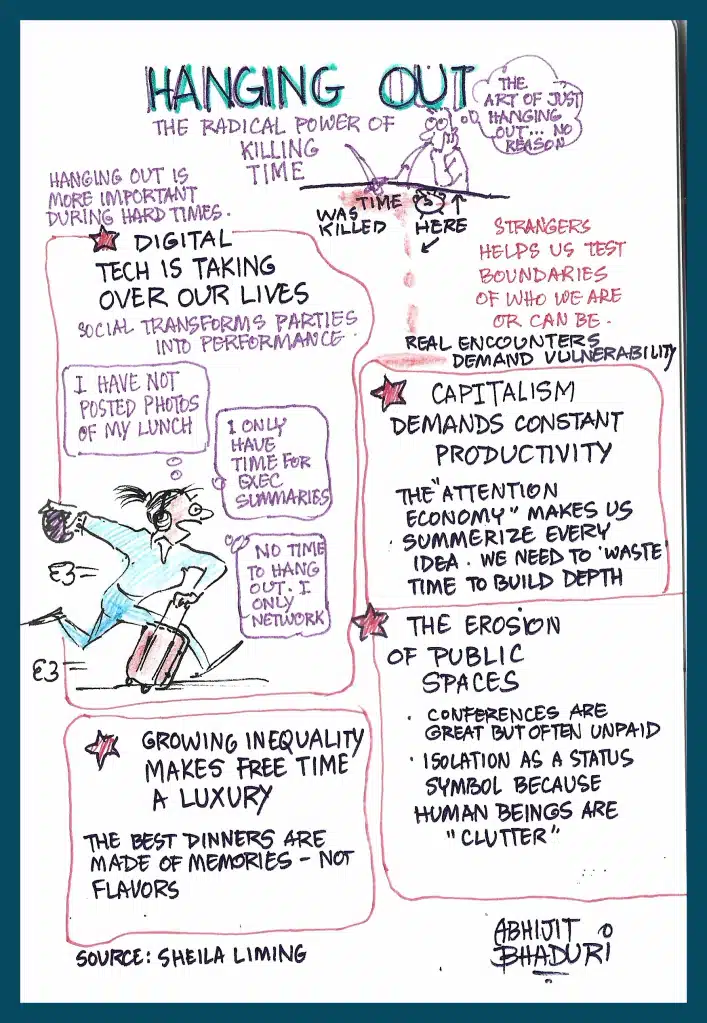
Liming traces this crisis through different contexts: the anxiety of modern parties, the thrill and peril of hanging out with strangers, the collaborative magic of musical jamming, the uncanny fakeness of reality TV friendships, the exhaustion of networking at professional conferences, the class politics of dinner parties, and the shallow simulation of connection offered by the internet. Each chapter reveals how capitalism, technology, and individualism have colonized spaces that once belonged to genuine human connection.
The author offers practical wisdom for reclaiming hanging out:
- Take time(steal it back from work’s endless demands).
- Take risks (chat with strangers at the gym or while traveling; remove your AirPods).
- Take opportunities (improvise with friends; let things be loose and unstructured).
- Take care (of yourself and others, with boundaries when needed).
- Take heart (have faith that practicing connection gets easier).
Who should read this book?
Anyone who feels the ache of modern loneliness. Anyone exhausted by performing their life online. Young people navigating social media’s distortions. Professionals burned out by “networking.” Artists craving collaborative creativity. Parents worried about their children’s isolation. Anyone who suspects that the way we’re living—isolated in our curated shells, performing for algorithms—isn’t working.
This insightful book about contemporary life names something we all feel but rarely discuss: the quiet catastrophe of not knowing how to simply be with each other anymore. Liming’s tone is warm, funny, occasionally tongue-in-cheek, but deadly serious about what’s at stake. The ability to hang out—to waste time together without productivity or purpose—isn’t frivolous. It’s how we stay human.
Read: How to get Platinum Status on an Airline
Someone recommended that I listen to this podcast. That in turn led to the book.