 On 7th March 2003, Broadway musicians went on strike. The League of American Theatres and Producers proposed to reduce the minimum orchestra size requirements from 24-26 to as low as 7 members, with a virtual orchestra filling the gaps. For the next four days, the musicians sat on strike outside the famous theaters of Broadway joined by many well-known actors and performers. The city lost $7million during those four days forcing Mayor Bloomberg to intervene, reduce the minimum number of musicians to 18-19, and hold that number steady for the next ten years.We have all seen the early warning signs of automation and how it could put people out of jobs, but then, nothing has changed in our labor laws. The gig economy is growing to encompass all shades of workers, from blue collars to highly paid professionals in every field. However, the law remains horribly inadequate.
The Gig Economy is HUGE
Artists and entertainers have always been a part of the gig economy. Some of them are lucky, they get commissioned to do a large mural or painting that offers a steady income flow for the duration of the project. But today, the gig economy is embracing people beyond showbiz.
 I live in an apartment complex where several housewives have signed on to an app called Foody Buddy. FoodyBuddy is a platform that aims to connect buyers (Foodies) and home chefs (Buddies) who live around them. Several stay-at-home moms have found a fantastic option to showcase their skills. They have all joined the gig economy.Sudeepa had worked with a telecom giant for years. She has recently been laid off by his company but has started coaching students. She is not making as much as she did when she had a full time job, but she is much happier and has more control over her time.I have been a gig economy worker since October 2016. I enjoy the creative freedom and the ability to choose the projects that I am interested in. I coach leadership teams and work with organizations on their digital transformation. Being a gig worker allows me to do creative things and travel and write.
 There are many shades of gig-economy workers. At the lowest end of the skill pyramid, you have the Uber Drivers or the carpenter who you can fetch through HouseJoy or UrbanClap. LinkedIn is full of white collar gig workers. They range from consultants, lawyers, executive coaches, designers and IT specialists.
Leadership dilemmas of dealing with gig workers
 Have you ever thought about what is common to bus drivers, bank tellers, cashiers, telephone operators, assembly line factory workers, stock traders, soldiers, journalists? Automation in varying degrees is impacting their jobs. From augmenting to elimination, there is a wide spectrum of what automation is doing to jobs that have employed millions of people around the world. Is there anyone who is safe from the march of robots? A job that is super-specialized and done by a handful of people is safe because it is not economical to automate. Jobs that deal with rapidly changing environments are also safe from automation. Being a great leader of people is unlikely to be threatened by automation. But there are dilemmas that leaders are facing as they deal with gig economy workers.
Brand matters
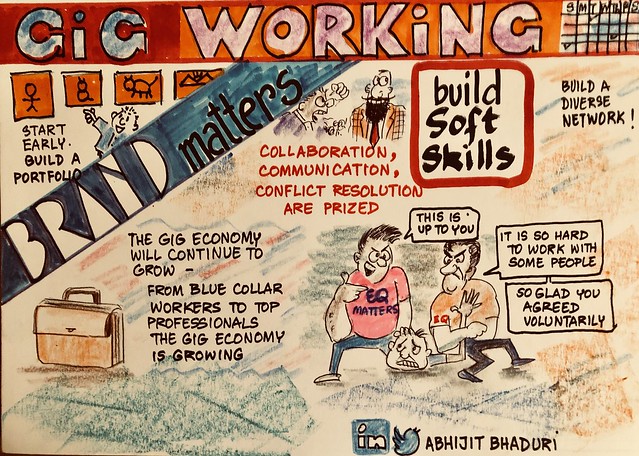
If poaching someone who is already employed elsewhere is tough, it is tougher to find people who are freelancers. The personal brand of the professional matters more and more. Brand building is a painstaking process that takes years of work. Start early. Create a body of work and make it easy for people to find you. Making your brand searchable on social media helps. Leaders must encourage their employees to create strong personal brands without feeling threatened.
Invest in soft skills
Soft skills matter for everyone, but for the gig worker, soft skills can prove to be ‘the’ differentiating factor between one gig and the next big one. Being able to negotiate your terms without putting off the other person matters a lot. Being able to work and collaborate with a cross-section of professionals is a common skill for all successful gig workers.
Open talent economy
Leaders need to be able to work with the open talent economy where the core full-time workers are augmented by the gig economy workers and this includes academics, interns, consultants etc. The leaders have to be talent magnets to be able to get the best of the open-talent pool.
Laws are lagging behind
Gig economy is a one-sided contract. The employers pay for the time the skills used. But staying updated costs time and money since gig-economy workers do not have access to the Learning & Development departments the way regular employees do, nor do they have the opportunity to build pension funds, medical insurance leave alone wealth creation opportunities like ESOPs. This is where the government needs to create laws that govern gig-workers.The gig economy works great if you have a financial cushion built in. Then it is a great way to explore the hidden talents you never knew you had. But being a gig worker is also full of insecurity, loneliness and income volatility. The unorganized blue collar workers have always lived without the safety net regular work provides. As 30-40 percent of the workforce of our country is joining this new world of work, it is time to rethink the labor laws.=========Join me on LinkedIn and Twitter @AbhijitBhaduriThis first appeared in People Matters, March 2018 issue