
AI Changes How We Must Judge Talent
AI automates repeatable tasks, accelerates problem solving for people who ask sharp questions, and shifts value from solo output to systems others can reuse. That means last year’s rating tells you how well someone fit yesterday’s workflow. Potential now shows up as learning speed, ability to transfer ideas across teams, judgment under uncertainty, the skill to orchestrate people plus AI, and the habit of lifting others.
A Simple Definition You Can Use
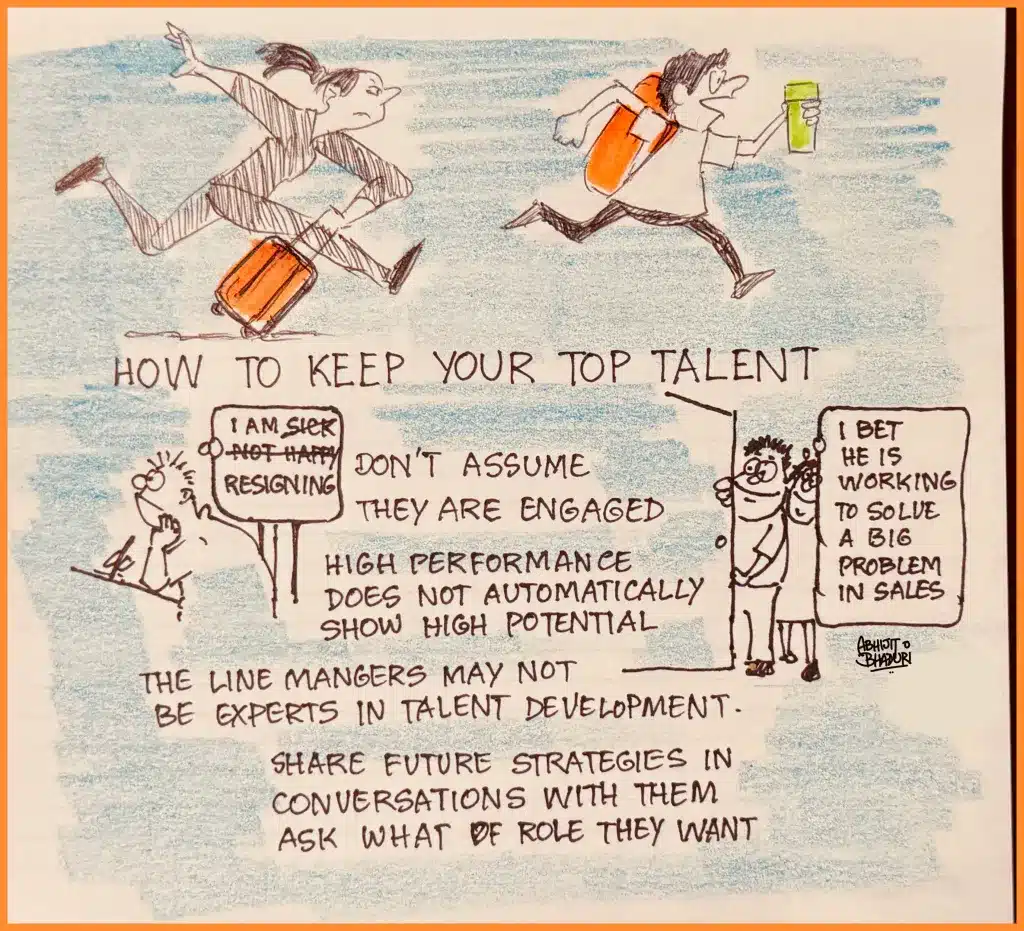
Potential is the capacity to improve quickly and make that improvement contagious. In practice: learning velocity, transfer power, judgment, orchestration, and pro-social influence. Integrity and drive are gates. If either gate is weak, pause the process.
Ronaldo As A Talent Lesson
Cristiano Ronaldo has scored everywhere, but the deeper signal is adaptability. New league, new coach, new tactics — he adjusts his runs, timing, and role so the whole team can use him. That is potential in plain sight: not only finishing, but reading the game, finding space, and raising teammates’ chances.
In companies, your “Ronaldo” is the person who changes how the team plays, not just the person who dazzles in one drill.
The Ten Old Myths And Better Moves
Myth 1: High performance equals high potential
Better move: track improvement after a workflow or tool change. Use time to competence and first two cycles of error trend. Promote when improvement beats team median twice.
Myth 2: Potential is a fixed trait
Better move: make potential buildable. Publish open challenge ladders and fund coaching and compute so more people can qualify.
Myth 3: Keep the HiPo list secret
Better move: share plain criteria and let evidence unlock access. Visibility speeds adoption and reduces perceived bias.
Myth 4: Managers are the best HiPo selectors
Better move: add peer signals and adoption data. Ask what others reused, not just what the manager admired.
Myth 5: Tenure predicts scale
Better move: design cross-function rotations with a before and after metric like cycle time or error rate. Reward transfer, not time served.
Myth 6: Confidence equals competence
Better move: score repeatable results others can run. Count adoptions and error reduction. Do not count swagger.
Myth 7: Leaders are great presenters
Better move: promote leaders who build systems people use. Require a working checklist or playbook behind each “win.”
Myth 8: The best tool user is the future leader
Better move:score problem framing, constraints, guardrails, and rollback plans. Button tricks age fast. Good design lasts.
Myth 9: An algorithm can choose your HiPos
Better move: let models surface signals and keep human reviewers accountable for the call. Store short notes you can explain to employees and the board.
Myth 10: A competitor’s HiPo is automatically your HiPo
Better move: decide after 90 to 180 days of evidence on learning speed, transfer, judgment, orchestration, and team lift. Potential is context bound.
What To Measure This Quarter
Learning speed — how fast after a workflow change.
Transfer power — one cross-team win with a short write-up others can copy.
Judgment — a one-page decision note that names trade-offs and stop rules.
Orchestration — a playbook or checklist with data rules and a rollback plan adopted by another team.
Pro-social influence — adjacent teams improve cycle time or error rate after working with this person.
A One-Page Scorecard That Travels
Rate each area from 1 to 5. Add someone to your HiPo pathway when the weighted average is 4 or higher and at least three areas are 4 or higher for two consecutive reviews. For individual contributors and small teams decide at 90 days. For cross-functional leads decide at 120 to 180 days.
A 30-60-90 Talent Plan You Can Start Now
Day 1 to 30: publish criteria in plain language, run two micro-rotations that cross a boundary, and start a short evidence log on the team wiki.
Day 31 to 60: turn the best pilot into a standard workflow with a risk checklist and rollback plan. Train reviewers on the scorecard.
Day 61 to 90: make the first HiPo decisions under the new rules. Add fairness checks across gender, location, and tenure. Report adoption and rework trends to your leadership team.
How This Reduces Risk And Attrition
Fewer hero projects and more reusable systems mean fewer surprises when people move. Clear pathways and internal moves cut regretted attrition. Decision notes and adoption data make promotion and succession discussions calmer because the evidence is shared.
For CEOs And CHROs In A Hurry
Ask five questions in every review:
- What did this person learn quickly.
- What traveled across teams.
- Which decision did they frame well.
- What system did they build that others use.
- Who got faster or made fewer errors because of them.
If the answers are clear and repeatable, you are looking at potential
Potential is not a highlight reel. It is the ability to change the game when the game itself changes. That is as true in football as it is in finance, sales, product, or operations. If you select for that, your team will still be scoring when the league rules change again.