Day: September 2, 2025

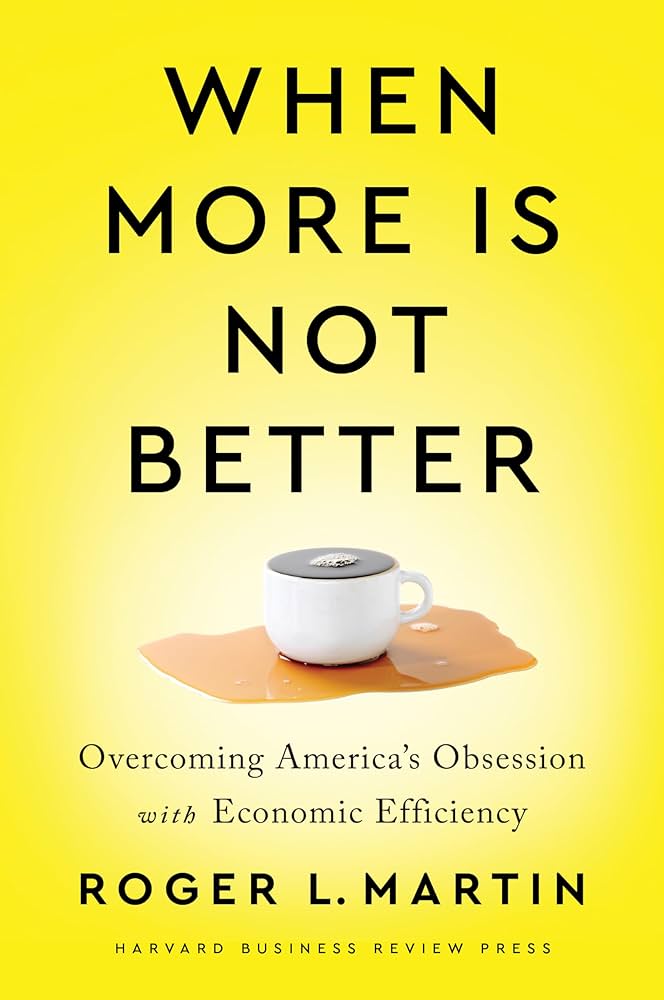
  • Book Review: When More Is Not Better

    Book Review: When More Is Not Better

    when more is not better

    In California’s Central Valley, you’ll find miles upon miles of almond trees—so many that the state now produces more than 80% of the world’s almonds. On the surface, it looks like a triumph of modern farming. Every acre is optimized, every tree planted in straight, orderly rows. Yields are higher than ever.

    But there’s a hidden cost. Almond trees can’t pollinate themselves. They depend on honeybees. And because these orchards are vast monocultures, they offer bees just one type of food, for a few weeks each year. To meet demand, farmers truck in millions of bees every spring, hauling them across states. The bees work intensely for that short window, often under stress from pesticides and the exhausting travel. The result is that bees are dying.

    Monocultures appear efficient in the short term, but they strip away the diversity and slack that make an ecosystem adaptable. What looks like progress is actually fragility in disguise.

    Roger Martin

    Besides one natural disaster could put 80% of the world’s almond production at risk. The challenge of a monoculture is that every little crease of inefficiency is ironed away until it is stiff as an overstarched shirt.

    Hyper-efficiency is like planting only almonds. You may get more output today, but you weaken the resilience and creativity needed to survive tomorrow.

    The Folly of Net Promoter Scores

    I had taken my car for a routine service to the dealer. While handing over the keys at the end of the day the service station manager told me, “We have a small survey we ask all customers to fill up.” She handed over the form and said, “You have an overall rating to choose from 1 to 10. Ten is the highest score and one s the least. Can you please rate us at 10 because less than 10 means I won’t get my bonus.”

    It is not uncommon to see that the sales team gets high NPS scores but the business is stagnant. Yet NPS seems to be the Holy Grail of so many businesses.

    In business, monocultures don’t always look like orchards. Sometimes they look like organizations where everyone is trained to think the same way, chase the same metric, or optimize for the same short-term result.

    Think of a company that runs on one number—say quarterly earnings, or Net Promoter Score. Just like the almond farmer who plants nothing but almonds, leaders narrow their focus to what feels efficient: squeeze costs, maximize output, push everyone toward the same target.

    At first, it works. Earnings look strong. Metrics go up. The rows are neat, the system hums.

    But then, the hidden costs appear. Employees stop experimenting because there’s no room for “inefficient” trial and error. Managers ignore long-term investments in skills because they don’t move the needle this quarter. The company becomes dependent on one “pollinator”—a single star performer, one big client, one hot product line.

    And like the bees in the almond orchards, those pollinators burn out. Innovation dries up. The organization becomes brittle.

    Roger Martin’s book set me thinking about short term thinking that plagues so many organizations. They invest in technical training but shrug away soft skills training. Diversity of thought, slack for experimentation, and investment in soft skills may look inefficient in the short term—but they’re the biodiversity that keeps organizations alive when the climate shifts.

    Want to listen to more ideas before you decide to read the book? Here is Roger Martin at Google talking in detail about the book


    Kid running through the fields
  • Why Your Company Needs a Chief Learning Officer (And How to Know If You’re Ready)

    Why Your Company Needs a Chief Learning Officer (And How to Know If You’re Ready)

    Companies die—quietly, in their sleep. Because skills age like milk, not wine.

    fast asleep

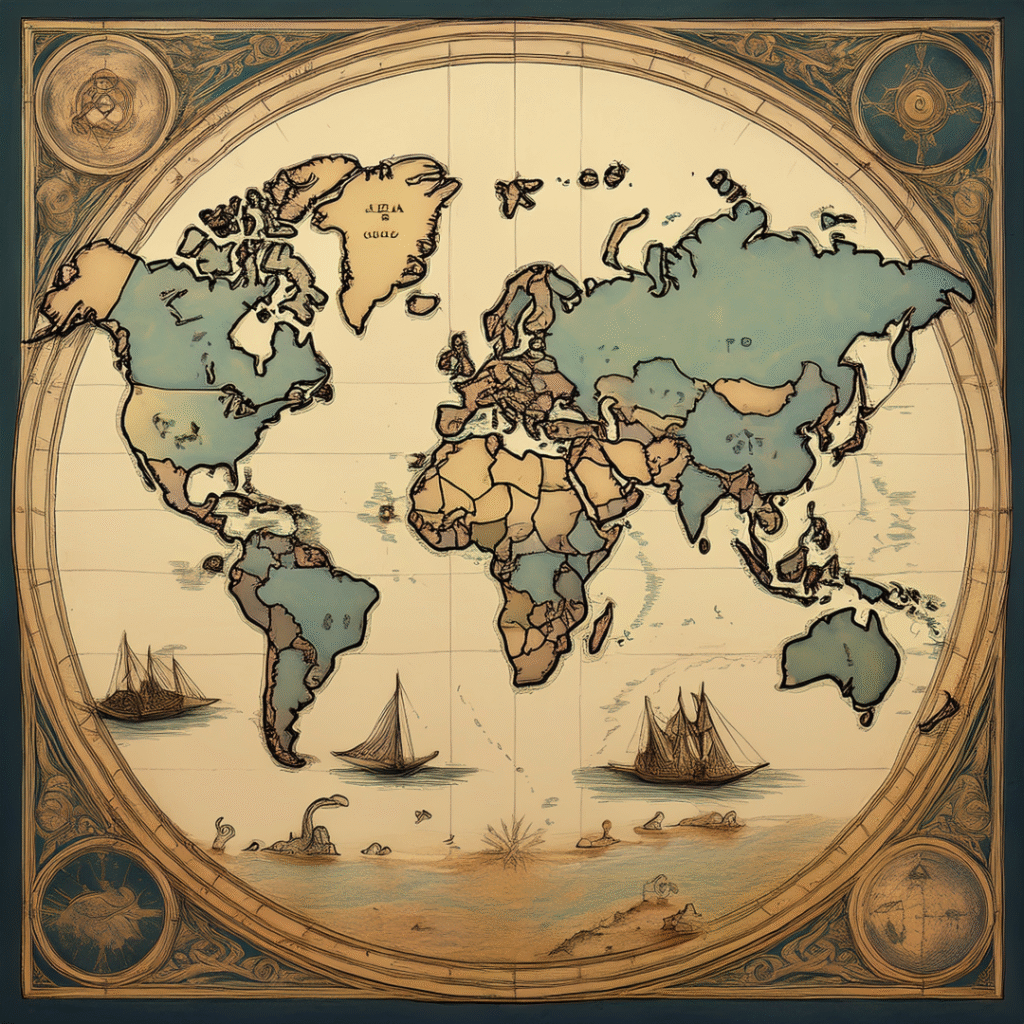
    When medieval European mapmakers encountered blank spaces on their maps – areas they knew existed but had little concrete knowledge about – they would often populate these unknown regions with drawings of fantastical beasts, sea monsters to show the area remained to be explored.

    When organizations encounter territories they don’t understand—whether it’s customer behavior in new markets, the impact of emerging technologies, or the true drivers of employee engagement—they tend to fill these voids with familiar frameworks and conventional wisdom rather than acknowledging uncertainty. This false confidence in imaginary knowledge can be more dangerous than honest ignorance, as it prevents companies from doing the hard work of genuine exploration and discovery that would actually illuminate these unknown territories.

    The most successful organizations learn to resist this impulse, instead marking their knowledge gaps clearly and investing in the patient, systematic exploration needed to map their business terrain accurately.

    The CEO of UpGrad Srikanth Iyengar and I chatted about the skilling strategy for the current times we live in.

    Is Your Learning Function a Map or Just a Compass?

    A Chief Learning Officer (CLO for short) is the map maker who sees the terrain ahead, redraws the map in real time, and helps your people find paths no one else has walked. Training helps you navigate today. A CLO helps you survive tomorrow.

    What World Is Your Learning Strategy Built For?

    The world has shifted under our feet:

    AI is already sitting in your office, making half your workforce wonder if they’ll be relevant next year. The winners will be the ones who teach people to partner with machines, not resist them.

    Your best people are not only hunting for pay raises. They’re hunting for growth. If they don’t see a future inside your company, they’ll make one outside of it.

    And complexity has collapsed the walls between functions. Finance can’t pretend marketing doesn’t exist. Operations can’t ignore technology. It is world where we need multidisciplinary thinkers.

    Your training department wasn’t designed for this world. It was built for a world that no longer exists.

    Why Doesn’t Every Company Have a CLO?

    Some firms are simply too small—for now. If you’ve got 50 people, a C-suite learning role might not make sense. But if you’re planning to scale, put it on the roadmap.

    Some leaders don’t see the difference. They confuse training with transformation. That’s like confusing a bicycle and a motorcycle because both have wheels. The power gap is massive.

    And yes, some leaders get spooked by the price tag. A great CLO costs a lot. But the real cost is invisible: the revenue you miss, the talent you lose, the opportunities that slip through your fingers.

    How Do You Know It’s Time?

    You need a CLO when digital transformation is not just an initiative but a bet-the-company moment. Here are questions my clients have asked me.

    Can’t AI Do This Job Instead?

    AI is a brilliant assistant—it can personalize training, crunch data, and deliver content at scale. But it can’t decide who to develop, which capabilities you’ll need next year, or why those choices matter.

    The CLO can work with a team that can leverage AI. To influence the culture, you need humans. The CLO needs to influence and persuade the CXOs and the rest of the organization. Today we need to build the skills at speed and scale.

    For example using “failure stories” – not case studies of successful sales to build consultative selling skills.

    Consultative selling improves dramatically when people understand the gaps between what they thought they heard and what the client actually needed. These post-mortem conversations—conducted months later when emotions have cooled—reveal the difference between surface-level pain points and deeper systemic issues that salespeople missed during the original process.

    Fractional or Full-Time: Which One’s for You?

    Fractional CLOs are perfect if you’re midsized (500–2,000 employees), in transition, or want C-level thinking without the full-time cost. They build foundations, design roadmaps, and guide pivots.

    Full-time CLOs make sense if you’re large, global, or complex; if the cost of being behind is measured in millions, not thousands; or if you’re in an industry where continuous capability building is survival, not strategy.

    What Makes a CLO Worth It?

    Look for someone who speaks two languages:
    (i) How adults learning science and
    (ii) Using creative learning styles to impact business strategy.
    That means someone who builds experiences, not just buys programs. Someone who can challenge culture and has the vision to reshape it.

    What Does Success Look Like?

    Here are some measures I like

    Cross-functional project success rates and speed – Measure how quickly teams from different departments collaborate effectively on new initiatives.

    Internal mobility vs. external hiring ratios for senior roles – Track what percentage of leadership positions are filled internally versus through external recruiting.

    Recovery time from failed initiatives – Track how quickly teams bounce back from setbacks and apply lessons to new projects.

    What Should You Do Next?

    Ask yourself: is your learning function building competitive advantage or just checking compliance boxes? Are you preparing for tomorrow or clinging to yesterday?

    Then choose. Fractional CLO to build the base. Full-time CLO to drive transformation.

    The future belongs to those who learn faster than the world changes. Everyone else is just waiting to be overtaken.