Day: July 31, 2025

  • Book Review: The Sirens’ Call by Chris Hayes

    Book Review: The Sirens’ Call by Chris Hayes

    The Sirens Call by Chris Hayes

    You know how sirens in mythology lured sailors to their doom with irresistible songs? So how did they escape the temptation of the sirens call? They sealed their ears with wax and tied themselves to the poles on the ship. That is how tough it was for Odysseus, according to mythology. Today’s “sirens” are apps, notifications, ads, and content streams that constantly pull at your attention. Hayes says we’re all Odysseus now—trying not to crash into the rocks, but endlessly tempted.

    Attention isn’t just something you give—it’s something being taken from you, often against your will.
    Attention Is the New Oil

    In the 20th century, oil and labor powered the economy. In the 21st, attention does. Companies aren’t just selling products—they’re competing for your eyes, ears, and scrolling fingers. Your attention is the most valuable and limited resource in the world right now.

    You may think you pay attention to what is important, actually what you pay attention to becomes important. It occpies your mindspace. That in turn shapes the modern economy and politics. So your attention matters to everyone – even me.

    Involuntary vs. Voluntary Attention
    Your brain has two attention modes:

    • Voluntary: When you choose to focus (like reading this).
    • Involuntary: When something grabs you without your permission (like TikTok auto-play or sirens).

    Hayes says most tech is designed to hijack the involuntary kind—because it’s easier and more profitable. You’re not losing focus because you’re weak—it’s because the system is built to steal your focus.

    What we need is human connection – not likes on social media

    Humans need attention like plants need sunlight. Not just likes, but deep recognition—being seen. Social media offers a fake version of that. You might get 1,000 likes and still feel invisible.

    What you really want isn’t likes. It’s to matter—to someone who really knows you.

    We’re surrounded by infinite entertainment, but it often leaves us anxious, empty, or distracted. Hayes compares it to eating junk food—addictive and unsatisfying. The more you consume, the more you crave.

    Infinite scrolling doesn’t fill the void—it creates it.

    Don’t Confuse Fame with Fulfillment

    From TikTokers to Elon Musk, people chase attention hoping it’ll make them feel whole. It doesn’t. The deeper need is recognition: to be known and valued by people who actually know us.

    Fame is attention without intimacy. It’s a loud room where nobody sees the real you.

    Social Media is Like a Slot Machine

    You keep pulling to see what you’ll get next—more likes, more posts, more dopamine. It’s designed to be addictive. You never feel “done.” Hayes calls it the “slot machine model” of attention.

    Your feed is a casino. Don’t let it gamble with your brain.

    Feeling distracted, tired, or restless isn’t a personal failure—it’s a completely reasonable reaction to a world that is designed to overload your brain. You’re not lazy. You’re being exploited.

    This book is a wake-up call to protect your mind like it’s your most valuable asset—because it is. Reclaim your attention, spend it on things that matter, and don’t settle for the illusion of connection when the real thing is still out there.


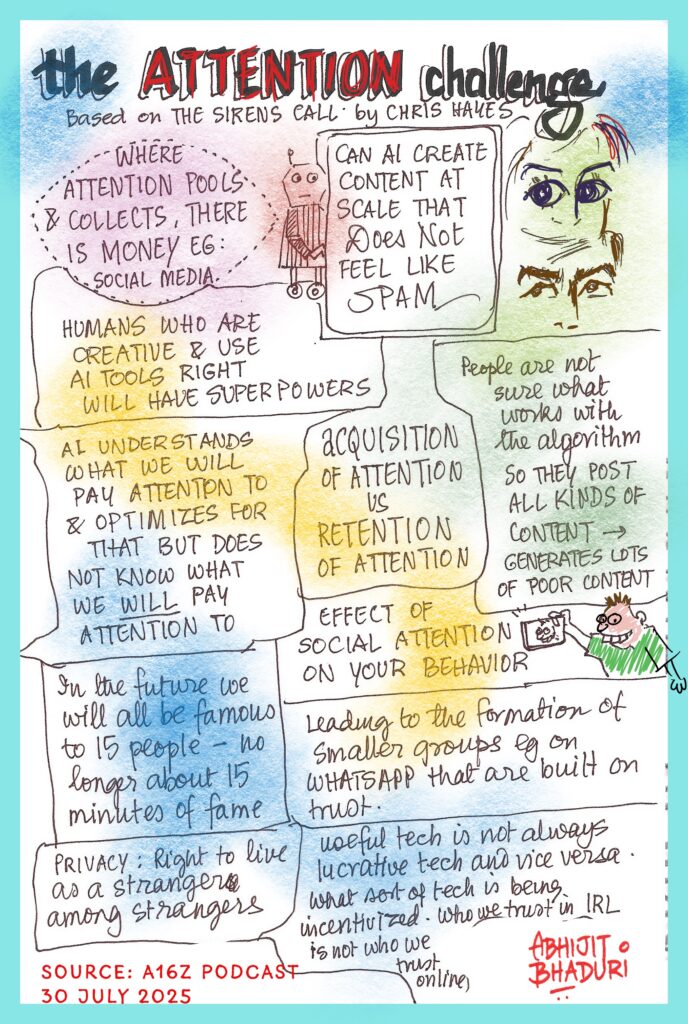
    Here is a chat with Chris Hayes that I enjoyed listening to. Some things you may want to listen for:

    1. Acquiring attention is different from retaining attention
    2. In future we will all be famous for 15 people. So forget about getting 15 minutes of fame. That is old hat.
    3. AI will generate content that gets your attention – much like a siren. For getting content that you want, we will move to smaller groups on platforms like WhatsApp, Telegram etc. You wll be happy to pay for this.

    abhijitbhaduri.substack.com
    abhijitbhaduri.substack.com
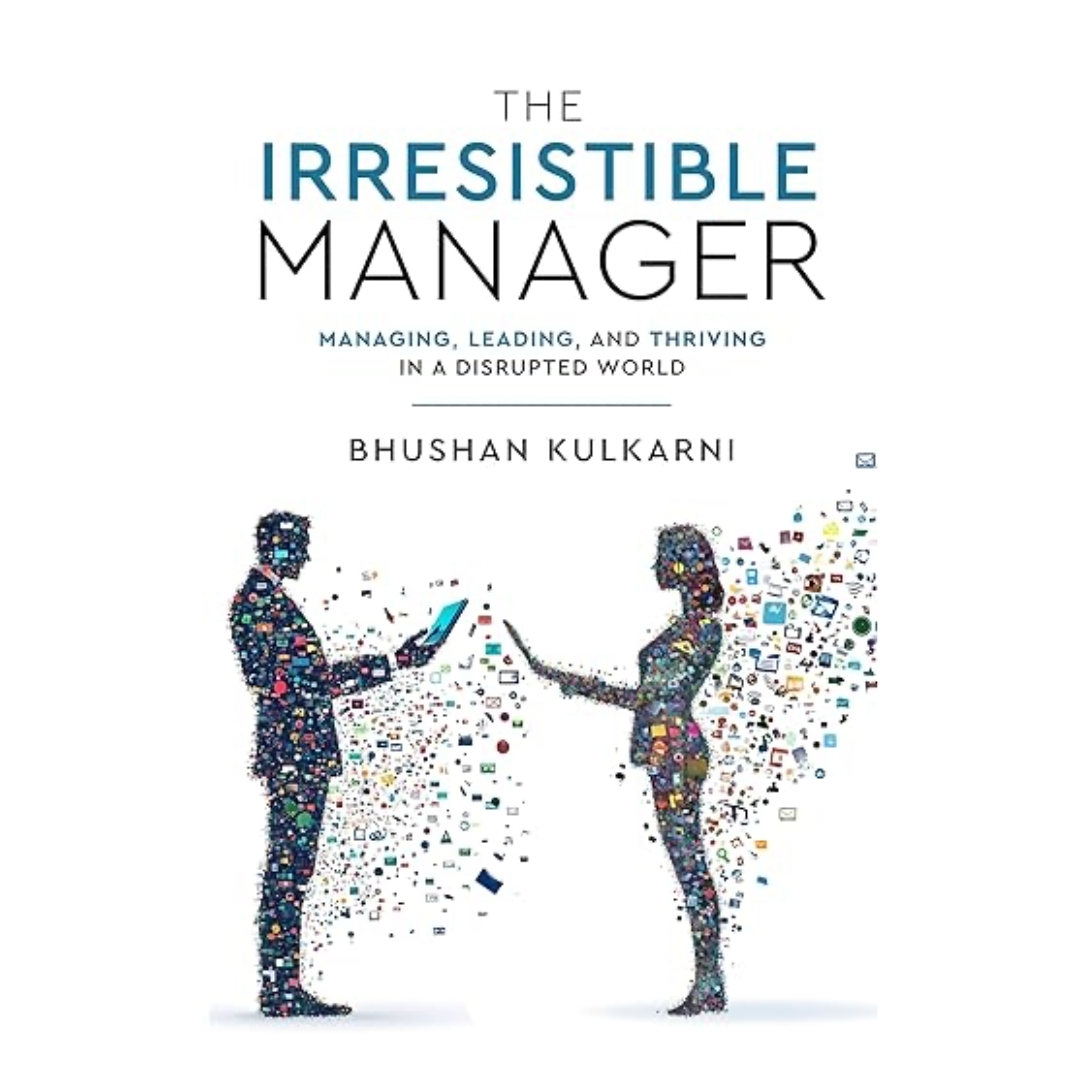
  • Book Review: The Irresistible Manager

    Book Review: The Irresistible Manager

    BVook Review The Irresistible Manager

    Middle Management Is Dead. Long Live the Irresistible Manager

    Bhushan Kulkarni’s book reminds us why the best managers aren’t promoted. They’re followed.

    “My span of control has doubled. I now report to my skip level manager and my influence feels cut in half.”

    A Manager in a Tech Giant

    Managers are being asked to do more—with less support, less clarity, and often, less job security. Big firms are removing layers. Spans are widening. And somewhere along the way, the role that once gave people direction and development is becoming optional. Is that the way forward? Have people managers lost their relevance. That’s what drew me to The Irresistible Manager by Bhushan Kulkarni.

    In 2025, companies across industries are flattening organizational hierarchies—and middle managers are disappearing. Pharmaceutical giant Bayer cut around 40% of its middle management to build self-organizing teams and boost agility.

    Across tech, the “Great Flattening” continues: Microsoft eliminated thousands of roles—including managerial positions—during multiple layoff waves totaling over 15,000 jobs, part of its shift toward AI‑driven efficiency. Tata Consultancy Services announced reductions of 12,200 roles (~2% of its workforce), mostly middle and senior managers, citing a skills mismatch as it reshapes for a digital future.

    These moves may save costs—but they often erode trust and sabotage human leadership. Companies may gain short‑term agility, but they lose proximity, mentorship, and the relational glue that lives in middle layers. What they’re missing is the ability to build and sustain engagement, collaboration, and development—especially when technology does not replace the human need for purpose, clarity, and psychological safety.


    Building trust in an era of layoffs

    The Irresistible Manager by Bhushan Kulkarni is a warm, practical guide for managers navigating flattened orgs, AI disruption, and widening spans of control. Rather than offering superficial tips, the book asks: who do you need to become to lead others in uncertain times? It opens with self-awareness practices before moving into frameworks like the Trust Equation (Empathy + Consistency + Relevance + Reliability + Future Security) and the DIAL model for team growth.

    Bhushan then walks you through smart hiring, intentional onboarding, coaching culture, facilitation skills, and effective agile leadership. He is grounded in India-rooted narratives, yet speaks globally—and weeds out theoretical leadership jargon with real dilemmas. Whether you’re a first-time manager, leading Gen Z teams, or guiding larger squads with leaner resources—this book offers the clarity, resilience, and real-world tools to lead with impact, empathy, and courage.

    Empathy + Consistency + Relevance + Reliability + Future Security builds Trust

    Many decisions about jobs, promotions, or layoffs are increasingly being taken at the top. Managers are the messengers, not the makers of those calls. That breaks trust. People want managers not messengers of the powers that be. That unfortunately is increasingly the case.

    This is where I wish the book had gone even deeper. Because leading in times like these means building trust when you don’t control the outcomes. It’s a harder kind of leadership.

    But the book points us in the right direction:

    • Be honest, even when it’s uncomfortable. People value clarity more than reassurance.
    • Make your team feel seen—even if you can’t make them feel safe.
    • Invest in their growth, not just their deliverables. That’s how people know you’re in their corner.
    • Great Teams Aren’t Just Built. They’re Curated.

    One story I’ll remember is of a manager who hired someone with amazing credentials. On paper, perfect. In practice, a disaster. Not because of performance—but because of fit. The team chemistry changed. Trust declined.

    Bhushan uses that to make a subtle point: skills help people do the job—but values decide if they’ll belong.

    He walks you through better ways to interview, onboard, and build culture—not as a one-off initiative, but as an everyday leadership habit. And if you’re a manager struggling with churn or disconnection, this part alone is worth the read.

    The Old Playbook Is Gone. Time to Write Your Own.

    In the final chapters, Bhushan shifts gears—from manager to futurist. He looks at what AI, Agile, and constant disruption mean for people managers.

    “If AI can do what you do, what will be left is who you are.”

    That, to me, is the heart of the book.

    Management isn’t about having answers. It’s about building trust, helping people grow, and being the steady voice in the noise. That kind of manager won’t be automated. They’ll be remembered.

    Two suggestions for the next edition

    1. Manager Archetypes. Sometimes, self-awareness starts with recognizing ourselves in a mirror. A few personas (e.g., The Hero, The Micromanager, The Ghost) would help readers locate their patterns faster.
    2. Cross-cultural nuance. Many of the insights are rooted in Indian contexts (which I loved). But adding examples from global teams would help managers navigating hybrid, multicultural setups.

    This is not a book you skim between meetings. It’s one you read slowly, with a pen. It’s one you’ll want to revisit on the days you feel unsure, unappreciated, or just plain stuck.

    Because in a world that’s cutting middle management, this book reminds us:

    What people still crave isn’t a boss.

    It’s someone who sees them, grows them, and helps them matter.

    One more thing

    If you’re reading this and wondering whether you’re doing this whole leadership thing “right”—you probably care more than most. That’s a great start.

    So here are three questions I’d invite you to sit with (inspired by the book and my own experience):

    1. Do my people trust me even when things go wrong?
    2. When was the last time I helped someone grow, not just deliver?
    3. What kind of leader would I want to work for right now?

    You don’t have to have all the answers. But if you’re asking these kinds of questions, you’re already becoming the kind of manager we need more of.