Day: May 18, 2025

  • The Hidden Cost of Gen AI at Work: Losing Motivation

    The Hidden Cost of Gen AI at Work: Losing Motivation

    Gen AI Can Boost Your Game—But Don’t Let It Steal the Joy of Playing
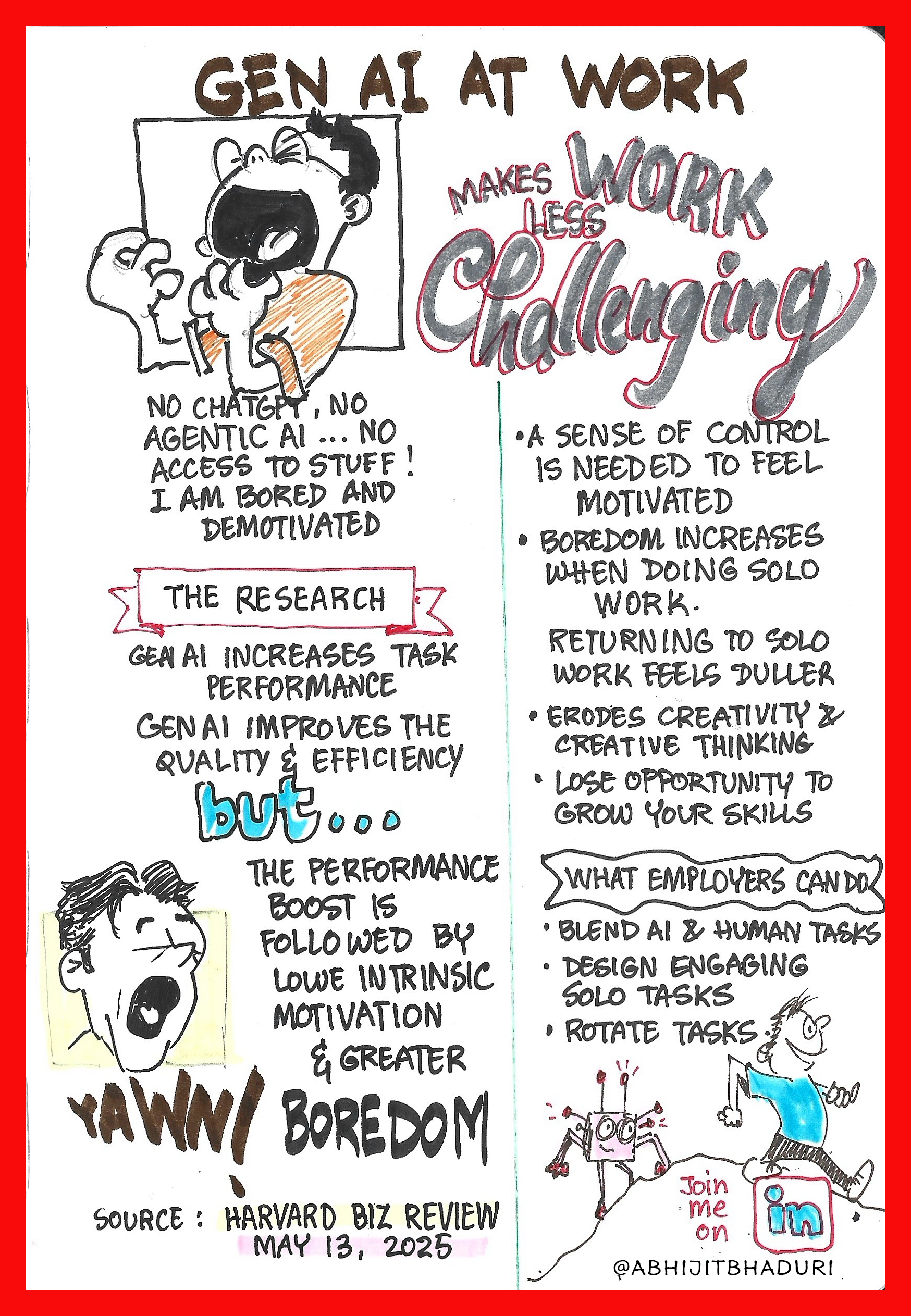
    Sketchnote_Gen AI Improves Productivity and Lowers Intrinsic Motivation

    Read the research published in Harvard Business Review – dt May 15-2025


    Think of a tennis player with a world-class coach whispering strategies through an earpiece. The player performs better, anticipates the opponent’s next move, and wins more games. But now imagine that same player being asked to switch off the earpiece and play solo. Suddenly, the silence feels louder than before. That’s what’s starting to happen at work—with Gen AI.

    We’ve entered a new era where Generative AI is the co-pilot for everything—from writing emails and brainstorming ideas to drafting performance reviews. It’s faster. It’s sharper. And it often sounds better than what we might write ourselves.

    But here’s the catch.

    When we return to tasks that don’t involve AI, they can feel flat, even boring. In a study involving more than 3,500 professionals, researchers found that people who used Gen AI for one task reported feeling less motivated and more bored when switching to the next task without AI. It’s a bit like watching a Christopher Nolan film and then being asked to sit through a PowerPoint presentation. The contrast is jarring.

    The science behind this is simple.

    When AI takes over the most mentally stimulating parts of a task—like thinking, creating, refining—we lose some of the satisfaction that comes from solving a problem ourselves. We become spectators in a game we used to play.

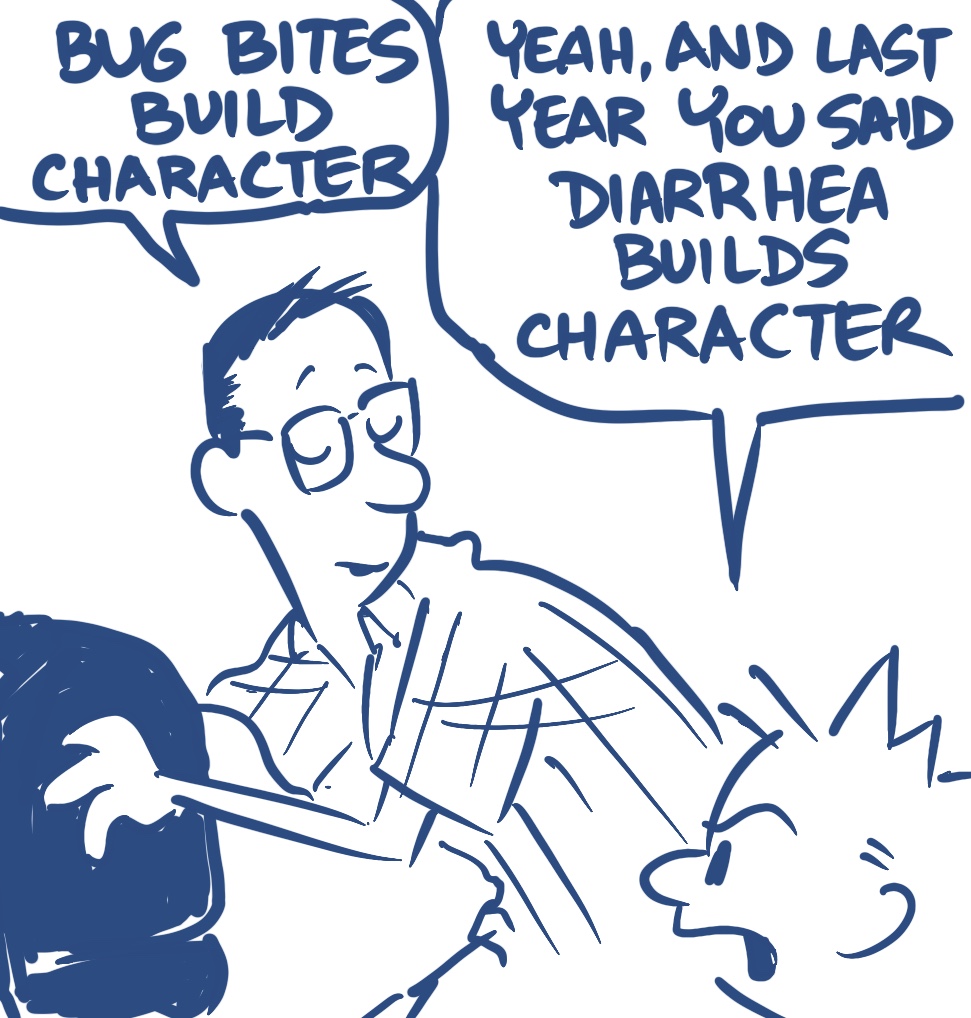
    Struggling and wrestling is actually part of what engages us in a task. Strange but true. Calvin’s dad had said, “struggle builds character”. Don’t laugh. It turns out that if you are not struggling just a bit at work, or struggling a bit as you try to learn something, you lose motivation. Stuggle builds character AND keeps you motivated !
    Here are five ways to make AI your teammate, not your replacement:

    1. Use AI to warm up, not play the whole match. Let AI help you draft the first version of a document or brainstorm ideas—but do the final pass yourself. That’s where your experience, your voice, and your insights shine through.
    2. Design your day like a training regimen. Start your day with creative solo work—like solving a problem, designing a pitch, or making a decision. Use AI later in the day for more structured or repetitive tasks. This preserves your mental energy and keeps you engaged.
    3. Be transparent about the collaboration. People feel more ownership when they know their input matters. If you’re managing teams, make it clear how AI supports—not replaces—their thinking. In cinema terms, AI is the editor, not the director.
    4. Switch tasks like a good playlist. Mix AI-assisted work with tasks that require human creativity and judgment. Think of it like alternating action scenes with moments of dialogue. You keep the energy up without burning out.
    5. Invest in your own thinking muscles. Use AI as a partner to sharpen—not soften—your skills. Just like a chess grandmaster uses practice games to prepare for the real match, treat Gen AI as practice—not the final performance.

    Gen AI is a powerful tool. But the magic of work comes from what you bring to it—your questions, your quirks, your connections.

    We don’t go to the movies just to see special effects. We go to feel something real.

    Let’s make sure the future of work feels just as human.

  • The One Habit that Will Keep You Relevant — No Matter Your Age

    The One Habit that Will Keep You Relevant — No Matter Your Age


    Multigenerational Workforce

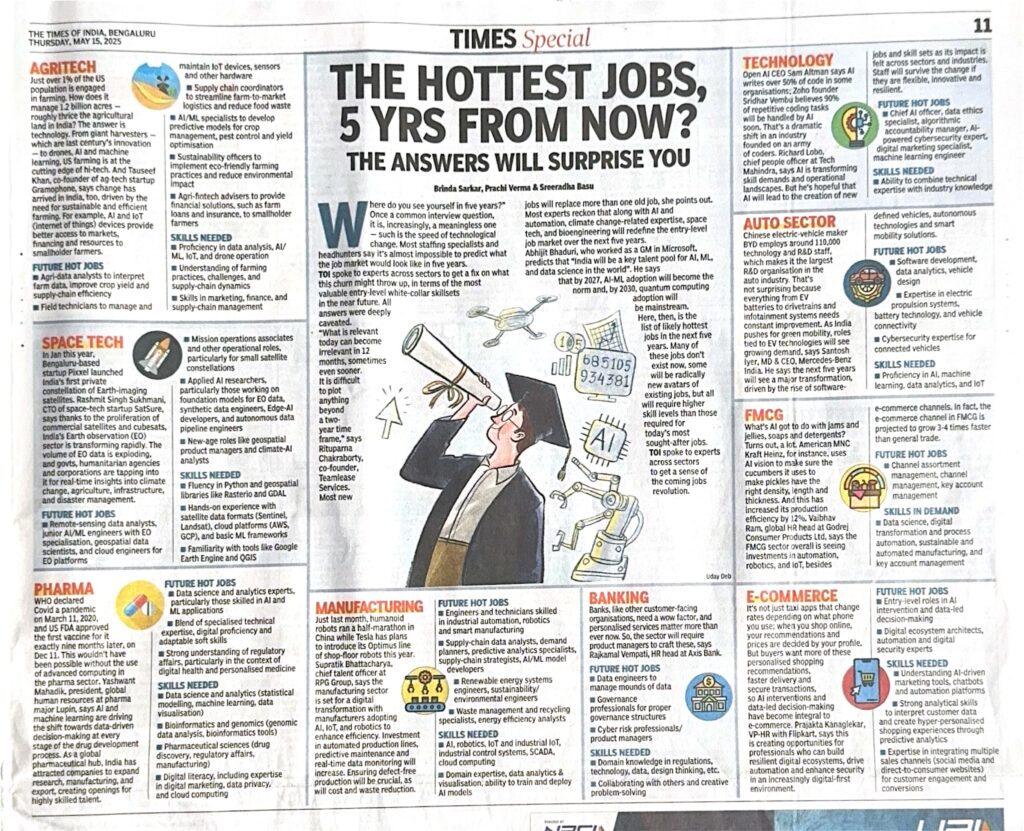
    Where do you see yourself five years from now?

    It’s a confronting question. Especially in a world where AI writes emails, robots manage warehouses, and quantum computing is just around the corner.

    But there’s good news too. As I said in the recent Times of India feature on the jobs of the future. This was also carried by The Economic Times

    “This shift will demand multi-skilled professionals who are not just domain experts, but can move across AI, ML, quantum computing, and more. By 2030, quantum computing and AI will be common requirements across most sectors.”
    Read more

    Here’s the truth no one tells you: The future doesn’t belong to the young or the tech-savvy. It belongs to the curious, the connected, and the cross-functional.

    If you want to thrive, there are three things you must start doing today:

    1. Learn the tech—not as a coder, but as a translator.
    2. Track how your domain is shifting—because every industry is quietly reinventing itself.
    3. Build a circle of friends across generations and sectors—because learning travels fastest through conversation.

    Let’s break it down by life stage. Because the future looks different depending on where you’re standing.


    If you’re in your 20s: Build a Foundation of Range

    This is your time to explore—before career silos trap you.

    1. Learn the tech:

    Don’t start with Python. Start with understanding how AI is being used in your field—whether it’s fashion, sports, agriculture, or finance. Platforms like Coursera, edX, and even YouTube channels like Two Minute Papers can give you the big picture.

    2. Understand the domain shift:

    Subscribe to newsletters in your field. Look at how automation, climate risk, or digital platforms are rewriting the rules. Start noticing the patterns.

    3. Build your circle across disciplines:

    Volunteer for a cross-functional project. Attend meetups outside your industry. Ask your parents’ friends what’s changing in their world of work. Be the dot that connects dots.


    If you’re in your 40s: Midlife Is Not a Crisis—It’s a Catalyst

    You’ve got two decades of experience. That’s your raw material for reinvention.

    1. Learn the tech:

    You don’t need to be a techie, but you do need tech empathy. Try tools like ChatGPT to draft your strategy, DALL·E to storyboard ideas, or Tableau to visualize your data.

    2. Track the domain shift:

    Most industries are being reshaped by regulation, sustainability, and consumer behavior. Set up Google Alerts, follow regulators, and listen to podcasts from disruptors in your sector.

    3. Make cross-generational friends:

    Mentor someone in their 20s. Ask them how they work, what they’re learning, what tools they use. In exchange, share your hard-earned context. It’s not reverse mentorship—it’s reciprocal wisdom.


    If you’re in your 50s: Your Experience Is a Platform—Use It

    Don’t aim to “stay in the game.” Aim to change the game.

    1. Learn the tech:

    Use AI tools to extend your influence. Automate your admin. Test new ideas faster. You don’t need to master the tech—just master its application.

    2. Reframe your domain knowledge:

    Your sector may be shifting to a platform model, circular economy, or AI-first operations. Can you teach it? Write about it? Advise others on it?

    3. Build bridges across sectors:

    Join a peer network, speak at a college, or contribute to a cross-industry panel. Seek out people outside your usual circles—young founders, gig workers, policy thinkers. Every conversation is a mirror and a map.


    The Big Idea: The Future Will Belong to the Bridge-Builders

    The most in-demand roles in 2030—from ethics officers in tech to climate economists in banking—will go to those who can speak multiple languages: tech, people, context, and change.

    You don’t need to be the expert in everything. You just need to be the connector.

    Start small. Pick one new tool to learn. One person outside your domain to talk to. One shift in your industry to explore.

    In five years, you won’t just be relevant.

    You’ll be ready