Day: May 15, 2025

  • With Varun Satia, CEO of Kraftshala

    With Varun Satia, CEO of Kraftshala

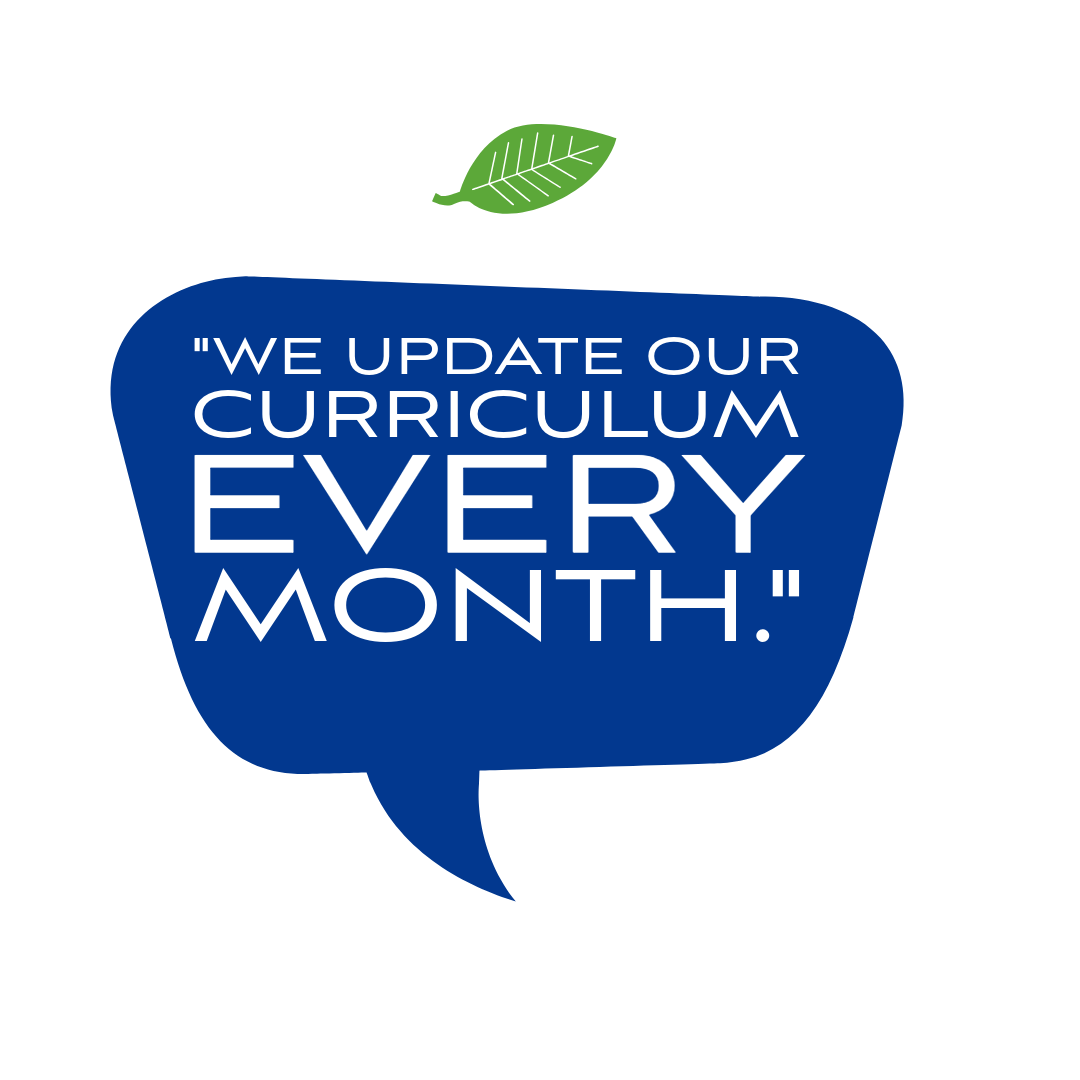
    Speech bubble image with a quote: "We update our curriculum every month." featuring a green leaf above. With Varun Satia, CEO of Kraftshala.

    Kraftshala is a fascinating job-linked platform for marketing and sales education! Here are five jaw-dropping facts about it:

    It is backed by top investors – Kraftshala has attracted investment from Nandu Nandkishore (Former Head of Asia, Oceania & Africa at Nestlé & Global CEO for Nestlé Nutrition) Pallav Jain & Sarfaraz Khimani (ex-Performics India), Phanindra Sama (RedBus) and Amit Kumar Agarwal (NoBroker).

    INDUSTRYCreds™ Certification – Kraftshala’s programs offer an INDUSTRYCreds™ certification, which is becoming a benchmark for hiring marketing and sales talent in India. Many top consumer companies, including Unilever, P&G, Nestlé, and Yum! Brands, recognize its value.

    94% Placement Rate – Kraftshala boasts a  94% placement rate, meaning that nearly all students and professionals who take their courses highly recommend them.

    Founded by Industry Experts – The company was founded in 2016 by Varun Satia (ex-Nestlé, ex-FMS) and Eshu Sharma (ex-HUL, ex-FMS), who saw a gap in practical marketing education and built Kraftshala to bridge it.

    Strong Placement Record – Kraftshala has successfully placed over 2200 students  in jobs with salaries starting from  4.5 LPA and going up to 9.2 LPA from it’s Marketing Launchpad Program. Its latest addition, the PGP in Sales, Marketing & Business Leadership, has delivered impressive outcomes with an average CTC of 10.3 LPA and the highest package reaching ₹17.5 LPA.

    I spoke to Varun Satia recently about his philosophy, operating model and more.

    Strong Industry Connections: Kraftshala leverages its network of industry partners to facilitate job placements, internships, and live projects, giving students practical exposure and increasing their chances of securing employment.

    Placement Accountability with Refund Policy: Kraftshala offers a unique proposition where students are assured of job placements post-course completion. If a student doesn’t secure a job within a stipulated timeframe above a certain CTC, after meeting all course requirements, Kraftshala promises a 60% refund emphasizing their confidence in the program’s effectiveness.

    Industry-Relevant Curriculum: The courses are designed in collaboration with industry experts to ensure that the content is up-to-date and aligns with current market demands. This approach increases the employability of graduates by equipping them with skills that employers are actively seeking. They update their curriculum every month with ongoing feedback from recruiters, understanding of the job market and to incorporate new tools and technologies. 

    Personalized Mentorship and Support: Students receive one-on-one mentorship from professionals in the field, providing guidance, feedback, and support throughout the learning journey. This personalized approach helps in addressing individual learning needs and career aspirations.

    Rigorous Assessment and Feedback Mechanisms: Regular assessments, projects, and feedback sessions are integral to the program, ensuring that students are continually improving and are well-prepared for real-world challenges.
    Speech bubble image with a quote: "We update our curriculum every month." featuring a green leaf above. With Varun Satia, CEO of Kraftshala.
  • Algorithms and Empathy Combine to Create Digital People Officers

    Algorithms and Empathy Combine to Create Digital People Officers

    You probably heard about Moderna as one of the first to develop a mRNA-based Covid-19 vaccines. Founded in 2010 Moderna focuses on using messenger RNA technology to create transformative medicines. They merged HR and Tech teams

    Human plus Algorithm

    Why Did Moderna Merge Tech and HR Departments

    Read the story in Wall Street Journal <click this>

    1. AI-Driven Workforce Transformation Moderna’s merger of tech and HR functions is a response to the sweeping influence of AI on workforce planning. The company is optimizing what work gets done by humans vs. what can be automated using AI (notably GPT-powered systems). The partnership with OpenAI signals a strategic shift: automation is no longer just an operational efficiency play—it is reshaping the core architecture of how roles, skills, and people are managed.
    2. Strategic Integration, Not Just Efficiency Tracey Franklin’s appointment as Chief People and Digital Technology Officer reflects a structural integration of talent and technology—a rare move that aligns workforce design with digital evolution. It’s a bet on hybrid leadership: combining behavioral insight (HR) with technological foresight (IT).
    3. Operational Complexity and Speed Moderna’s explosive growth—from 830 to over 5,000 employees in just five years—created the need for scalable, AI-enabled people systems. During Covid-19, HR had to accelerate hiring under intense pressure. Now, AI offers a way to sustain that pace without chaos—via “digital agents” that answer employee queries, optimize roles, and route people decisions to specialized GPTs.
    4. Reimagining Role Design Roles are no longer being designed strictly by traditional job descriptions. They are co-created by understanding what humans should do, what machines can do, and what needs to be done. That thinking allows for AI to take over junior analyst tasks, freeing up humans for higher-order work.


    Implications for the Industry

    1. Collapse of Traditional Silos The blending of HR and tech reflects the collapse of organizational silos. Functional boundaries—between CHROs and CIOs—are dissolving, and the new leaders must span talent, tech, and transformation.
    2. Rise of “Digital People Officers” This move signals a shift in what CHROs need to become: fluent in data, design, and digital tools. The HR leader of the future is no longer just a steward of culture or policy—but a builder of digital operating models for human capital.
    3. Restructuring at Scale AI-driven restructuring is now a strategic lever, not a reactive cost-cutting move. The elimination of 10% of tech roles shows how AI is not only creating efficiencies but also triggering redefinition of entire job families.

    Second-Order Effects

    1. Ethics and Accountability Drift As GPTs handle sensitive tasks—like performance management or equity reviews—organizations must ask: Who is accountable for bias, misjudgment, or fairness? If a digital agent routes a performance issue wrongly, does HR own it? Does tech? Or the algorithm?
    2. Talent Identity Crisis Employees may struggle with the meaning of their roles if decisions, communication, and even development advice are delegated to AI. The risk is emotional disengagement or a decline in perceived autonomy.
    3. New Skills Demand HR professionals must now master AI interfaces, workflow automation, and data synthesis. Tech teams, in turn, need empathy, ethics, and an understanding of human behavior. This creates a dual upskilling pressure.
    4. Redesign of the Employee Experience Employee service models are shifting from HR helpdesks to GPT-powered portals. The human-to-human touch risks being lost—unless consciously redesigned with empathy and trust in mind.

    Should This Become the Norm?

    Yes—with Caution.

    This model works when:

    • There is a strong strategic partnership between HR and tech
    • AI is used not just for automation, but for augmentation
    • The culture can support continuous redesign, not just efficiency

    But this should not become a default template for all organizations. In labor-intensive industries, small firms, or deeply relational workplaces (e.g., education, elder care), this merger may create cultural fragmentation or reduce psychological safety.

    Should Others Follow?

    Yes—but not blindly.

    This convergence model works when:

    • AI is mature enough to handle back-end automation
    • The leadership has a systems-thinking mindset
    • The culture values coherence over control

    It may not be ideal in:

    • Labor-intensive sectors with deep specialization (e.g., hospitals, legal firms)
    • Cultures that prize hierarchy and clear roles
    • Organizations with weak digital maturity

    But for high-growth, innovation-led companies, this fusion of HR, Tech, and Marketing could become the new operating model.


    The Bigger Picture: Designing the Org as a System

    What Moderna has done is not just restructure—it has re-coded the organization. Departments are no longer fortresses. They are capabilities that fluidly connect, powered by AI, governed by ethics, and animated by human creativity.

    The future is not about hiring for roles. It’s about assembling multidisciplinary teams around problems—and giving them the tools to evolve in real time. My prediction: In the medium term expect to see Marketing become a part of HR.

    Don’t ask, “Should we merge Tech, HR, and Marketing?

    Instead ask, “What could thrive outside of a silo!”

    I write about talent and technology in my free newsletter on LinkedIn . Copy and paste this link in your browser https://tinyurl.com/ycejmumr