AI Inferences in $0.01 or Rs1
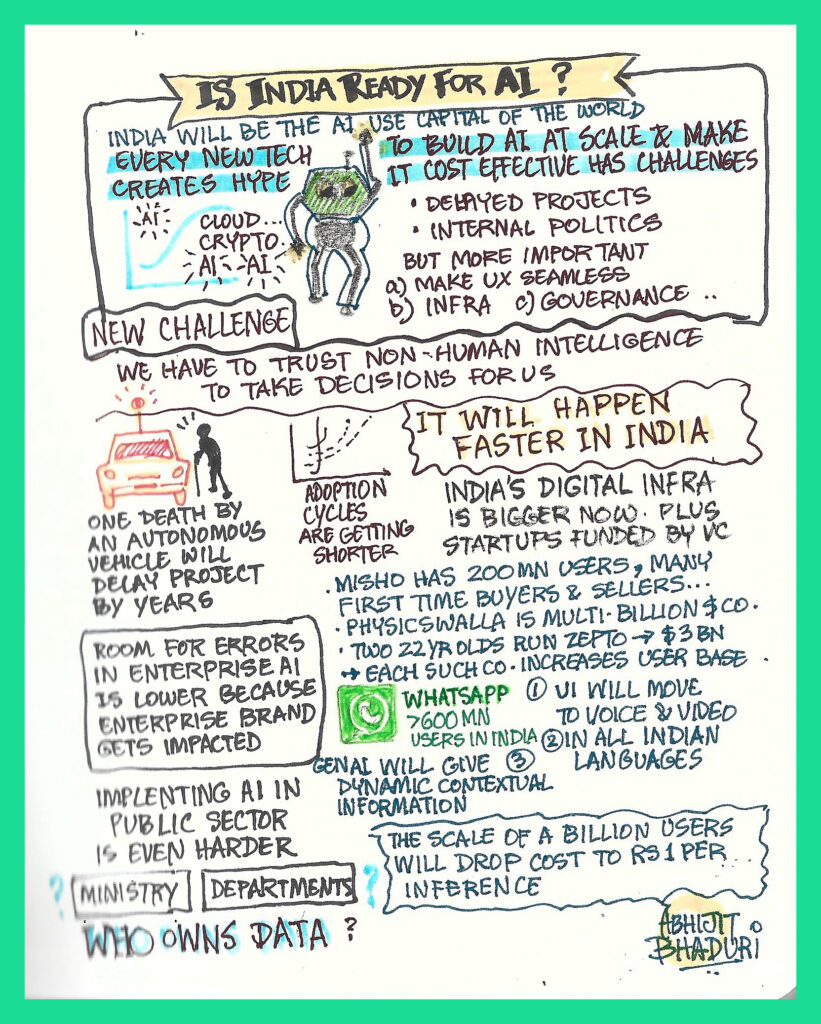
In a world racing to harness artificial intelligence, India is quietly positioning itself not just as a participant but as the global capital for AI use cases. With its unique combination of massive digital infrastructure, a billion-strong user base, and entrepreneurial energy, India offers the perfect ecosystem for AI innovation at unprecedented scale.
The Foundation: Digital Public Infrastructure Meets AI
India’s digital public infrastructure (DPI) provides the ideal foundation for AI applications to thrive. This robust ecosystem includes:
- Aadhaar: The world’s largest biometric ID system covering 1.3+ billion people
- UPI: A real-time payment system processing billions of transactions monthly
- India Stack: Open APIs enabling paperless, presence-less, and cashless service delivery
As Nandan Nilekani, Infosys co-founder and architect of India’s digital transformation, points out: “India’s digital foundation will power AI in unprecedented ways. While others focus on building large models, India is uniquely positioned to deploy AI at scale to solve real-world problems.”
The Scale: A Billion Digital Citizens
With over 806 million internet users (projected to exceed 900 million by the end of 2025), India offers an unmatched testbed for AI applications:
- Rural Digital Adoption: The majority of new internet users now come from rural areas
- Mobile-First Economy: Over 1.12 billion mobile connections power digital interactions
- Multilingual User Base: Digital interfaces supporting 22+ Indian languages
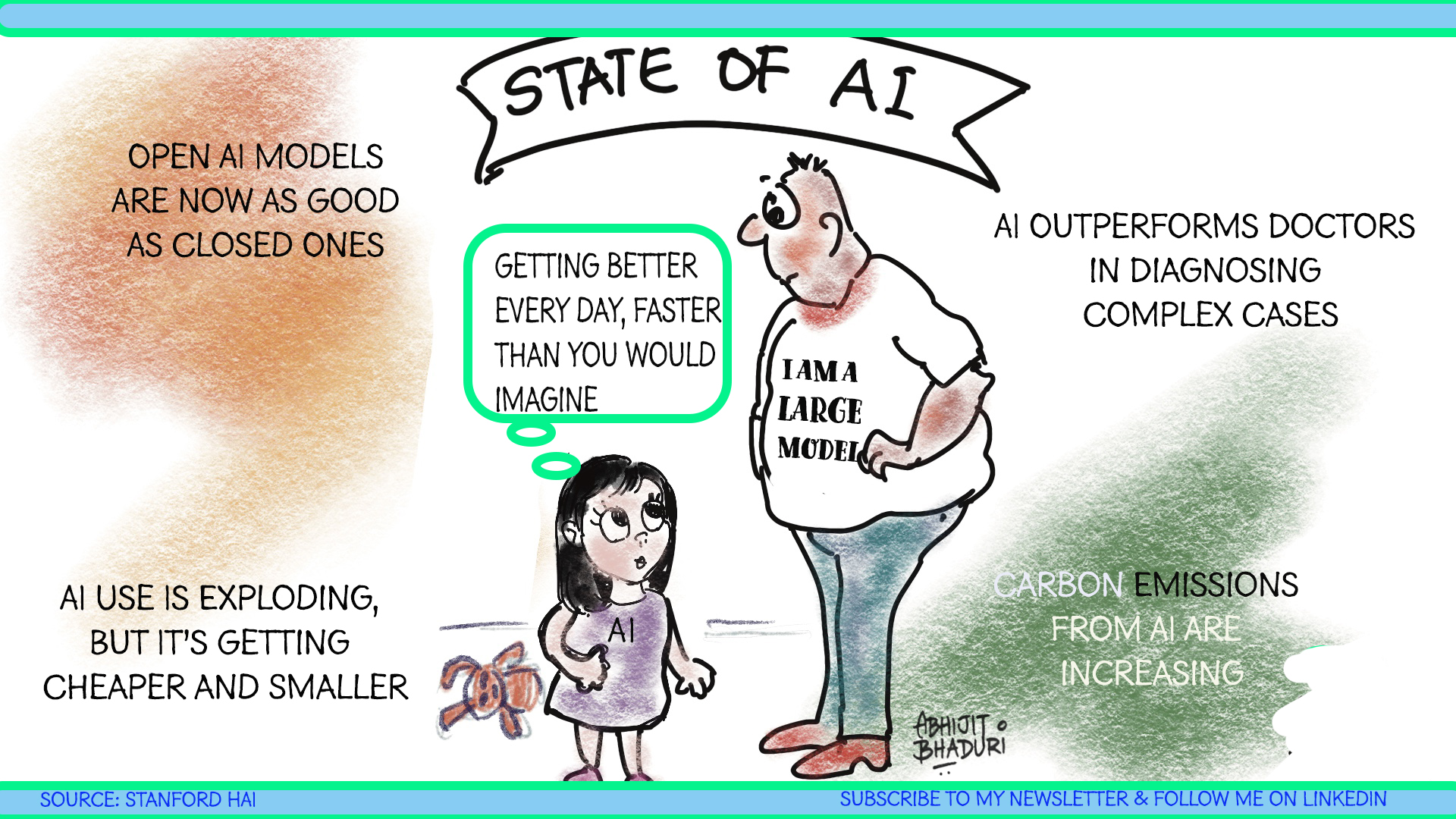
This scale creates a virtuous cycle: AI solutions built for India must work for diverse populations, varying literacy levels, multiple languages, and resource-constrained environments—making them inherently robust and globally applicable. Read the report by Stanford Human AI lab
The Opportunity: Solving Real Problems at Scale
Unlike AI development in more mature markets that often focuses on incremental efficiency gains, India’s AI landscape targets fundamental challenges:
Healthcare
AI-powered diagnostic tools are helping bridge the severe doctor shortage in rural areas. For example, startups are using AI for early detection of diabetic retinopathy and tuberculosis through smartphone cameras, potentially saving millions from preventable blindness and disease progression.
Agriculture
With 43% of India’s workforce engaged in agriculture, AI applications are transforming farming practices. Predictive models combining weather data, soil conditions, and crop history help farmers make better decisions, increasing yields by 15-30% in pilot programs.
Financial Inclusion
AI-driven credit scoring models analyze alternative data points (like digital payment histories from UPI) to extend loans to previously “unbanked” populations with no credit history. This has enabled micro-lending to millions of small businesses previously excluded from the formal financial system.
Education
Adaptive learning platforms using AI are personalizing education in regional languages, addressing the severe teacher shortage in rural schools. These platforms dynamically adjust difficulty levels based on student performance, dramatically improving learning outcomes.
The Advantage: Frugal Innovation
India’s approach to AI is characterized by frugal innovation—creating more value with fewer resources. This leads to:
- Cost-Effective Solutions: AI applications developed for the Indian market must be affordable at scale
- Resource Efficiency: Models optimized to run on entry-level smartphones and limited bandwidth
- Localized Intelligence: AI trained on diverse Indian languages and cultural contexts
For example, voice-based AI interfaces in local languages allow even illiterate users to access digital services, a necessity in a country with 22 official languages and varying literacy rates.
The Future: One Million Startups by 2035
Nilekani envisions India hosting one million startups by 2035, many leveraging AI technologies to address local and global challenges. This entrepreneurial explosion is supported by:
- Open Data Repositories: Government initiatives making crucial datasets available for AI training
- API Economy: Public and private sector APIs enabling easy integration of AI capabilities
- Talent Pool: India produces 1.5 million engineering graduates annually, increasingly specializing in AI/ML
The Global Impact: From India to the World
Solutions developed for India’s complex environment can scale globally, especially to emerging markets with similar challenges. We’re already seeing this happen:
- India’s UPI payment system is being adopted or emulated in countries like Singapore, UAE, and several African nations
- Healthcare AI applications developed for resource-constrained Indian hospitals are finding markets across Southeast Asia and Africa
- Language models trained on India’s diverse linguistic landscape are proving valuable for other multilingual societies
It will happen despite challenges
While India’s AI journey isn’t without challenges—including data privacy concerns, cybersecurity threats, and digital divides—the country’s focus on narrow, high-impact AI use cases provides a pragmatic path forward.
As Nilekani highlights: “Indians need not lose sleep over developing large AI models like China’s DeepSeek. Our strength lies in applying AI to solve real problems for real people.”
India: The Perfect AI Lab
India represents perhaps the world’s most exciting AI laboratory—where cutting-edge technology meets real-world complexity at unprecedented scale. By combining its digital public infrastructure with entrepreneurial energy and focusing on practical applications rather than theoretical capabilities, India is creating an AI ecosystem that solves meaningful problems.
In this ecosystem, AI isn’t just a technology for enhancing existing services—it’s a transformative force making essential services accessible to hundreds of millions for the first time. That’s why India will be the AI use case capital of the world.
As the global AI landscape evolves, watch India not just for the models it builds, but for how it puts AI to work for a billion people. The sketchnote I made is a summary of Nandan’s talk. But he does a much better job!