Day: February 6, 2025

  • Weekly updates, WSJ, What I Heard & Read

    Weekly updates, WSJ, What I Heard & Read

    This is the WWW issue of the newsletter with Weekly Updates, WSJ and What I heard. So lets go!

    “Don’t forget to send me your weekly report,” he turned back from the door and added, “because it will help decide your increment and maybe even your promotion.”

    I groaned. Does my boss not trust me? Or is it a clever way to ensure I am accounting for every minute I spend in the office?

    I spoke to Rascal Rusty, my classmate from the M-B-A days. He always knew what to do. He saw the first weekly report and said, “All that you have left out is what you ate for lunch every day.”

    What to write in the weekly report

    Imagine your favorite team is playing a cricket match. And you watched it all day. Your friend missed the match and wants to know what happened. You would tell him or her the highlights and not about every ball bowled or every run scored. In short you would share the highlights. That is a good way to understand the weekly report.

    Your monthly check-ins are an opportunity to agree on the priorities for the month and what you need to start or stop doing. If you receive any feedback from your manager, add a line in your weekly report to show that you are working on it and the result of that action. Read more here

    Scan courtesy: @Rajiv Bhalla

    The Article for The Wall Street Journal

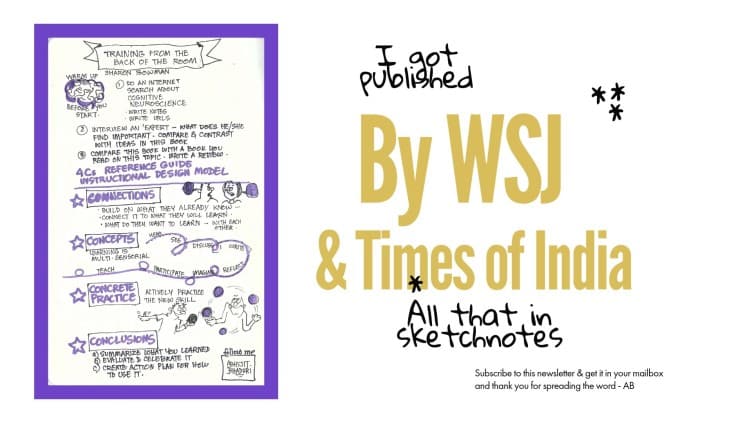
    There is something very special about seeing your name in print. This week I partnered with Jennifer Shappley VP of Talent at #LinkedIn to write about what companies are doing about Career Development. They are doing this as a way to stay competitive.

    The Skills Gap is Real—And Worrying

    The Skills Gap is Worrying

    Nearly 50% of executives fear their employees lack the skills to drive business strategy. Companies that fail to upskill their workforce risk falling behind.

    • Companies with robust career programs are 11% more confident in profitability and 15% ahead in generative AI adoption compared to those without.

    • Generative AI personalizes career development at scale, delivering real-time coaching and tailored learning plans—helping employees stay ahead.

    • Only 15% of employees got career planning support from their manager last year—a 5% drop from the previous year, signaling the need for new approaches.

    I would be thrilled if you clicked on this and read the article. Thanks for doing it

    Book Recommendation: Training from the BACK of the ROOM!

    This book begins with a bang. Before she has said ANYTHING and by that I mean ANYTHING, Susan Bowman asks you to do a Google search and look up what people say about Cognitive Neuroscience and to ask an expert what they think of the subject and do a little quiz. And I am saying to myself, and so what are those 65 things you are going to tell me about training from the back of the room!

    The BIG Idea: Let the participants do more active learning

    Where to Spend Your Learning Budget: Core skills or Emergent skills?

    The Jan-Feb 2025 issue of Harvard Business Review asks this interesting question. 60% of the employees will need to be retrained before 2027 according to the World Economic Forum. But the average investment in training is dropping.

    Where is your training budget better spent? In strengthening the core skills or should you send everyone on some skill that you saw being advertised?

    Investing in strengthening the core gives you a 5 times impact on performance. Read more here

    A podcast I heard

    Your resume is a powerful signalling device. But does it send the right signals?

    Read this to find out

    If you found this newsletter to be useful, maybe there is someone else who you can share this with. Please tell them why they should read this and subscribe to this newsletter as you forward it. That makes it more effective.

    Thanks for your help

    Have a question? A suggestion? Point out an opportunity? Email me at abhijitbhaduri@live. com
    Thanks for reading

  • The Year of the Snake, Snake Oil & Talent

    The Year of the Snake, Snake Oil & Talent

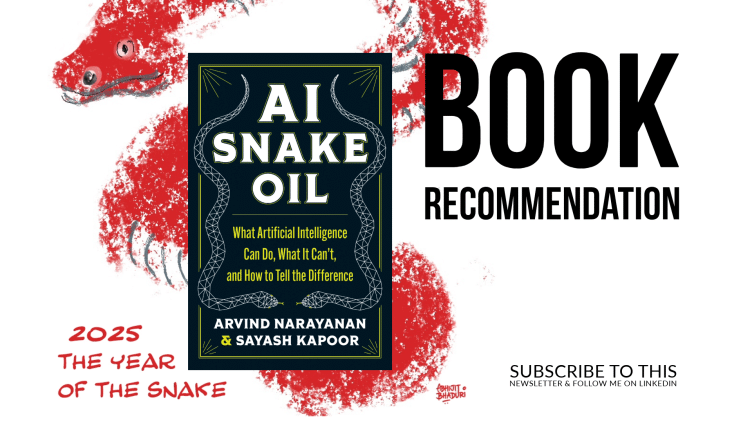
    Who is likely to adopt AI faster – the person who has learned a lot about AI or the one who does not? Read what research tells us. And why the year of the snake is good way to understand why I am recommending this book.

    People with less knowledge about AI often show greater receptivity to using it, known as the “lower literacy-higher receptivity” link. This openness is partly due to AI’s magical appeal, as seen with tools like ChatGPT. However, there’s a significant gap between AI’s true capabilities and the hype surrounding it. As AI transforms business models and forces legacy companies to adapt, it’s crucial to differentiate between reality and hype before investing. This distinction is important in a landscape where misinformation is prevalent, and wise investment decisions are key to achieving a return on investment.

    2025 is the Year of the Snake

    In Chinese culture, the Snake is revered as a symbol of wisdom and knowledge. Individuals born in the Year of the Snake are believed to possess deep thinking abilities, keen intuition, and the capacity to uncover secrets and hidden truths. The Snake’s association with transformation and rebirth is linked to its ability to shed its skin and emerge anew, symbolizing renewal and adaptability.

    Book Review and Recommendation

    In “AI Snake Oil,” Princeton researchers Professor Arvind Narayanan and Sayash Kapoor provide a nuanced and critical examination of artificial intelligence, distinguishing between genuine advances and overblown claims.

    The authors argue that while some AI applications show real promise, others are effectively “snake oil” – solutions that don’t work as advertised but are sold anyway. Their analysis is particularly valuable because it avoids both extremes – uncritical techno-optimism and blanket skepticism.

    There are three kinds of AI

    The next time someone talks about AI, ask them which kind of AI are they talking about. This sketchnote gives you a summary of the key ideas.

    1. The Three Faces of AI – Predictive, Generative and Content Moderation

    a) Predictive AI – this one gets a B- or C from Prof

    Think of AI being used in hiring or processing medical claims by predicting how long a person needs to be hospitalised. I was fascinated by the section on using predictive AI in hiring. Simply adding a bookshelf in the video background improved candidate scores. Changing resume format from PDF to plain text affected personality scores. Using “fancy” words like “conglomerate” could artificially improve ratings of candidates. There is inherent bias against non-native English speakers. Resume screening tools often missed qualified candidates due to formatting issues

    Candidates can fool hiring algorithms by simply adding keywords in white text on their resume. Or by adjusting their speaking patterns. What is worse is when AI is hiring, the candidates don’t know how they’re being evaluated and there’s no meaningful way to appeal decisions.

    Once a company has spent money on these tools, they are forced to continue using it to recover costs and will be advocating for their usage to their peers.

    b) Generative AI – this one gets an A grade from the prof

    It is useful for content creation and coding. It still suffers from factual inaccuracies and hallucination. The human biases in training show up in the output too. Remember how Google got a lot of flak when Gemini changed the look of the US Founding Fathers. Besides there are strong protests raised about how some of these models have stolen data from the internet to train the algorithms.

    c) Content Moderation AI – It gets a B or B+ at best

    From Facebook to YouTube, any platform that has user generated content has to address how it will deal with content that needs to be moderated. From child pornography to political content and sites that give out questionable medical, financial advice that is useless at best and damaging in many cases, AI has failed to live up to its hype. It fails to distinguish between harmful content and legitimate discussion.

    What can be done

    Organizations adopt AI as a solution to complex problems. For example sorting the problem of getting a large volume of resumes while hiring, the employers use AI. When done without proper human oversight and accountability, there is no understanding of the limitations of the tech. The market forces drown out the facts. Consider the institutional context and capacity before you implement something because it has the word AI in it.

    “AI Snake Oil” is an important contribution to our understanding of AI’s role in society. Its framework for distinguishing between different types of AI and their limitations is particularly valuable. The authors successfully balance acknowledging AI’s genuine advances while critically examining overblown claims and potential harms.

    Your chances of getting promoted depend on the Talent Pyramid

    Organizations start off looking like pyramids. Everything works smoothly. And then when the first set of promotions are announced, the first seeds of chaos are sown. That is if there is no planful talent management. Every department starts jockeying for more promotions. Then the star peformer threatens to leave. He or she is promoted and then a few more promos are thrown in as an after thought. Very soon ,,,

    I spoke to Tonushree Mondal who helped in demystifying some of these talent management concepts. The idea: help people understand these so that they can navigate their own career choices better.

    Let me know what you thought of it. If you liked it, pl feel free to use it and share it with your friends and colleagues.

    90 days, dozens of interviews, billions on the line: Inside Blackstone’s CEO search process for its 250 companies

  • The Big Idea from LinkedIn Workplace Learning Report 2025

    The Big Idea from LinkedIn Workplace Learning Report 2025

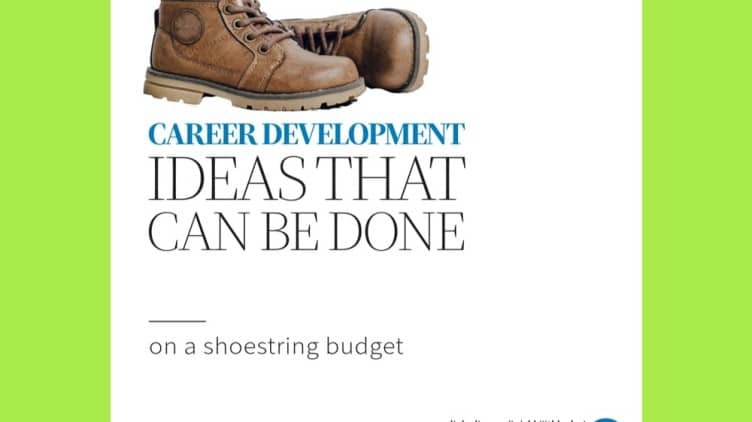
    Want to be the darling of the employees? Become a Career Development Champ – invest in their careers. I will also share what you can do when you have NO BUDGET allocated for this.

    This year I got quoted in the Linked In Workplace Learning Report 2025 so am really thrilled. The Report reveals a powerful trend: organizations that prioritize career development (the Career Development Champions) are significantly outperforming those that don’t. These champions are not only more successful in attracting and retaining top talent but are also better positioned to lead in the age of generative AI.

    So what is the biggest idea from the LinkedIn Workplace Learning Report 2025? Link given at the end.

    Great businesses are built on great careers

    Companies prioritizing career development report a 42% higher likelihood of being frontrunners in adopting generative AI

    Career Development Champions

    Career Development Champions are organizations that have embraced a culture of continuous learning and growth, providing employees with the tools and opportunities they need to advance their careers. They have a stronger outlook for profitability and growth. They are more confident in their ability to attract and retain qualified talent. They are better positioned to leverage the power of AI for business success.

    What do the champs do?

    Robust Career Development Programs: Offering a range of programs like leadership training, internal mobility opportunities, and mentorship. Measurable Impact: Tracking key metrics like internal mobility rate and new skills development to ensure their programs are effective. Investment in Career-Driven Learning: Dedicating resources to support employees’ learning and development journey.

    abhijitbhaduri@live. com

    Be a Career Development Champion on a Shoestring

    You don’t need a massive L&D budget to become a Career Development Champion. Here are some ideas you can implement today:

    Captions are auto generated

    PlayMedia is loadingPlayPlayLoaded: 0%0:00Stream Type LIVERemaining time -0:00 1xPlayback speedPlayback speed0. 5×0. 75x1x, selected1. 25×1. 5×1. 75x2xTurn closed captions offShow captionsUnmuteTurn fullscreen onFullscreenMedia player modal window

    1. Unleash the Power of Internal Mobility

    Job Shadowing: Allow employees to shadow colleagues in different departments to gain insights into new roles and skills. Internal Gig Marketplace: Create a platform where employees can volunteer for short-term projects or assignments in other teams.

    2. Empower Your Managers to Become Career Coaches

    Mentorship Program: Pair managers with senior leaders who can guide them in developing their coaching skills. Regular Career Conversations: Encourage managers to have regular one-on-one meetings with their team members to discuss career goals and development opportunities.

    3. Measure Your Impact, Even Without Fancy Tools

    Employee Satisfaction Surveys: Conduct regular surveys to gauge employee satisfaction with career development opportunities. Track Internal Promotions: Monitor the number of employees who are promoted internally as an indicator of career growth.

    4. Fuel Individual Growth Through Self-Directed Learning

    Curated Learning Resources: Create a library of free online courses, articles, and videos that employees can access to develop new skills. Learning Communities: Encourage employees to form learning groups where they can share knowledge and support each other’s growth.

    5. Invest in AI-Powered Learning (Even on a Budget)

    Free AI Tools: Explore free AI tools that can provide personalized learning recommendations and skills assessments. Leverage LinkedIn Learning: Offer free trials or limited access to LinkedIn Learning to give employees a taste of AI-powered learning.

    Becoming a Career Development Champion is not just about having a big budget; it’s about creating a culture of learning and growth. By implementing these ideas, you can empower your employees to take ownership of their careers and drive your organization’s success.

    What creative strategies have you used to foster career development in your organization? Share your tips and experiences in the comments below!

    #careerdevelopment #learninganddevelopment #employeeengagement #futureofwork #leadership #AI #upskilling #reskilling #internalmobility #talentmanagement

    Read the report – click this

    Hanging with Hung Lee in this video

    Hung Lee is synonymous with recruitment and talent acquisition. You may have seen friends and fans posting videos of him in Bangalore. I missed meeting him there. But I got to hang out with him in the same video.

    What I am reading now

    How old are you? Never mind Google can estimate it.

    Google will soon use machine learning to estimate the age of its users. Google is testing a machine learning model in the US to help determine whether someone is under 18, allowing it to “provide more age-appropriate experiences” across its platforms.

    What is Generative AI vs Agentic AI?

    Book : Training From the Back of the Room!: 65 Ways to Step Aside and Let Them Learn

    Will write a review on abhijitbhaduri. com

    First impression: a great book for anyone wanting to teach anyone anything.

    Listening to this song by The Beatles

    https://youtu. be/Opxhh9Oh3rg?si=Nljq_ptrFy4xT8zY

  • Inside Blackstone’s CEO Playbook: 90 Days, Dozens of Interviews, Billions at Stake

    Inside Blackstone’s CEO Playbook: 90 Days, Dozens of Interviews, Billions at Stake

    Inside Blackstone's CEO Playbook: A detailed search process highlighting key traits, interviews, and assessments for leadership roles, with billions at stake.

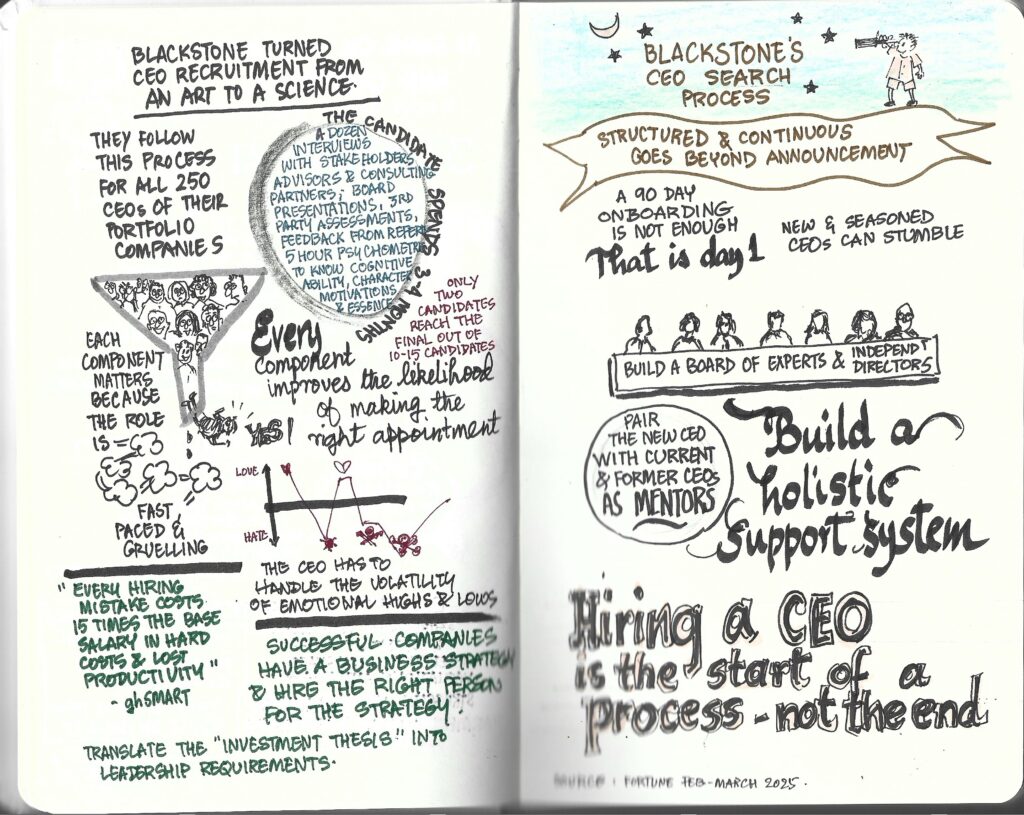
    The private equity firm Blackrock has almost 250 companies in its portfolio. That means they need to select 250 CEOs to run these businesses. That portfolio is worth billions. They turned CEO hiring from an art to a science.

    Blackstone’s approach to hiring CEOs is a comprehensive and rigorous process that emphasizes not just past successes but also future potential and alignment with the company’s strategic goals. This focus on the “who” as well as the “what” sets it apart from many traditional executive search processes. 

    Step 1: Define the “investment thesis”

    The board and the partners define the investment thesis. What do they expect the business to deliver. That outcome is then distilled into creating the leadership profile of the CEO. An investment thesis is a concise and well-structured document that outlines the strategic rationale for an investment. It identifies the key factors that are expected to drive value creation for the company, such as mergers and acquisitions, digital investments, or expansion into new markets. The investment thesis also sets a time horizon for achieving these objectives and outlines a potential exit strategy. 

    Prioritize the “who” as well as the “what.” Finding the right leader who aligns with the company’s strategic goals and possesses the necessary traits for success is paramount. 

    Blackstone uses investment theses to guide its investments and ensure that its portfolio companies have strong leadership teams in place to execute their strategic goals. The firm’s CEO selection process is closely aligned with the investment thesis to ensure that the chosen leader has the necessary skills and experience to deliver on the company’s strategic objectives. 

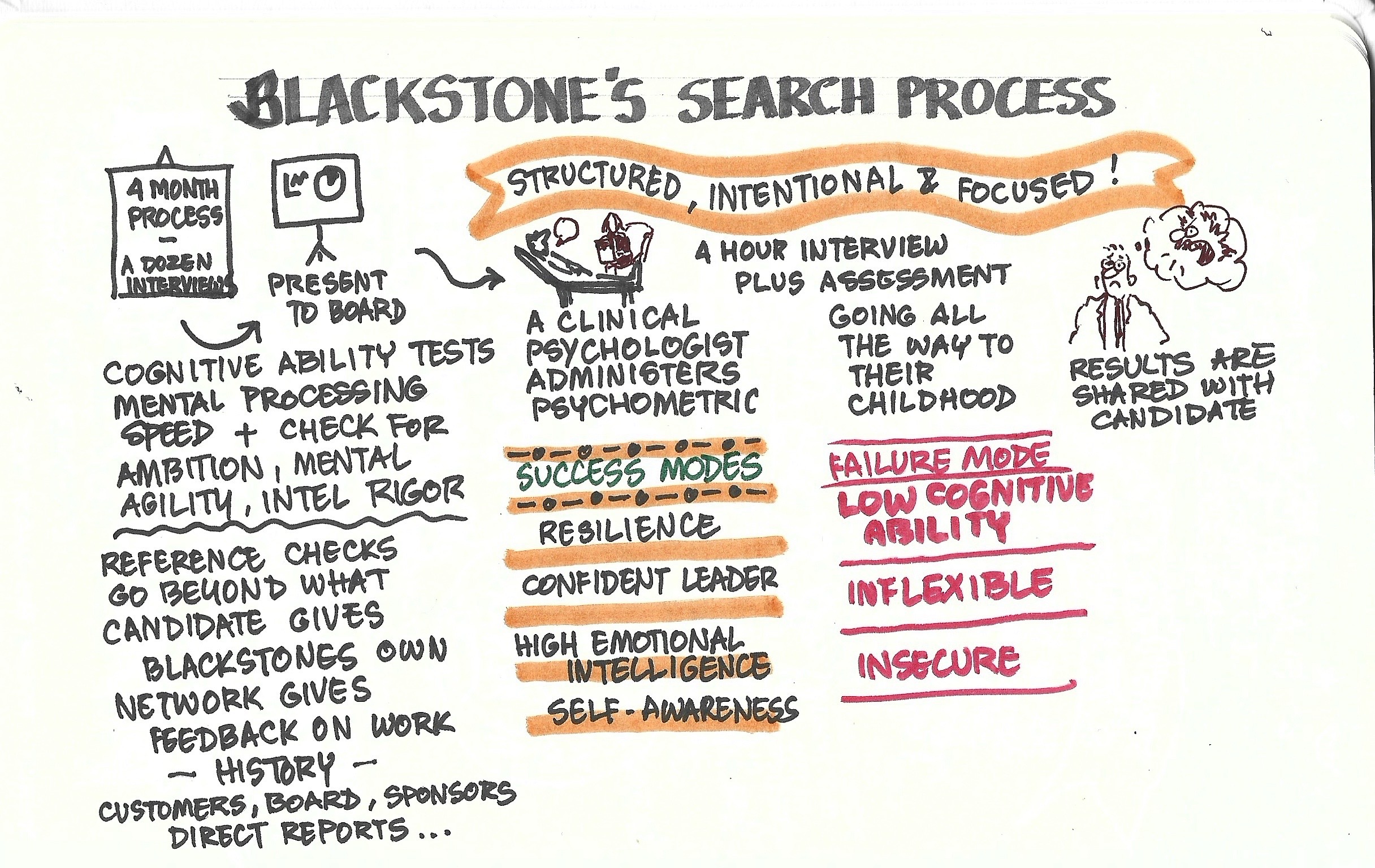
    Step 2: Interviews, presentations, assessments, reference checks, 5-hour psychometric assessment will take 3-4 months

    A multi-faceted selection process that includes in-depth interviews, rigorous assessments, and thorough reference checks is essential. Every component matters because the CEO’s role is demanding and gruelling. Psychometric evaluations can provide valuable insights into a candidate’s cognitive abilities, personality traits, and leadership style. For each role 10-15 candidates are screened to distil it to only 2 candidates who finally make the cut.

    A clinical psychologist evaluates the mental make up of the candidate. The CEO has to handle emotional pressures of being admired one day and vilified the next day. The success modes are resilience, confidence in leadership, emotional intelligence and self awareness. Low cognitive ability; insecurity and an insecure person rarely succeed as CEOs.

    Every hiring mistake costs 15 times the base salary in hard costs and lost productivity. A wrong hire who is paid $100,000 costs the company $1.5 million, says consulting firm ghSMART

    • Go beyond the references provided by the candidate. Blackstone uses their own backchannels and reach out to a broad network of individuals who have worked with the candidate. That includes customers, stakeholders, board members, team members etc.
    • Provide ongoing support and onboarding. A structured onboarding plan and continuous support, including coaching and feedback, are critical for ensuring a successful CEO transition. The CEOs announcement is day one of the process.

    Source: Fortune Magazine, Feb-March 2025

    Can this person deliver what the business needs, in the way it needs it, at the time it needs it? That remains the acid test of every hiring decision. The stakes are higher for a CEOs search.