
Day: November 8, 2024

  • Get your cat to develop a reading habit

    I was horrified to know that Pixie had not developed a love for reading

    I was visiting my friends and I knew they had a cat called Pixie. So I asked them if I could bring a book for Pixie, you know things that he likes to read. I did not want to give him a book he already had. After an embarrassed silence they told me that Pixie had never really developed a taste for fiction.

    I asked tentatively, “Would he prefer non-fiction?”

    “No he just does not enjoy reading books. He really spends all his time on the mobile. He is part of a few WhatsApp groups and they keep forwarding silly cat videos all day. His attention span has dropped.” My hosts were concerned. They had presented Pixie with a copy of Paul Gallico’s fabulous book called Jennie. That remained untouched. I knew this needed a quick resolution.

    Jennie by Paul Gallico
    The best book to understand cats
     

    The story in brief

    This is the story of a young boy called Peter, who is knocked down by a car. To his considerable astonishment, when he recovers, he is not a young boy, but a cat!

    Fortunately, he meets Jennie, a cat who had been abandoned by her family when they moved away, who educates him in the wiles of the feline world.

    My host wiped a tear and said, Pixie did not even go past the first page of this book. We need help. Teach our cat how to read.”

    Ten tips to get your cat to be a book lover

    As I travel I am constantly amazed at how many cats have never experienced the joy of reading. Here are things that cat-parents can do that can turn their pet into a book lover.

    1. Start with their interests: What are their hobbies, passions, and curiosities? Recommend books that align with those interests, even if they seem unconventional. If your cat loves fish, get a storybook about fishes or fishing.

    2. Embrace diverse formats: Reading doesn’t have to mean traditional novels. Suggest graphic novels, audiobooks, or short story collections. Variety can keep things fresh and engaging. I absolutely recommend audiobooks. The cat can listen to it even as they snooze or take a walk in the neighborhood.

      (Here is a list of graphic novels that cats have loved)- <click this>
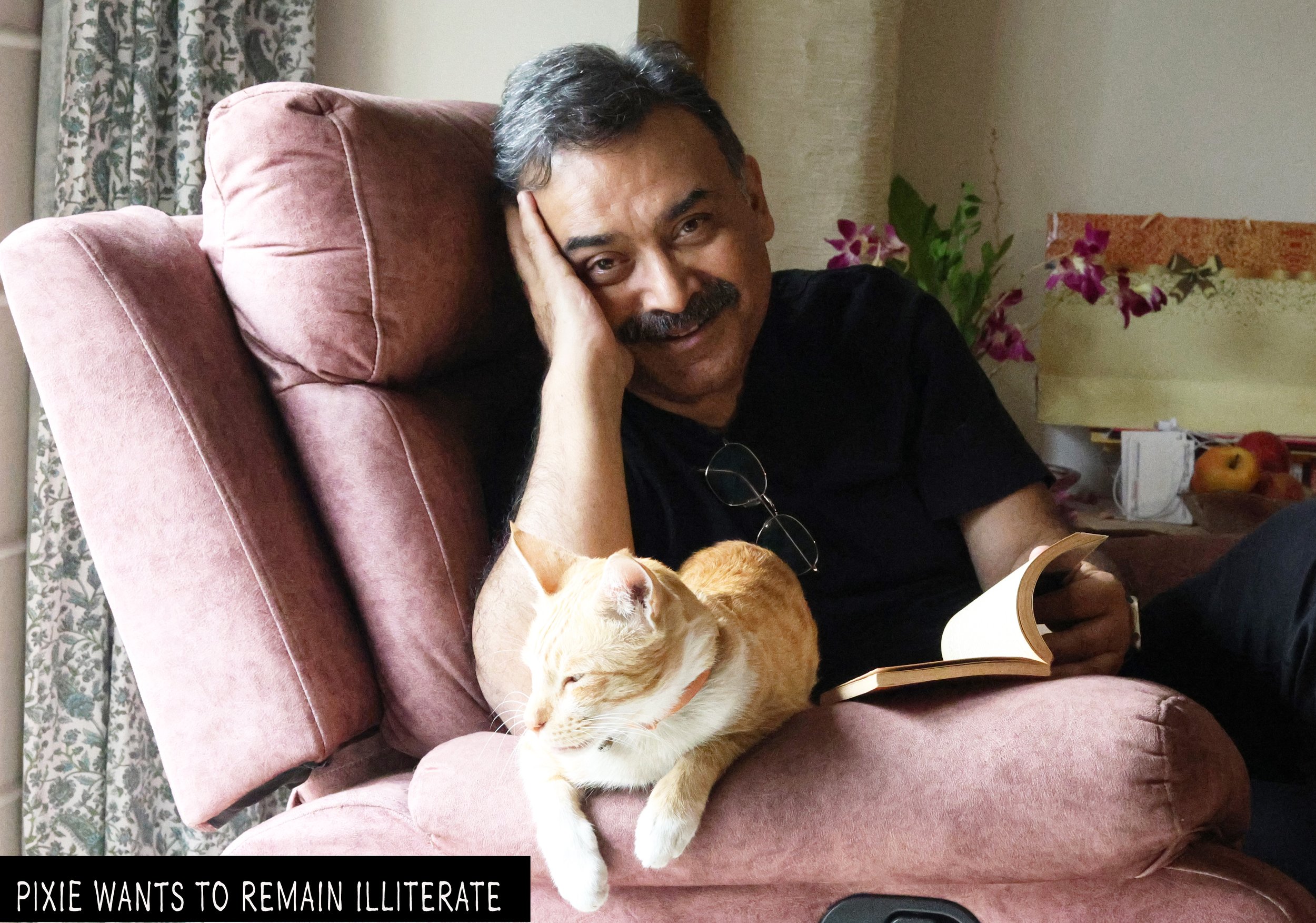
    One day I discovered that Pixie actually enjoyed audiobooks. So I started reading aloud. And that worked.

    3. Create a comfortable reading ritual: Encourage them to dedicate a specific time and place for reading, free from distractions. A cozy armchair, a warm beverage, and soft lighting can make all the difference. Curl up with a dark chocolate after dinner and a murder mystery. It is a great combination.

    4. Find their “reading tribe”: Suggest joining a book club, online forum, or social media group focused on books. Discussing stories with other cats can deepen appreciation and provide motivation. Invite another cat to join your book club. Make it social.

    5. Don’t force it: Encourage exploration and allow your cat to abandon books he/she don’t enjoy. There’s no shame in putting down a book that isn’t captivating. Pixie was fussy. It took me time to get him to find a book that he liked. I finally found success in Jonathan Livingstone Seagull by Richard Bach.

    6. Celebrate small victories: Acknowledge every finished book, chapter, or even page. Positive reinforcement can build confidence and encourage further reading. Initially I would give Pixie a treat after each page. Then I delayed the treat until we reached the end of a chapter. Eventually when he looked up and smiled after the end of War and Peace by Tolstoy, I knew it had happened.

    7. Be a reading role model: Share your own reading experiences, recommend books you love, and demonstrate the enjoyment reading brings you. Feel free to recommend a variety of books. When you go to the gym to lift weights you always start with something light and easy. Reading habits are no different. Start small. Stay ambitious.

    8. Visit a library or bookstore together: Browsing shelves and discovering new titles can be an adventure in itself. The atmosphere of these places can be inspiring. Pixie loves audiobooks. I found that he would listen to me for hours if I read out a story. I would dramatize different segments to get him interested.

    Pixie listening to me reading out a short story by Satyajit Ray

    9. Gift them a personalized book subscription: Services that curate books based on individual preferences can introduce them to new authors and genres they might not discover on their own. I bought Pixie a set of books I have written. He promises to write a review.
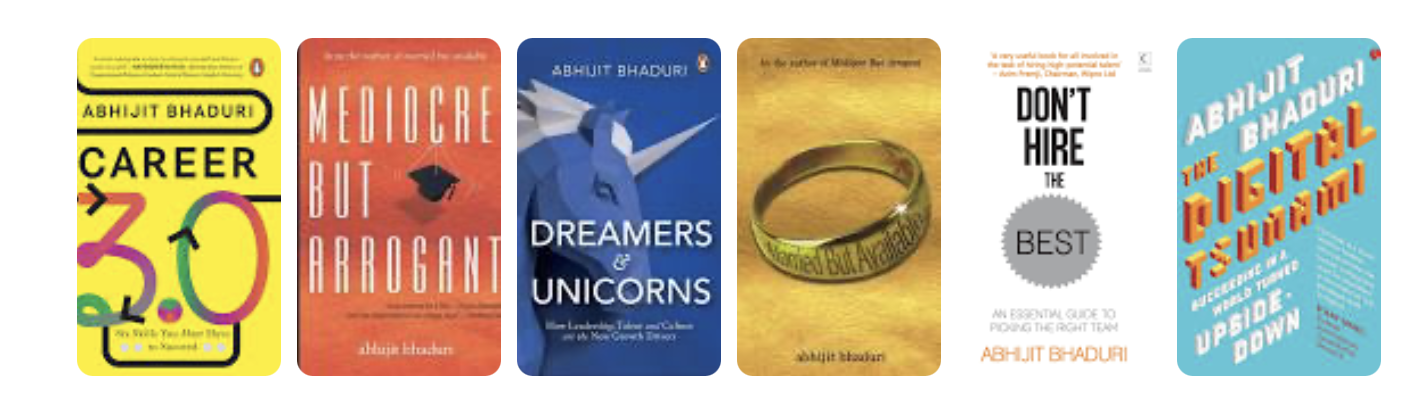
    I cried with joy when my cat wanted to read every book I had written.

    10. Focus on the journey, not the destination: Emphasize the pleasure of immersing oneself in a story, escaping reality, and connecting with characters. The love for reading will grow naturally with time and positive experiences. So keep at it. Don’t deprive your cat of this huge opportunity.

    I would love to know if any of these worked for you or your cat. Email me at abhijitbhaduri@live.com

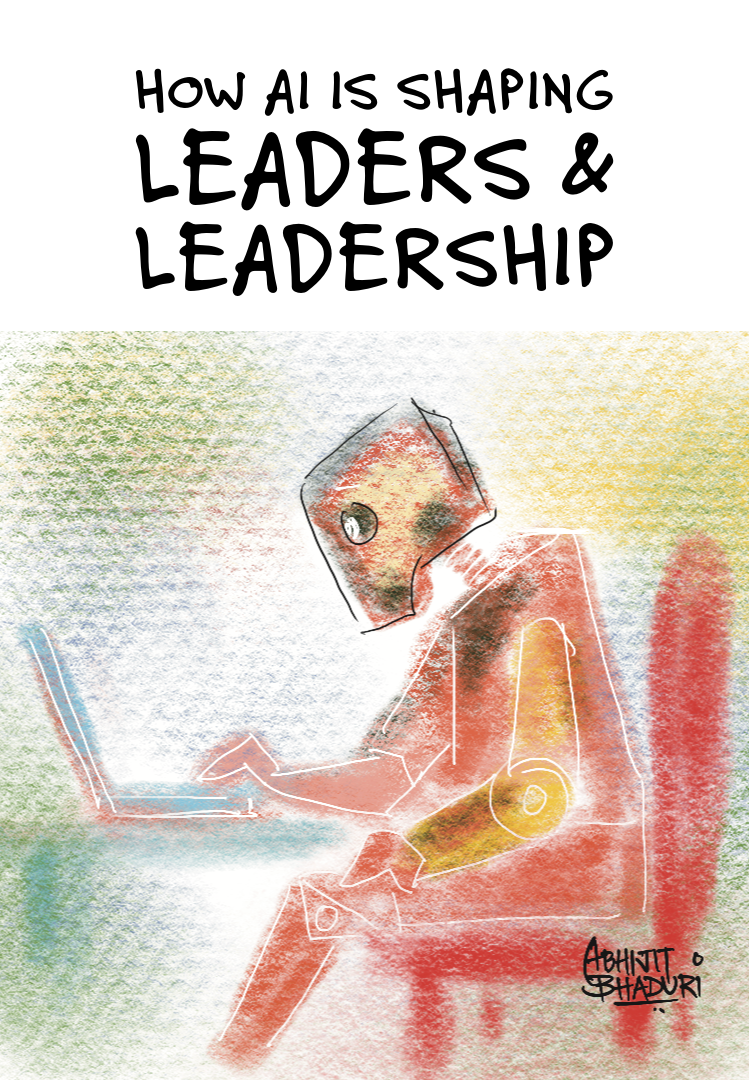
  • How AI is Shaping the Future of Leadership

    Can you spot the dragon?

    Imagine you have a HUGE box of LEGOs, with millions of pieces! It’s tough to decide what to build just by looking in the box, right? That’s how leaders sometimes make decisions, using only what they know or a small amount of information. AI is like a super-smart robot that can look at ALL the LEGOs and tell you exactly what cool things you can build, like a giant spaceship or a robot dinosaur!

    The CEO’s Job Needs New Skills

    If I had to write the job description of a CEO, I would include a few skills today. Depending on how you

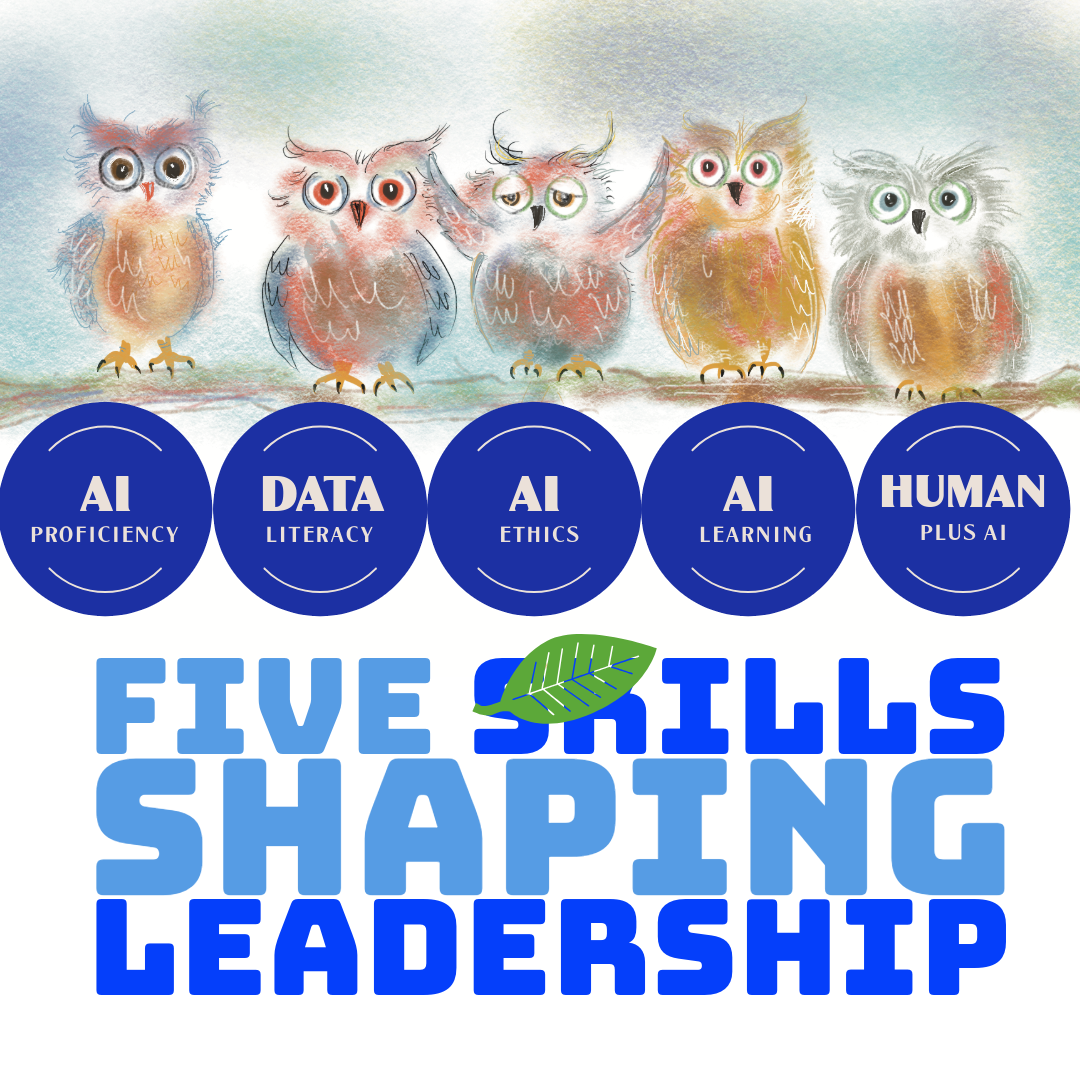
    1. Data literacy: Ability to analyze and interpret AI-generated insights.

    2. Ethical AI implementation: Ensuring responsible and unbiased use of AI systems.

    3. Continuous AI learning: Adapting to evolving AI technologies and integrating them into workflows.

    4. Balancing AI with human skills: Maintaining emotional intelligence and communication skills alongside AI proficiency.

    5. AI proficiency: Understanding and utilizing AI tools for decision-making and innovation.

    Mamta Sharma spoke to me about the impact of AI on leaders and leadership. Here is the interview.

    A recent Deloitte Private survey of C-suite executives highlights the growing importance of AI in shaping leadership priorities for private companies in the coming year. With 43% of respondents indicating a focus on increasing AI usage across their organisations and 37% prioritising technology investments, it’s clear that leaders recognise AI as a vital tool for enhancing operational effectiveness.

    The report, “Private Company Outlook: Governance,” further emphasises that emerging technology and AI are deemed critical competencies for strengthening organisational boards, with 43% of executives highlighting this need. Training and educating board members about AI is considered essential, paralleling efforts to reskill the workforce. The survey revealed that determining AI usage within the organisation (50%), upskilling the workforce on AI (49%), and providing training for board members (49%) are all high priorities. In contrast, only 31% of executives view recruiting board members with advanced AI or emerging tech experience as a high or very high priority.

    AI has the potential to enhance decision-making, foster creativity, and automate routine tasks, but its true value lies in its implementation. Leaders who embrace AI with curiosity and a willingness to experiment can unlock its transformative capabilities, while those who view it solely as a productivity tool risk missing out.

    In an interview with All Thing Talent, Talent Development Advisor Abhijit Bhaduri discusses how AI is transforming leadership dynamics by enabling leaders to make informed, data-driven decisions that drive their organisations forward.  As AI evolves, Bhaduri says leaders must balance its insights with their intuition, ensuring they remain innovative without losing their human touch.

    It is upto each leader to rethink their own job description before they drive AI adoption for the organization

    AI in Decision-Making

    Bhaduri emphasises that AI is revolutionising leadership by supercharging decision-making. “Leaders can now leverage AI to analyse vast datasets and predict outcomes with unprecedented accuracy, whether it’s evaluating market entry strategies or optimising product design,” says Bhaduri. He notes that AI empowers leaders to identify and mitigate potential risks, leading to more informed and confident choices. “AI-powered tools can automate routine decisions, freeing up leaders to focus on strategic priorities and complex problem-solving.” By embracing AI, leaders gain a significant competitive edge through data-driven decisions that push their organisations forward.

    AI as a Creative Companion
    Bhaduri highlights that AI is more than just an efficiency tool; it’s a powerful catalyst for creativity. “Forward-thinking leaders are using AI to brainstorm ideas, explore unconventional solutions, and unlock new levels of innovation.” He explains, “Imagine asking AI for ‘50 ways to improve customer engagement’ and receiving a diverse range of actionable ideas. This sparks creativity and leads to breakthroughs that traditional methods alone cannot achieve.” According to Bhaduri, AI can also personalise customer experiences by analysing individual preferences and tailoring interactions accordingly. “This ability to foster innovation and deepen customer connections positions AI as an indispensable creative partner for modern leaders.”

    These are five skills that all leaders need to build to succeed in the AI economy

    AI and Leadership Development
    “Leaders must shift their focus from immediate ROI to long-term learning and view AI as an opportunity for growth, not a threat to their authority,” says Bhaduri. By cultivating a culture of experimentation and continuous learning, leaders can overcome adoption barriers and fully harness AI’s potential. He notes that AI is reshaping leadership development by providing personalised learning experiences and simulated training environments. “Leaders can now use AI to practice interactions with diverse personalities, refine their decision-making skills in realistic scenarios, and gain valuable self-awareness.” He adds, “AI-powered platforms can even act as personalised coaches, offering customised learning paths, quizzes, and resources to accelerate leadership growth.”

    Furthermore, Bhaduri highlights how AI can facilitate peer-to-peer learning by connecting leaders with mentors and communities, fostering a culture of continuous development. “While human judgment remains crucial, AI empowers leaders to develop their skills and adapt to the evolving demands of the digital age.”

    Ethical Considerations
    The rise of AI in leadership also brings forth significant ethical considerations that cannot be overlooked. Leaders must address concerns around data privacy, ensuring that AI systems are used responsibly and transparently. Furthermore, the risk of bias in AI algorithms poses a challenge that requires vigilant oversight; leaders have the responsibility to ensure that AI implementations do not perpetuate discrimination or inequality. By prioritising ethical AI use, leaders can not only protect their organisations but also foster trust among employees and stakeholders. Addressing these ethical implications is crucial in creating a leadership approach that aligns technological advancements with core organisational values.

    Overcoming Challenges in AI Adoption and Skills Development
    Bhaduri acknowledges the hesitation many leaders feel in adopting AI, due to concerns about technical skills, ROI, or perceived threats to their roles. “However, early adoption is crucial for maximising AI’s potential,” he says. “Leaders who proactively experiment with AI and integrate it into their workflows will gain a significant advantage—think of it like learning a new language; the earlier you start, the more fluent you become.”

    To successfully integrate AI, Bhaduri advises cultivating essential skills. “Digital literacy enables leaders to understand and effectively utilise AI tools,” he notes. He advocates for developing critical thinking skills, “which allow leaders to analyse AI-generated data, question assumptions, and balance quantitative insights with qualitative judgments.”

    Emotional intelligence is equally important. Leaders must maintain empathy and strong communication skills to foster relationships with their teams and ensure that the human aspect of leadership isn’t overshadowed by technology.

    The future of leadership is being reshaped by AI, empowering those who embrace it to navigate tomorrow’s challenges and seize new opportunities with confidence.

    https://allthingstalent.org/leading-with-ai-abhijit-bhaduri-on-how-ai-is-shaping-future-of-leadership/2024/11/06/