

In every country, educational institutions are categorised as Tier 1, Tier 2, Tier 3 etc. Does making it to a Tier 1 college guarantee a fast-track in climbing the corporate hierarchy. Or is this a fatal flaw built on the assumption of “ceteris paribus”.
A flawed assumption called ceteris paribus
Ask your economist friend to explain the term Ceteris Paribus. They will laugh sheepishly. Traditional Economics had a fatal assumption. The average consumer finds an expensive wine to be tastier than one which is priced lower. This defies the law of economics that says at high prices demand will drop, ceteris paribus. Traditional economics ignore factors like affordability and desirability and the irrational side of humans. (read more)
The talent market also assumes ceteris paribus. When colleges are ranked as Tier 1/ Tier 2 etc, they assume that the colleges have filtered out the students in terms of their “merit”. If the employer simply shows up at a Tier 1 college, they are assured of hiring someone who is “meritorious”. They then pay a premium to these Tier 1 campus hires.
For people with an advanced degree, the wage premium is two hundred and thirteen per cent. This is based on the flawed assumption that the brightest students will be better performers. That is rarely the case. Yet paying a premium for a Tier 1 campus continues. <read more>
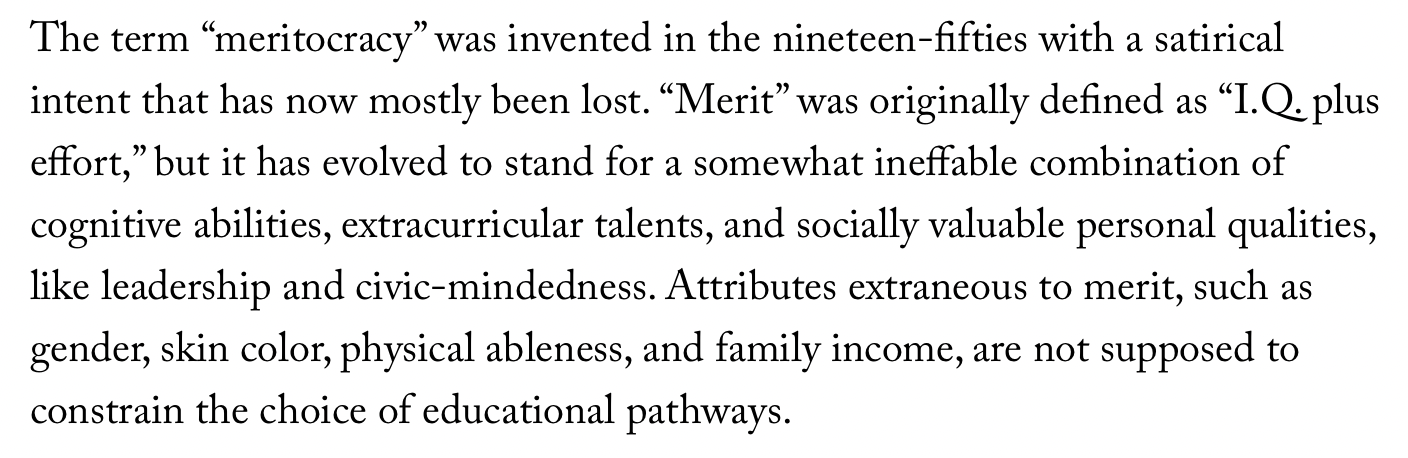
Privilege and flawed assumptions
If the admission to Tier 1 colleges was an opportunity available to everyone, it would be a fair system. That is a flawed assumption.
The wealthy parents can pay to have the best tutors teach their kids. And pay for all the extra curricular classes and equipment. They can pay the fee to take the standardised tests needed to apply to any college in the world. Then the employers go to those “tier 1” colleges and pay eye popping salaries and turn them into employees on their rolls.
The winners of these top tier colleges ignore the role of luck and believe they deserve the spoils.
Here are three assumptions to be challenged.
-
Hiring from the Alma Mater: When the hiring manager goes back to their alma mater to hire, they are perpetuating the flawed assumption that the brightest students are only available there. In India, my alma mater – XLRI and TISS make up the majority of CHROs. They in turn hire their team members from the same colleges. It leaves out many more serving students who could benefit from the opportunity. A CHRO summarised it perfectly by calling it a
“It is an invisible caste system”
-
Hiring the topper: When an employer hires the class topper, they believe that “other things being equal”, a topper will be a better performer than the rest. Academic achievements are a result of individual effort. The world of work depends on collaboration and teamwork. Assuming that capabilities and behaviour and motivation needed to succeed in business can be predicted by grades is a flawed ceteris paribus assumption. <Read: what they do not tell you about class toppers>
-
Hiring “experienced” people only: Ceteris paribus, only someone who has done the job before can do the job, it is a flawed assumption. People get rejected for having too little experience and they get rejected for having too much of it. In the world that we are in, technology is creating new products and services. New business models are being created. New markets are being addressed. Everyone, from a fresher to a retired person can contribute because the map of this new world is still being built.
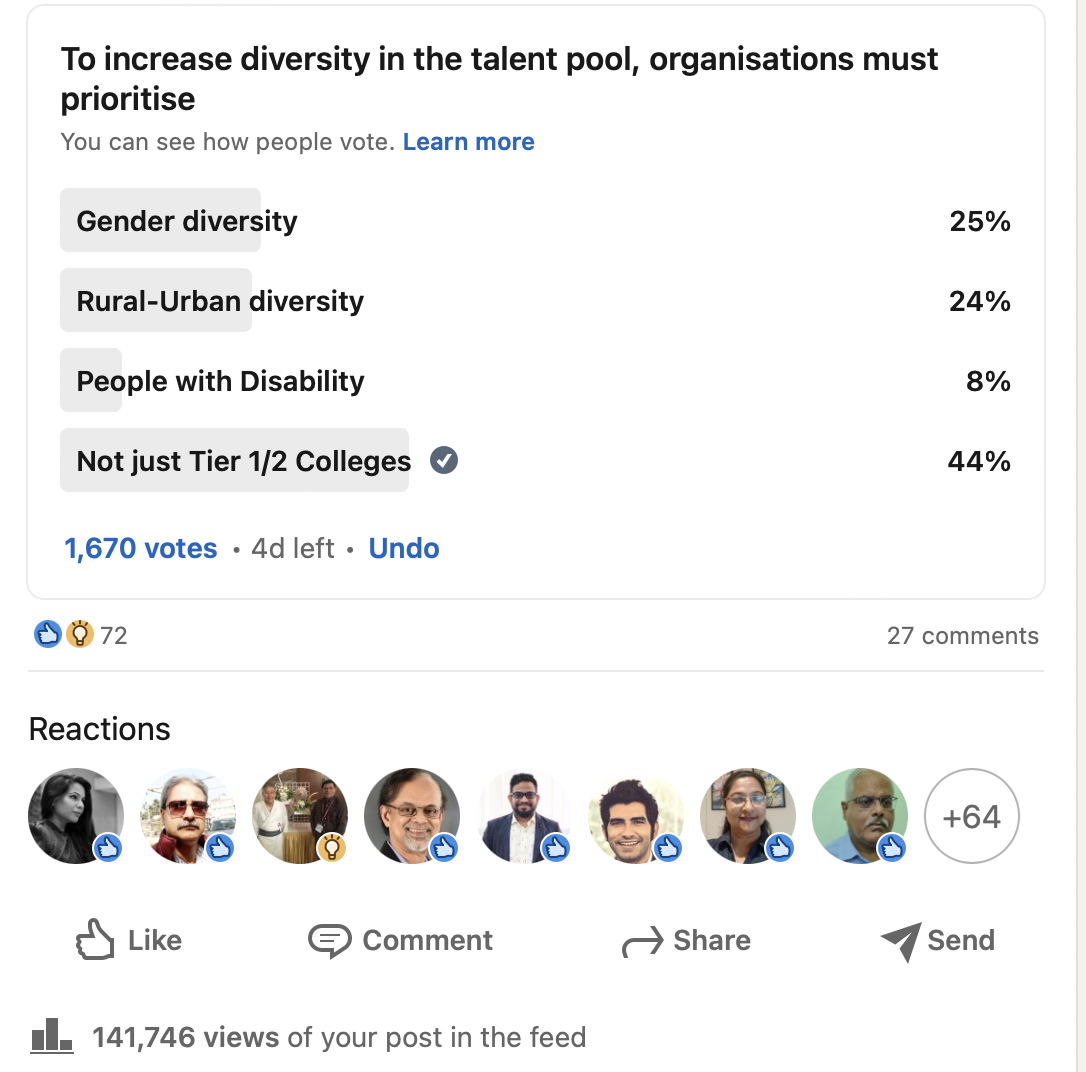
I asked my readers the single biggest initiative to increase diversity in the talent pool. Hiring beyond Tier1/ Tier2 colleges can really diversify the talent pool.
The Tyranny of “Merit”
Not everyone has an equal chance to compete when we put a premium on merit. Poor families stay poor while affluent parents create advantages for their kids. In the college admissions scandal, 30 parents in US were charged with facilitating fraud and paying a combined $25 million in bribes to get their children into elite schools. <read more: did anything change?>
43% of Harvard’s white students are ALDCs ie Athletes, Legacy students, Dean’s interest list (meaning their parents have donated to the school) or Children of faculty and staff. Roughly three-quarters of these applicants would have been rejected if it weren’t for having rich or Harvard-connected parents or being an athlete. <read more>
Michael Sandel, the author of the brilliant book The Tyranny of Merit summarises it best. Don’t miss this 8 minute talk
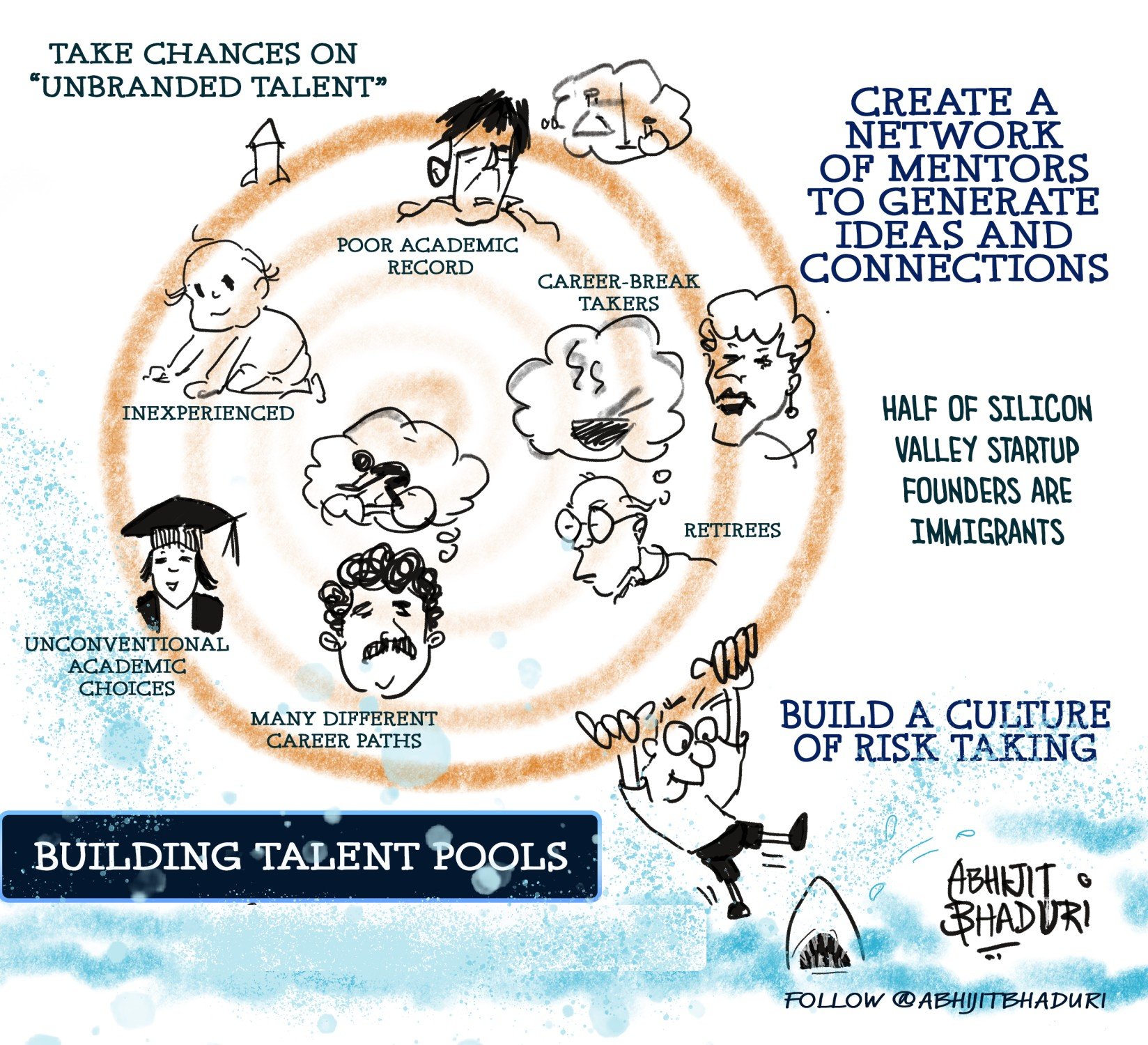
Take chances on “Jagged Resumes” & unbranded talent
“Jagged Resume” is a term coined by George Anders. His book The Rare Find is full of such jagged characters.
The idea is that often, the most important differences among candidates will not be at the top of the resume/CV. You’ll be looking at a large pool of people who went to good universities, got good marks, and have at least some amount of good experience. Trying to spot relatively small differences within these mainstream markers — and hire the candidates who appear 97% perfect instead of those who are 96% perfect — may not be a wise way of doing your final sorting.
Instead look for Jagged Resumes or unbranded talent. More than 55% of America’s billion-dollar startups have an immigrant founder. <read more>
While reading a resume, most people start at the top and work their way to the end of the document. What if recruiters started reading the resume backwards? That is where you might discover a jagged resume – one that bucks the trend and could often hold the key to discovering great talent. <read more>
Here are two lesson in building talent pools
-
Create a network of mentors who can generate ideas and connections
-
Create a culture that is comfortable with failure.
There is every likelihood that the opportunities created for the unbranded talent pool will address The Great Resignation.
If you have a question, do drop me an email. Please do subscribe to this newsletter and encourage others to subscribe too. Thanks!