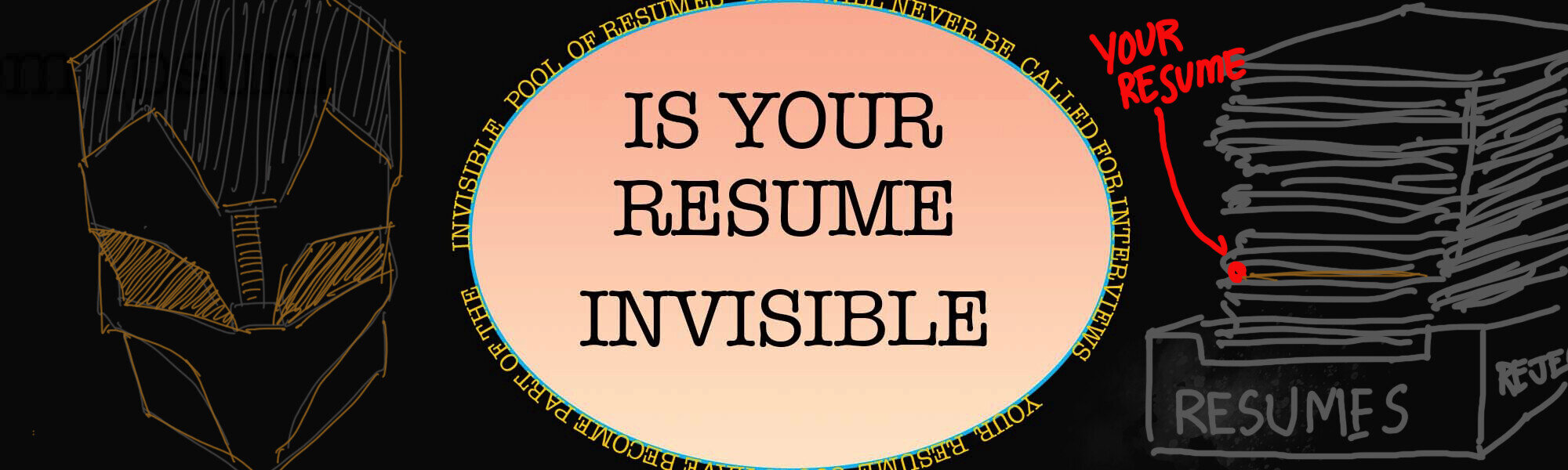
Why do so many people find it hard to get noticed? While employers are using algorithms to hire, people are still writing resumes and preparing for interviews with humans.
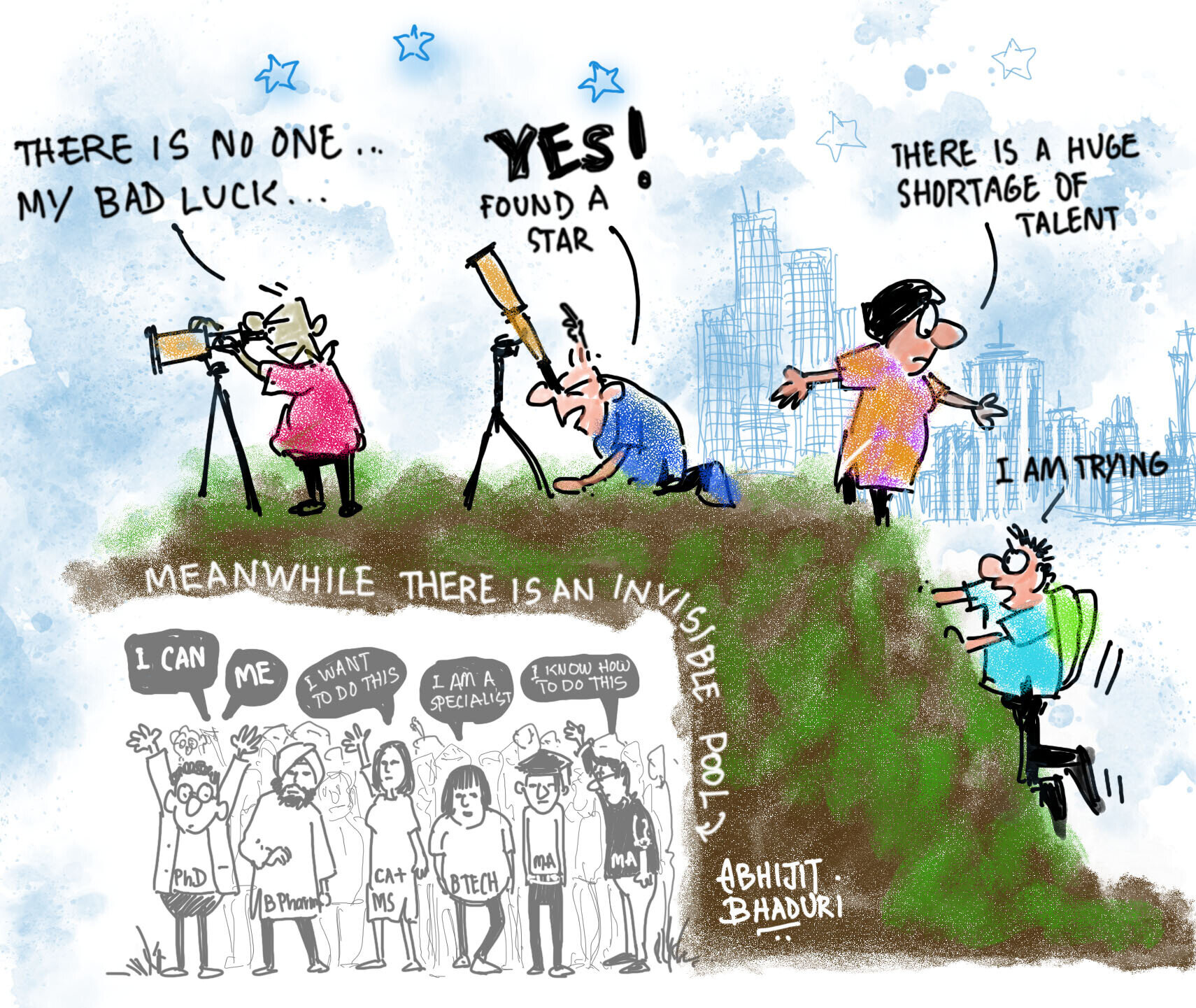
Finding a job was hard (for some) even before the pandemic
Most applicants are still writing their resumes for humans. They continue to prepare for interviews with humans. The reality is that from reading the resumes to testing and video interviews, we are dealing with algorithms. Without changing our response to the hiring algorithm, rejoin the pile of people who apply for jobs but are never called. They join the growing pile of resumes that are ‘invisible’.
Not finding a job creates a career break. With each passing day, it become harder to find a role because jobs are becoming hybrid. That also needs a different strategy.
A career-break breaks careers
In a competitive job market, taking a career break can put your resume into the invisible talent pool. The longer the break, the harder it is to get back.
-
Caregivers: The pandemic has forced several people to take a break and look after a loved one. Women take career breaks when they have children. In many cultures, looking after ageing family members becomes the responsibility of the women forcing them out of full time employment. Caregivers form a large chunk of the “invisibles”.
-
Relocating partners: A partner or spouse relocating to a different location can also turn the person’s resume to become invisible. Many countries have stringent visa laws making it illegal for the trailing spouse to continue their professional career. The family circumstances push family members in to the “invisibles” pile.
-
Neuro-diverse talent and PWD: People with disability and neuro-diverse people, no matter how qualified also become invisible in the eyes of the recruiters. The prevailing human biases make it difficult for this talent pool to catch the recruiter’s attention. They take up roles that do not leverage their potential and often make them “invisible”.
And then there is the tsunami of resignations that every employer is grappling with. Employers are signalling their desperation by offering signing bonus to blue collar workers and luxury vehicles to anyone who stays long enough to collect it. <read more>
The effect of becoming “invisible”
Full time work becomes increasingly harder to find. The invisible talent pool moves out of full-time employment. They are forced to stay unemployed and survive by doing odd jobs. They take up part-time employment with the hope that they will get an opportunity to get an offer to work full-time; but that rarely happens.
According to the World Bank, as of 2019, almost 30% of the youth are NEET (not in education, employment or training). In India 15% of the population faces this challenge despite having advanced education. (read more)
Job descriptions are becoming complex
Staying out of full time employment makes getting back to the workforce harder because of the rapid changes to business models, jobs and skills needed. The implications are clear:
1. Rapid obsolescence of skills
The employers keep inflating the requirements and that in turn reduces the candidates pool.

In a world where the skills needed to do a job are changing continuously, being out of a full-time role makes it hard to keep pace. The traditional skill providers lag behind before they turn a niche skill into a marketable skill. One sign of a marketable skill is that it starts to appear in job descriptions. With the half-life of skills shrinking steadily, the rate of obsolescence is rapid.
2. “Hybrid jobs” leave out anyone NOT in full-time employment
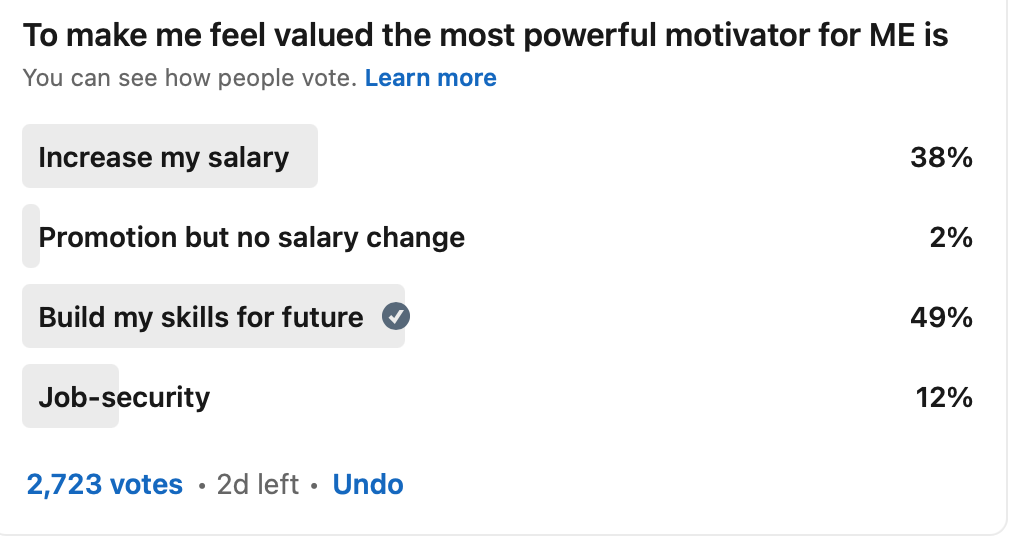
Hybrid jobs combine skill sets that never used to be found in the same job eg design and programming. They are almost universally the fastest-growing and highest-paying – and often hardest for the “invisibles” to land. (Read more)
Most hybrid jobs need skills that cut across functions. That is possible to learn only if someone is in full time employment. Graphic designers have to excel not just in design, but also in programming, branding, and CAD/CAM.48
B2B sales positions now require familiarity with tools like Salesforce.com and the ability to use digital devices to enter orders, track inventory, and check order status. Those not in full time employment struggle to know what skills to acquire, how and where to acquire them, and how to overcome their lack of financial resources and time to do so. Read more
Algorithms at every stage
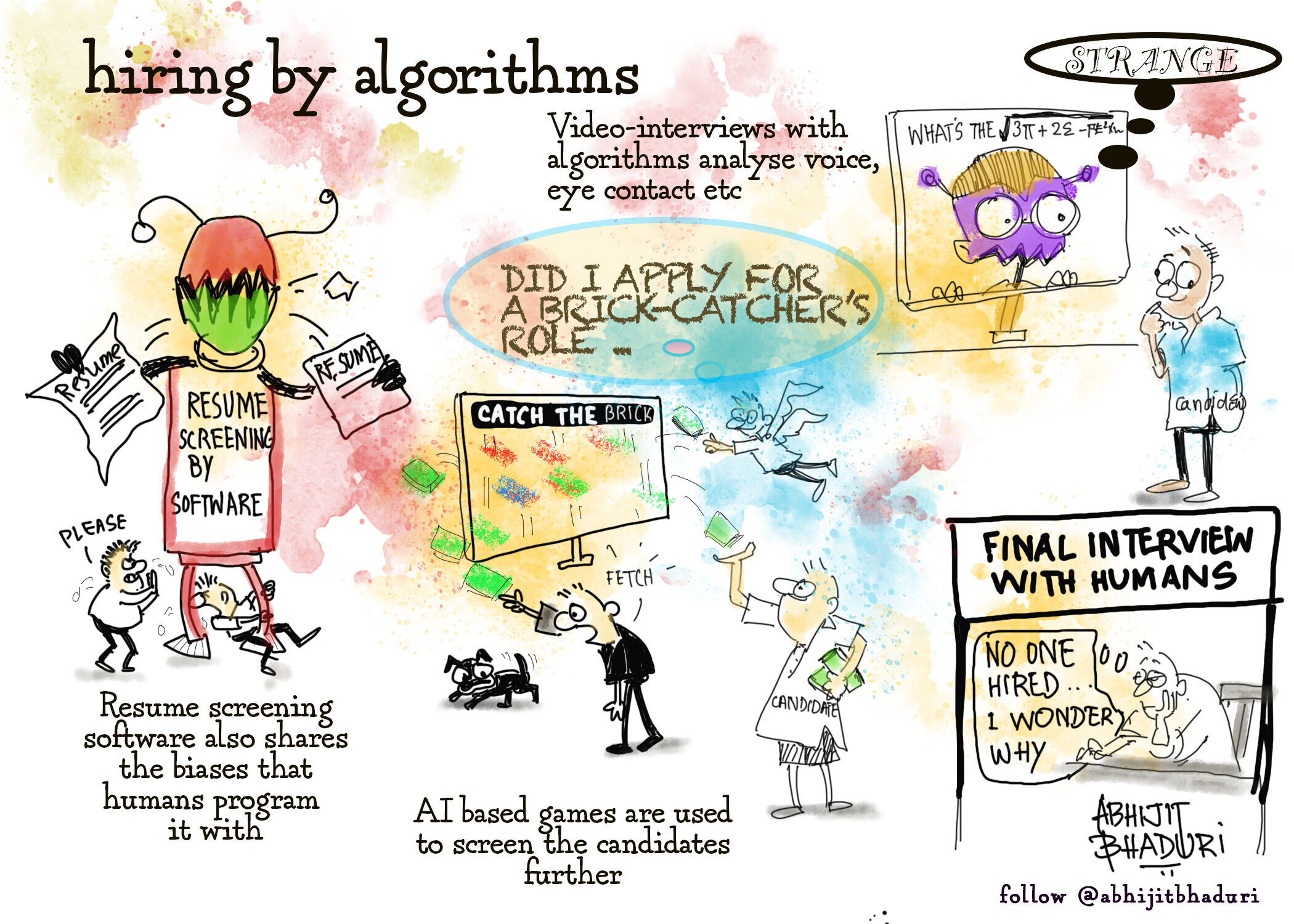
It has become easy for people to apply for jobs. LinkedIn makes it easy for people to apply to a job at the click of a button. Each job gets more applicants than a human can handle. Enter hiring automation software that has changed how hiring happens. 99% of Fortune 500 companies use software to screen applications.
A. Resume screening by algorithms
Pro-Tip: Look for clues in the job ad. Any skill that has “significant,” “strong” or “mastery” mentioned is important to highlight especially in your latest assignment. Always use the most relevant keywords from the job-ad in your most recent job listed. Quantifying results also helps recruiting software to choose your resume. <Resume writing tips>
Pro-Tip: Removing dates and presenting previous employment in terms of years of experience increased call-backs by 15%. Formatting your résumé in a way that highlights your years of experience seems to be the way to go. <Read More>
Pro-Tip: Keep your traditional resume for the in-person interview. The resume you send in for screening must be more factual and precise.
Read more: How to write your resume for an algorithm
B. Testing by algorithms
AI based games are used to screen the candidates soft skills like risk taking ability, collaboration etc. Watch: 3 Easy Hacks To Prepare for Hirevue / Spark Hire / VidCruiter
C. Video interviews with algorithms
Video interviews analyse the candidate’s voice, eye-contact, tone, choice of words etc to further narrow the candidate pool. Watch: How to pass video interviews
While employers are using algorithms to hire, people are still writing resumes and preparing for interviews with humans. For example, software systems often eliminate those with a gap in employment if companies believe the currently-employed are more capable of filling a role successfully. The invisible talent pool is at a distinct disadvantage. <watch this>
Expertise and knowledge are becoming less important in predicting success on the job. Decoding the elements of personality like curiosity, learning ability, people skills, ambition, risk taking and motivation to do the job are becoming important for every job.
The way forward
While hiring by algorithms is efficient, but it creates another problem. There is an ever increasing pool of talent that is becoming invisible. Employers are trying to solve the problem by using more and more algorithms.
Solving the talent scarcity problem needs employers to do two things right away:
-
Make the invisible talent pool, part of every candidate pool – not CSR
-
Put disproportionate investment in skill building when hiring for anyone who has had a career break.
Hiring people from the invisible talent pool as part of the CSR process conveys the impression that it is an act of charity. It is not. Hiring from the invisible talent pool is the best way solve the talent crisis.
Additional readings (pl suggest more resources people can use)
Read: How to get your resume noticed
Listen to this podcast about how hiring is changing