Day: May 8, 2021

  • Careers in a Hybrid World

    Careers in a Hybrid World

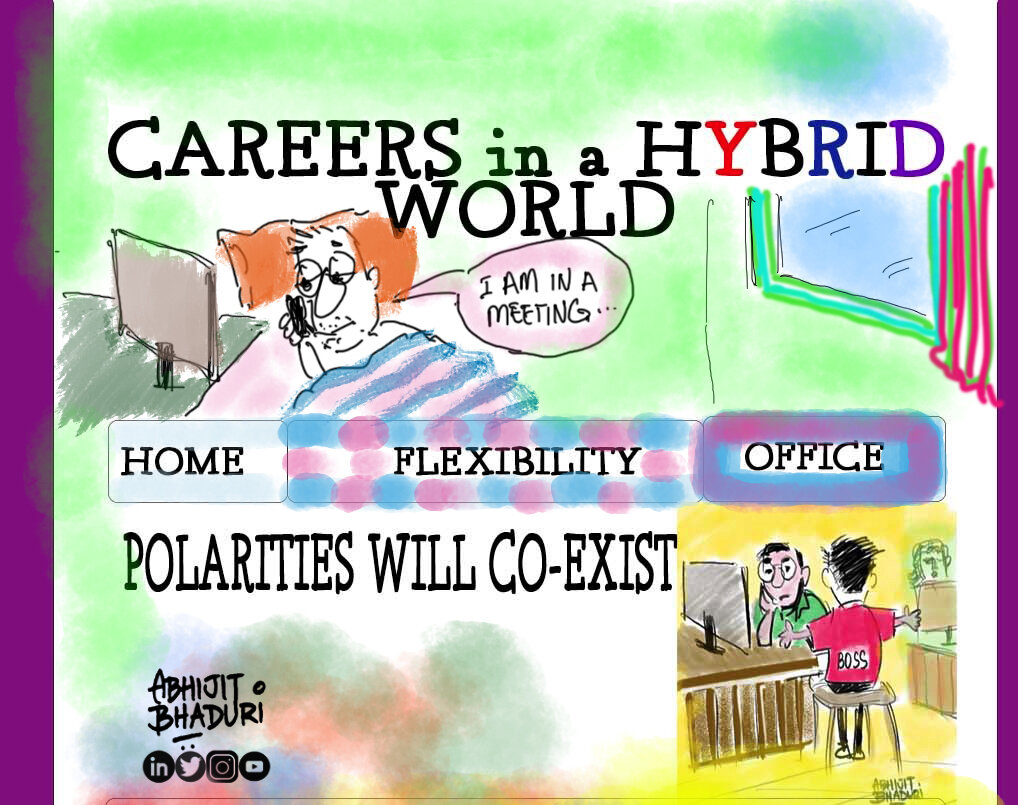
    In a hybrid world, we will experience most things along a continuum - careers, work rules, employment contracts etc. I spoke about this in this podcast. Listen in.

    In a hybrid world, we will experience most things along a continuum – careers, work rules, employment contracts etc. I spoke about this in this podcast. Listen in.

    Sundar Pichai, CEO of Google, sent employees an email about the company’s decision to create a “hybrid workplace” – a model wherein around 60% of the employees would come together in the office a few days every week, another 20% would work in new office locations, and the remaining 20% would work from home. That led to a lot of interest in the media. What was this “hybrid workplace” and what would that mean for us?

    >
    Going forward, Googlers will be able to temporarily work from a location other than their main office for up to four weeks per year, with manager approval.
    — Sundar Pichai

    Think Along a Continuum

    We have moved away from the world of binary choices and moved to a continuum. You will have some companies that are allowing employees to work from anywhere forever. Twitter’s decision to allow its 5,200 primarily San Francisco-based employees to decide where they want to work will impact everything from office lease, home ownership patterns and compensation packages.

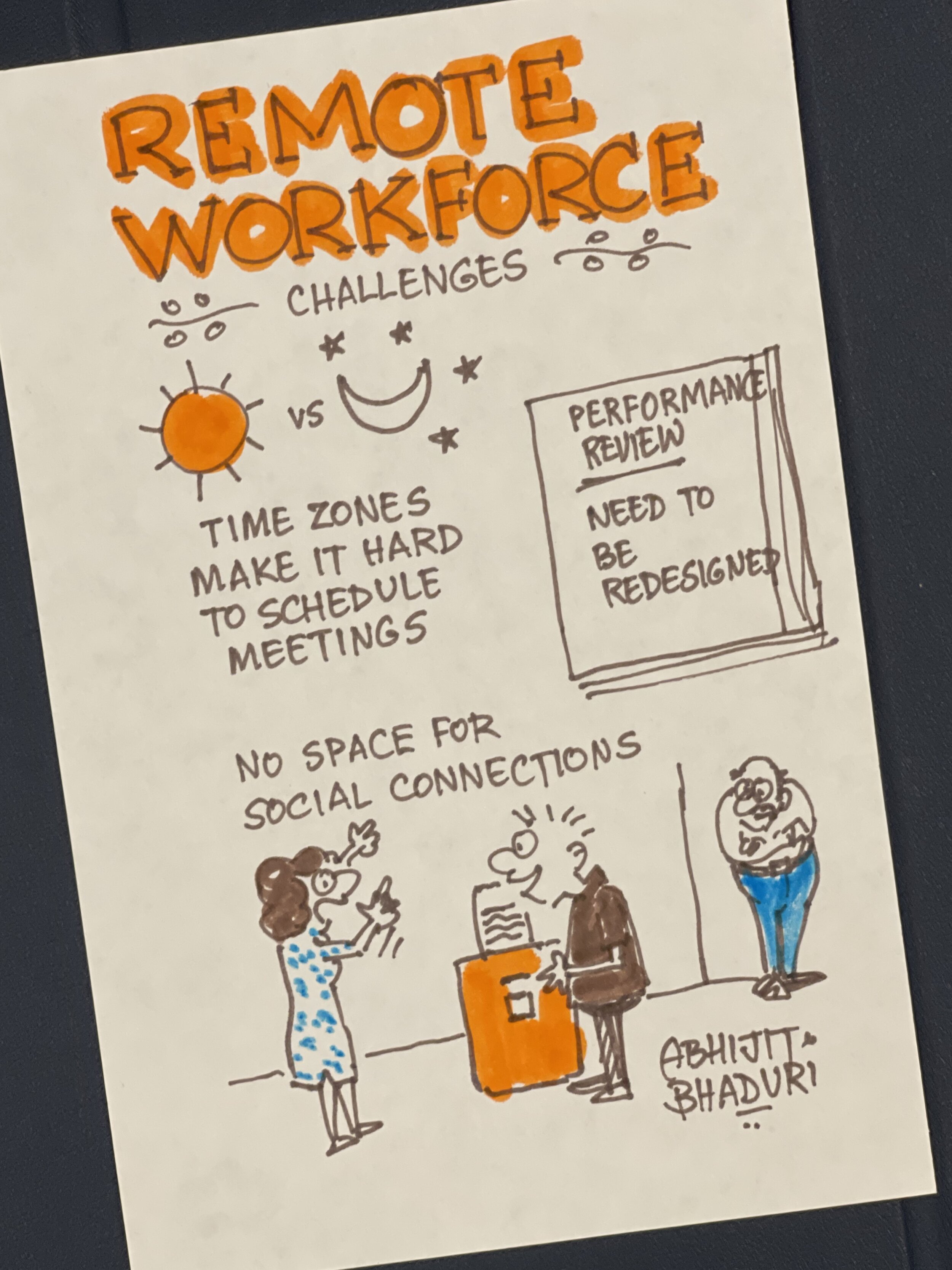
    Many others like Apple and Netflix believe that “creativity comes from spontaneous meetings, from random discussions.” I spoke to Moneycontrol.com about hybrid workplaces. People are likely to miss the warm face-to-face personal interactions that they had with their colleagues in the physical space. It will be a challenge to replicate these virtually, therefore organisations will have to work harder to build connections.
    Read: Is the hybrid model a good fit for India?

    When Twitter announced the work-from-home policy, it threw the HR teams and IT teams into a tizzy.

    When Twitter announced the work-from-home policy, it threw the HR teams and IT teams into a tizzy.

    >
    They surveyed the implications of various employee moves from legal, tax, IT and security, real estate and immigration perspectives. They looked into the tax consequences for workers who wanted to move to countries where Twitter wasn’t authorized to operate. The security team began creating protocols for large numbers of people logging into company systems outside of headquarters.
    — Washington Post

    Most companies will fall in the middle of the spectrum with some offering fully remote working, like Twitter. Some will want to go back to in-person workplaces. Most will allow for some flexibility to the employees. One thing is certain, working in a hybrid environment will mean a big change in the life of the managers. <Read More>

    Think Adaptability

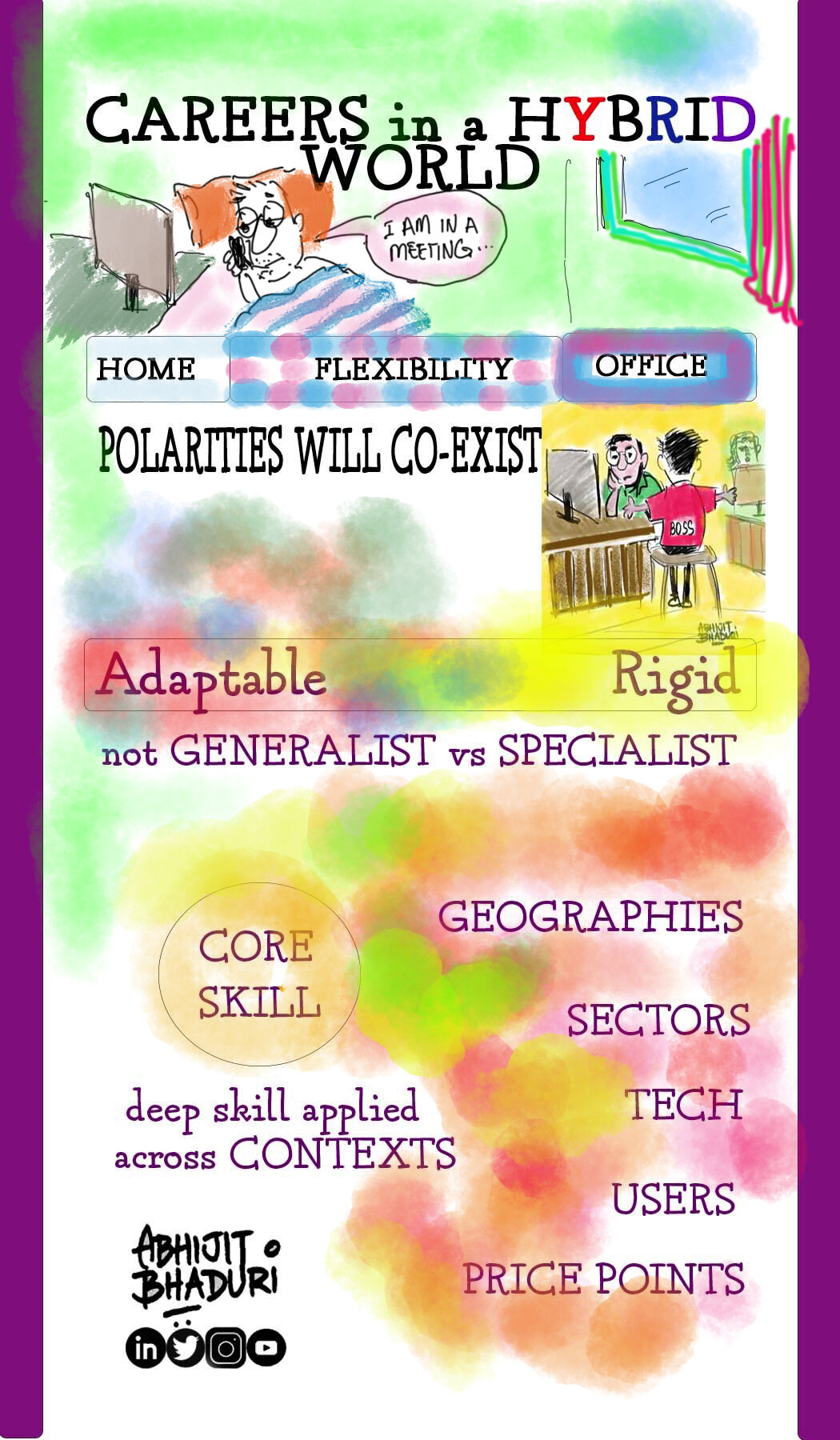
    Think about your skills from the lens of rigidity and adaptability. You need deep skills that can be applied to solve problems across many settings. A communications professional may need to build skills in managing brand architecture, social media, digital marketing, SEO etc. The core skill has to be applied in multiple settings and contexts.

    Skills too will be along a continuum. There will be some specialists who will choose to become self-employed and most organisations will have some generalists.

    Spaces as a Portfolio

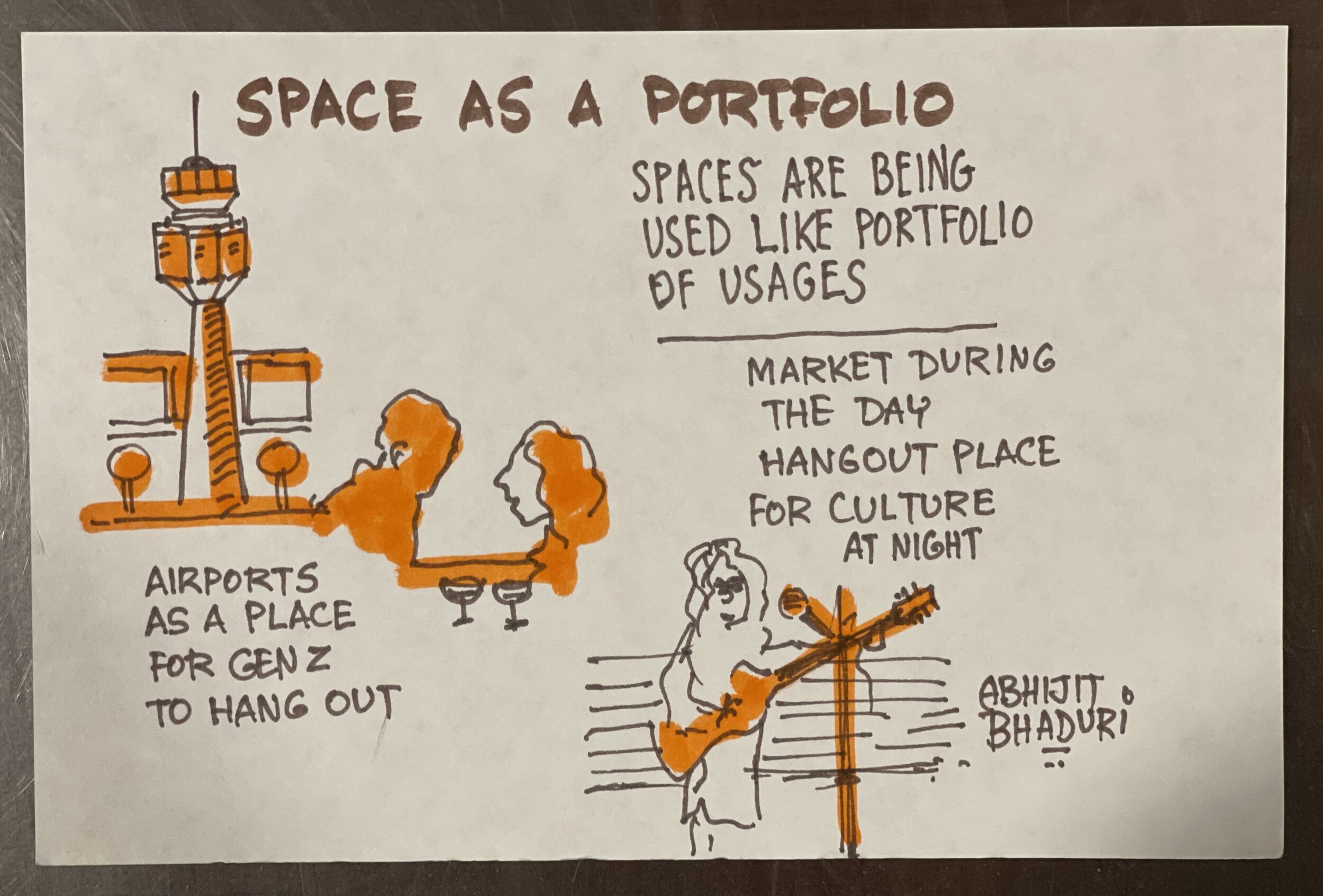
    During the pandemic, many companies shut their offices in the big metros. People moved to the suburbs or to their small towns. The vacant spaces offer opportunities for offices to use space as a portfolio of activities. Some Co-Working spaces used to offer talks and musical performances in the evening to better utilise space and offer innovative experiences for their clients.

    What happened to airports? As travel reduced, there was another interesting trend appearing. Lots of Gen Z and Millennials use the airport as a place to socialise. 
    “An airport is a free, diverse and safe space that offers the roaming possibilities of streets and parks, with the added benefit of lots of security, meaning nothing bad is likely to happen to you there.”

    “An airport is a free, diverse and safe space that offers the roaming possibilities of streets and parks, with the added benefit of lots of security, meaning nothing bad is likely to happen to you there.”

    Vice explains it as, “The appeal of the airport seems to be rooted in something very human: being connected to people in a world where significant events are happening all around: leaving to start a new life, returning to connect with an old one, going on an adventure, saying hello or goodbye to a loved one.” <Read the post>

    The Nobel Museum in Stockholm becomes a place to have dinner surrounded by memorabilia of Nobel Laureates. I actually had dinner there. read about it. <Click this>

    Space as a way to shape culture

    Large companies have under-utilised office spaces. Startups are scrounging for space. Getting a small startup in the office could become a way for businesses to shape their culture. The startup and the large behemoth could learn from each other.

    I talked about careers in a hybrid world. Listen to this
  • The Experience Economy – II

    The Experience Economy – II

    The Experience Economy.jpg

    This is a continuation of The Experience Economy post that outlined the three triggers driving this shift. The Experience is going to need more ‘Experience Makers’. Can you be one of the superstars of the Experience Economy? Let’s get started.

    The candidate experience

    “If this is how they treat the CEO, I wonder how they make the other candidates feel…”

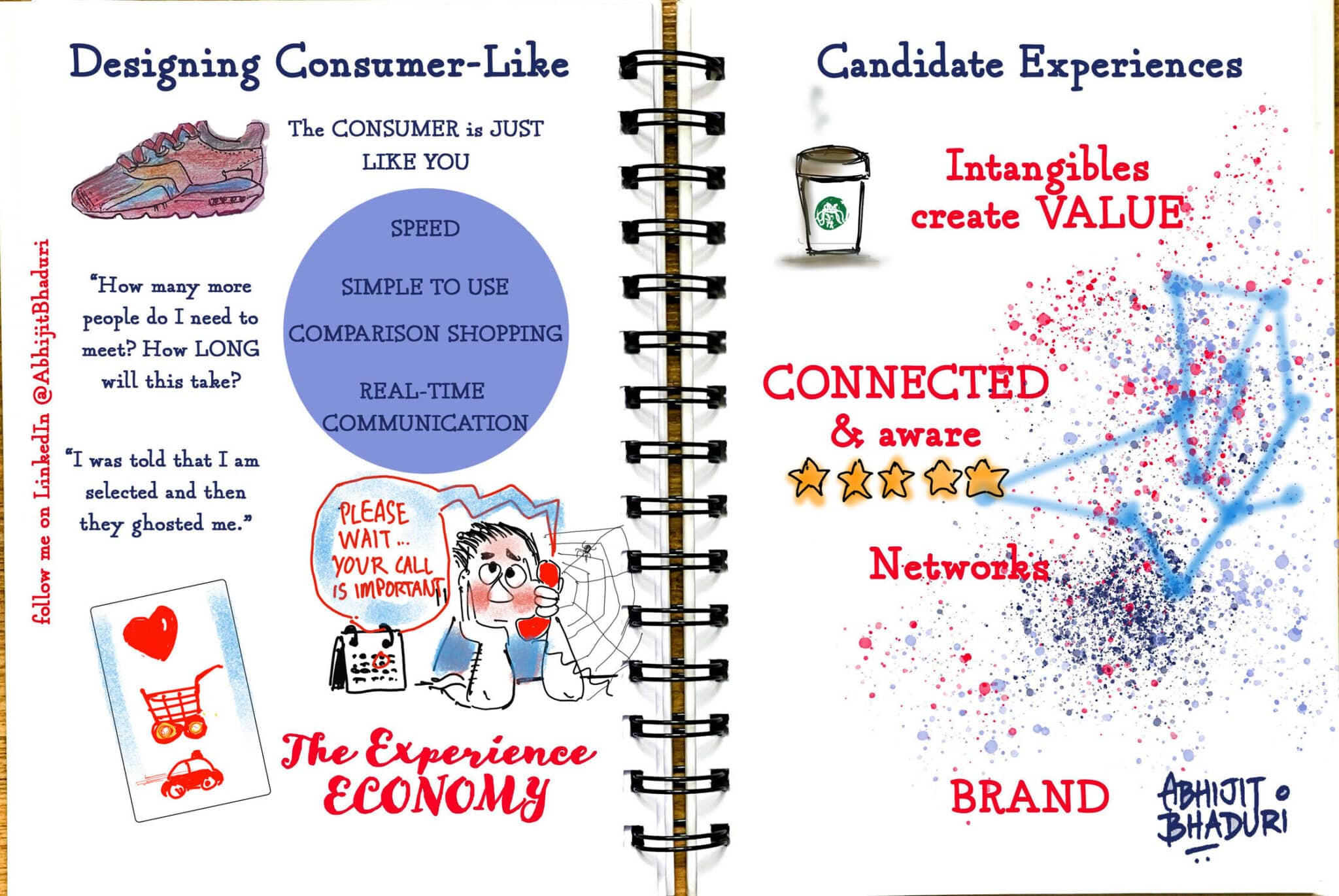
    Supreet Verma (not his real name) is being considered for the CEO’s role of a mid-sized firm. The search firm told him that the entire process would take 2-3 weeks during which he would meet the 8 Board members. He has met everyone (some more than once), but even after four months there is no clear decision. Sounds familiar?

    Kiran was told that she had cleared the first round of interviews. The next round of interviews was to be scheduled the next morning. When I did not hear from them, I called the Talent Acquisition lead. He said, ‘I am interviewing a candidate. I will call you back. It has been three weeks. I now understand I have been ghosted.

    "Ghosted" is the term used when someone abruptly cuts off all communication without explanation.

    Customer Experience CX is the key

    In case of mass production, the worker has limited impact on the final product. The individual employee’s impact on the final product cannot be isolated.

    Customisation is the next phase, companies produce many variants of a product in a factory. Consumer goods use customisation (eg herbal toothpaste, toothpaste for sensitive teeth etc). The individual worker’s stamp in not visible in the final product.

    Personalisation is the next phase that is best described Steve Jobs described the Mac team as a set of artists who mass-produced their art. Every Mac carried the signature of the team. <Read more> Personalised products need a community of buyers and sellers. The youth magazine called JS had a cult-like following among the young readers in the seventies. <Dig deeper> This is first stage when the individual worker’s work is clearly identifiable.

    Individualisation is the stage when the customers pay for what the product (or service) makes them feel. The luxury hotels build a bond with their top customers. So does the neighborhood kirana store in India. <Read: Relationships are the future of retail>

    The Experience Economy begins when the individual employee’s contribution is clearly identifiable. The individual creator creates a product that appeals to the senses of the buyer. That could involve appealing to the senses through sound <read this>

    Adding ambient scents Nike showroom increased consumers’ pleasure and stimulation, willingness to spend more money, and likelihood of returning to the store, compared with a non-scented environment. <Read about Digital Olfaction>

    Talent is not a normal distribution

    In the Experience Economy, finding the right candidate can make all the difference. The top 1% gets 10% of the organisation’s output. The top 5% accounts for 25% of the output. Michael Phelps Olympics medals tally consists of 23 gold medals (from 2004 to 2016) – the most Olympic gold medals ever won – three silver and two bronze medals. The haul of 28 medals makes it the most ever in Olympic history. Even among Nobel Prize winners, the top 1% has a visible lead <Read about who qualifies for the 1% among Nobel Laureates>

    To get the top 1% talent, the candidate experience has to be designed to attract the top 1%. These are people who are chased by head-hunters. You can’t hire them. They have to want to work for you. Experiences create a pull that we cannot resist.

    Designing Consumer Like.jpg

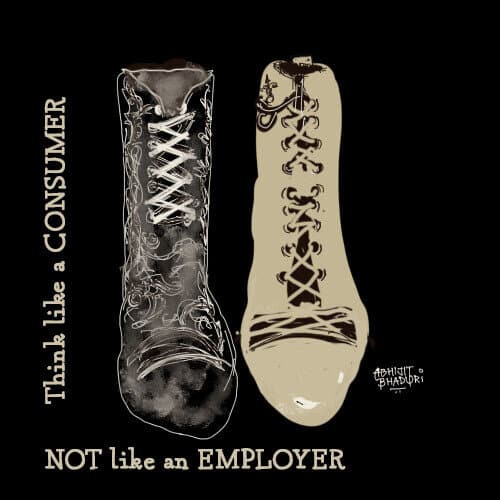
    Think like a CONSUMER – not an employer

    Think Like a Consumer.jpg

    Empathy lies at the heart of great design. To design anything, you have to walk in the shoes of the user. That involves discover their tangible needs and the intangible needs. When my clients invite me to design a “consumer-like candidate experience”, here are some design principles I share.

    1. Think like a consumer – not an employer: Employers think about process flow. They benchmark their competitors hiring cycles. The first step is to stop benchmarking your competition. Benchmark dating sites, e-commerce sites and online banking to design the candidate experience.

    2. Think hours not days: Food delivery services deliver food in a matter of minutes. Grocery gets delivered in a few hours. We get impatient when the cab service tells us that the nearest cab is 8 minutes away. My friend Debu tells me how he brought down the hiring time for engineers from 45 days to 8 hours by simply redesigning the process.

    3. Think about waiting times: Use the waiting time to coach the candidate about what to expect during the interview. Can they meet the team members they will work with? Maybe they can watch short videos recorded by the hiring panel about their hobbies. Can they choose to learn a skill that they could use in future, even if they do not get hired by you.

    4. Extra care for those you do not hire: Customers who are asked, and then given information the way they want, are 2.2 times more likely to purchase and recommend you to others. Could the person be a good fit for a different role in the same team? Or in a different function? Does the person have a skill that the person should build on?

    5. Leverage your new hires: The new hires are the best experience designers you can leverage. Tell them to bring in ideas from their most memorable experiences – no matter where and when it happened. Once they design the candidate experience, seek their help in designing the onboarding experience.

    The age of experiences is here. Being able to improve the candidate experience will have an immediate impact on your reputation as an employer. With the rise of freelancers, part-timers, consultants and gig-workers, maybe it is time to rethink the term employee experience.

    I foresee that the currently fragmented view of candidate experience, employee experience and customer experience will all blend into one umbrella term – Human Experience Design. That would be the pinnacle of the Experience Economy.

    Email: abhijitbhaduri@live.com Follow me on LinkedIn, Twitter & Clubhouse @AbhijitBhaduri