The full review can be heard in the audio version below
The pandemic has reshaped and redefined workspaces not to mention, doing away with the concept of office spaces. Abhijit Bhaduri, author of Dreamers and Unicorns, tells HRKatha, “Work has changed, workforce has changed and the workplace has disappeared altogether,” and this is what forms the crux of his book.
The author personally recommends the book for anyone who is exploring career choices, be it B-school students or young professionals who are entering the work space and are seeking a thinking cap. As media becomes diversified and available at a tap on a digital screen, the way people communicate with each other has undergone drastic transformation as well. This is a reminder to adopt innovation as a practice to keep themselves or their firms relevant, now and in the years to come.
Dreamers and Unicorns on display at Oxford Book Store, Park Street Kolkata.
Photo courtesy Arjya Chakraborty
As for measuring the value of organisations, there has been a shift from tangible factors to intangible factors, and around 85 per cent of firms measure their worth based on intangible factors — volume of patrons, hired talent and their retention, and also the company culture. This is more so in today’s context where companies are no longer driven by their location, size or capital alone.
Bhaduri has outlined three phases to any person’s career — the dreamer, the unicorn and the market shaper. Early career professionals are in the ‘dreamer’ phase wherein they experiment with jobs to find their fit, and once they find what they like, and their presence is felt and seen, pan India, they enter the ‘unicorn’ phase. It could be individual alone or the firm as a whole coming to the limelight and causing ripples of change. The unicorns, with their national presence and continuous innovation, enter the ‘market shaper’ phase and become trend influencers, taking their reach beyond the borders of their own country.
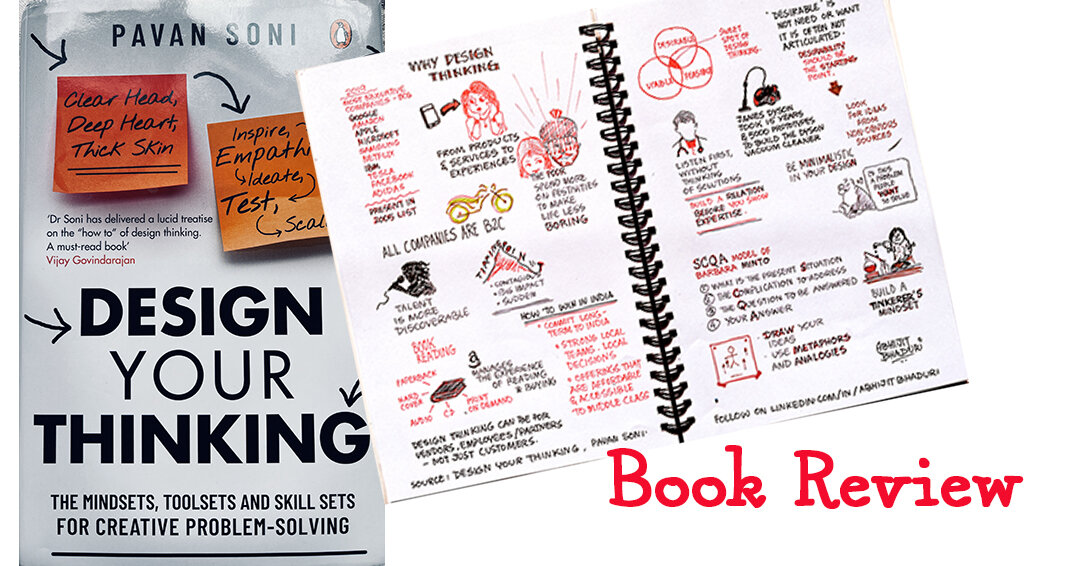
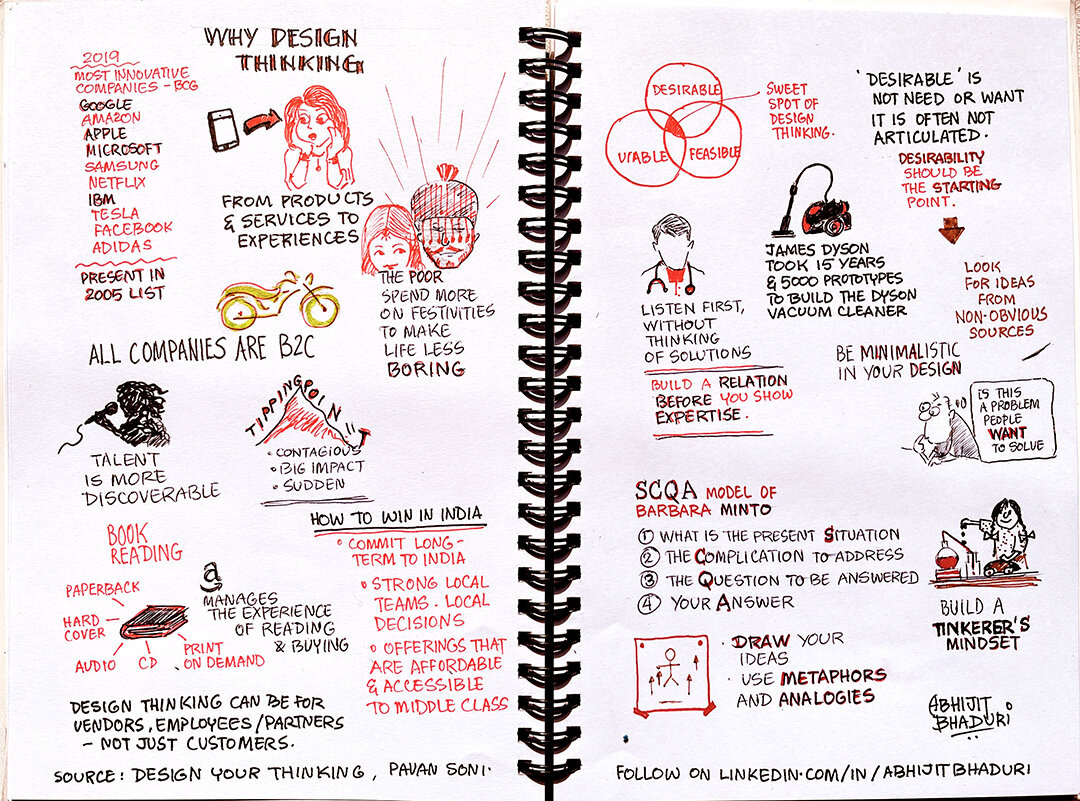
Desire is a need or want that is not articulated. The most innovative companies are able to discover that desire that the consumer is unable to address. Knowing what is desirable is not enough. The current state of technology, logistics and talent available to the firm determines the feasibility of building the product or service. Then the finance team looks at the cost structures to determine if the idea is viable as a business. Design Thinking sits at the sweet spot of desirability, feasibility and viability.
Tim Brown is one of the leading thinkers of this discipline who explains the basics of Design Thinking. Watch his video and get hooked to this discipline.
Why does innovation matter?
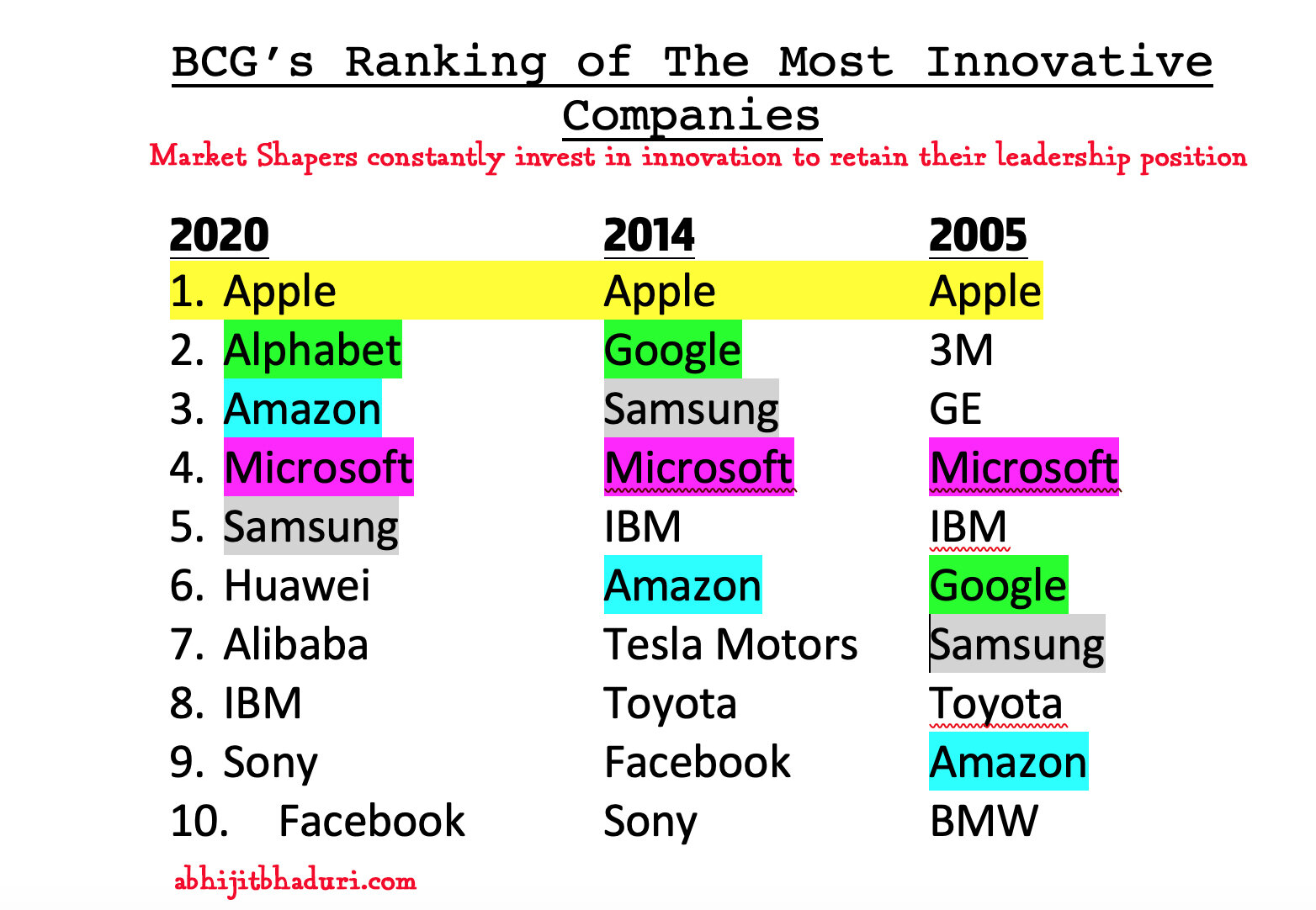
BCG has been ranking 50 of the world’s most innovative companies since 2005. Look at the table below. The Market Shapers like Apple, Google, Amazon, Microsoft have always been famous for investing in innovation to stay ahead. Look at the list in 2005. There are companies that have dropped off. Only eight companies have made the list every year, and they include Alphabet, Amazon, Apple, HP, IBM, Microsoft, Samsung, and Toyota.
Market Leaders take a long term view of innovation
According to Forbes, the companies who excel at serial innovation double down their efforts during downturns, so they have a greater opportunity to invest and position themselves for a recovery faster than competitors.
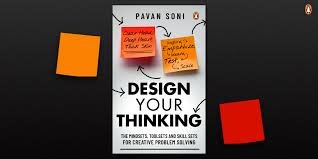
Design Your Thinking by Pavan Soni tells you how to be a creative problem solver. Dreamers have to discover an unmet need and figure out how to build and distribute it efficiently. Creative problem solving helps people to understand what the consumers desire. Dreamers use it to get started and become Market Shapers. Each new geography or market offers a nuanced view of the consumer within a country. Unicorns use creative problem solving to keep the product relevant. They need to find creative ways to discover how to scale up up the product or service. The Market Shapers like the ten most innovative companies given above use advanced analytics, digital design and technology platforms to strengthen their specific initiatives and create new ventures.
People no longer buy products or services. They buy experiences. <Read this>
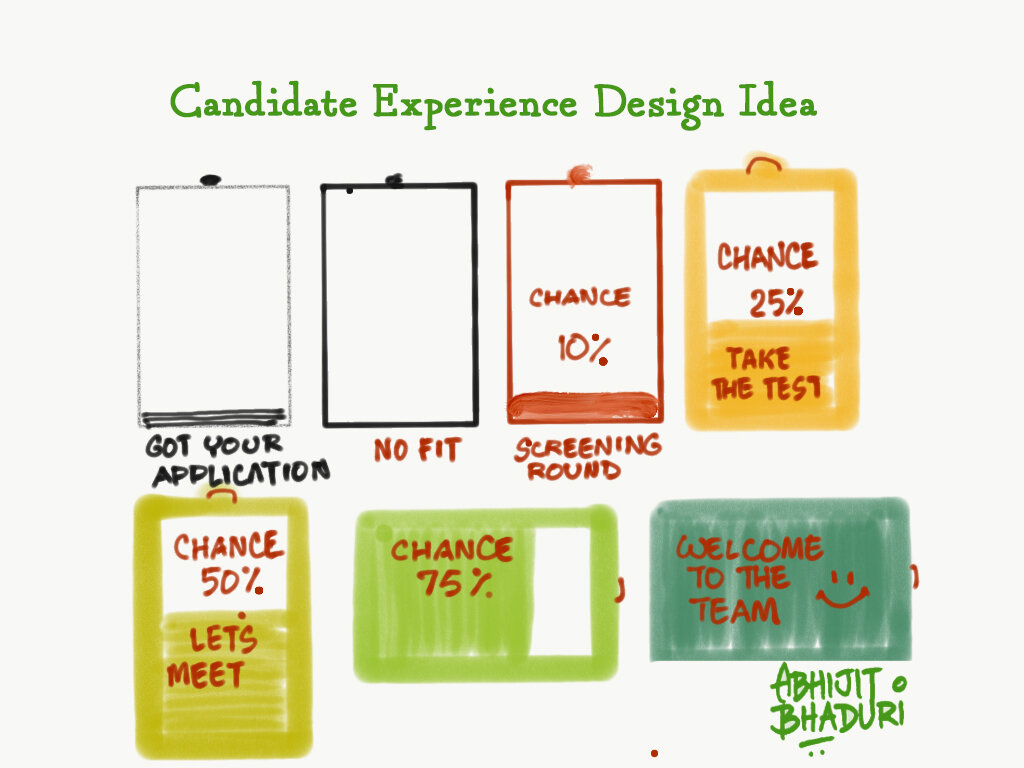
One of the most vexing experiences of candidates is the act of applying for a position in a company. I was trying to sketch out a way to keep the candidate engaged by sharing the probability of the candidate’s success. This is not just about telling the candidate where they are in the hiring process. It is about telling them the probability of success.
I had designed this app for a client to help them improve the candidate experience.
> “Telling the candidate what you want them to know is often not what the the candidate wants to know.”
You can always add more information to the app. For example: The expected date and time of the next step. The ability to schedule meetings … you just have to start thinking about what ELSE candidate would like to know.
Read this lovely post on the ten faces of innovation <Read this>
Idea you can use:
What if the candidate got an app that tracks his/her journey from mailing the resume to getting the offer. Would it make a difference?
What I liked about this book
The book shares a list of tools from the usual ones like brainstorming to more advanced methods used by companies. There are lots of anecdotes and trivia (eg James Dyson took 15 years and 5000 iterations of the vacuum cleaner) that keep you engaged. There are plenty of references for those who want to dig deeper.
The book talks about the journey from ideation to launch. At each stage of the process, Pavan shares the mindset, toolset and skills you need to get going. The most difficult part, I believe, is the ability to really understand the desire of the consumer. The process is messy. The consumer is not articulate. The bias of the designer comes through. This is the bit that Pavan does a great job of in the book.
What I did not like about the book
In the organisation, the human elements of influencing and getting the scarce resources is as hard as the product design. Since human beings are unpredictable (unlike algorithms that follow rules), most entrepreneurs fail because they do not address the human element. For example: what to do when the engineer leading the project quits to join the competitor a month before the launch. Or when the head of another function scuttles your funding or takes away your key resources. These are real problems that are often not surfaced in a book. I wish Pavan had addressed it in his book.